
Athens in winter: why February is the best time to go for art and history
Disclosure: This post contains affiliate links. I earn a small commission on every purchase made at no extra cost to you.
I booked Athens in February partly out of practicality: it was my first time visiting Greece, and I wanted to see the ancient sites properly. I am not a good hot-weather traveller, and I don't do well with crowds, both of which Athens has in abundance in summer. Visiting in February meant I could move at my own pace, linger where I wanted, and actually take things in.
What I didn't quite anticipate was how much I would enjoy the city in winter itself. The light was good, the food was excellent, and on the sunny days, which were most of them, it felt nothing like February at home in the UK.
Athens in winter is not for everyone. If you are after a week by the sea with a cold drink, come back in June. But if your priority is the Acropolis, the Agora, the museums and the neighbourhoods, February is quietly one of the best times to go. Flights and accommodation are a fraction of the summer price, the sites are calm, and the city feels like it belongs to the people who actually live in it.
Athens winter weather
February in Athens is not reliably sunny, and it is worth being honest about that. The weeks before we visited had been very rainy, and we did have one thoroughly soggy day, wet feet and all. But the other three days were mild and bright, the kind of winter sunshine that feels like a genuine gift in the middle of February. Temperatures were comfortable for walking around all day in light layers and a jacket, nothing like the 40 degree heat that descends on the city in summer.
One thing I had been anxious about before the trip was booking the Acropolis in advance. I wanted to make sure I visited on a sunny day, and was worried about committing to a date without knowing the forecast. In the end it wasn't necessary. There were no queues and no shortage of tickets in February. I booked a day or two ahead once I could see the weather coming in, which felt like the right balance. In summer the situation is very different, but in February you can afford to be flexible.
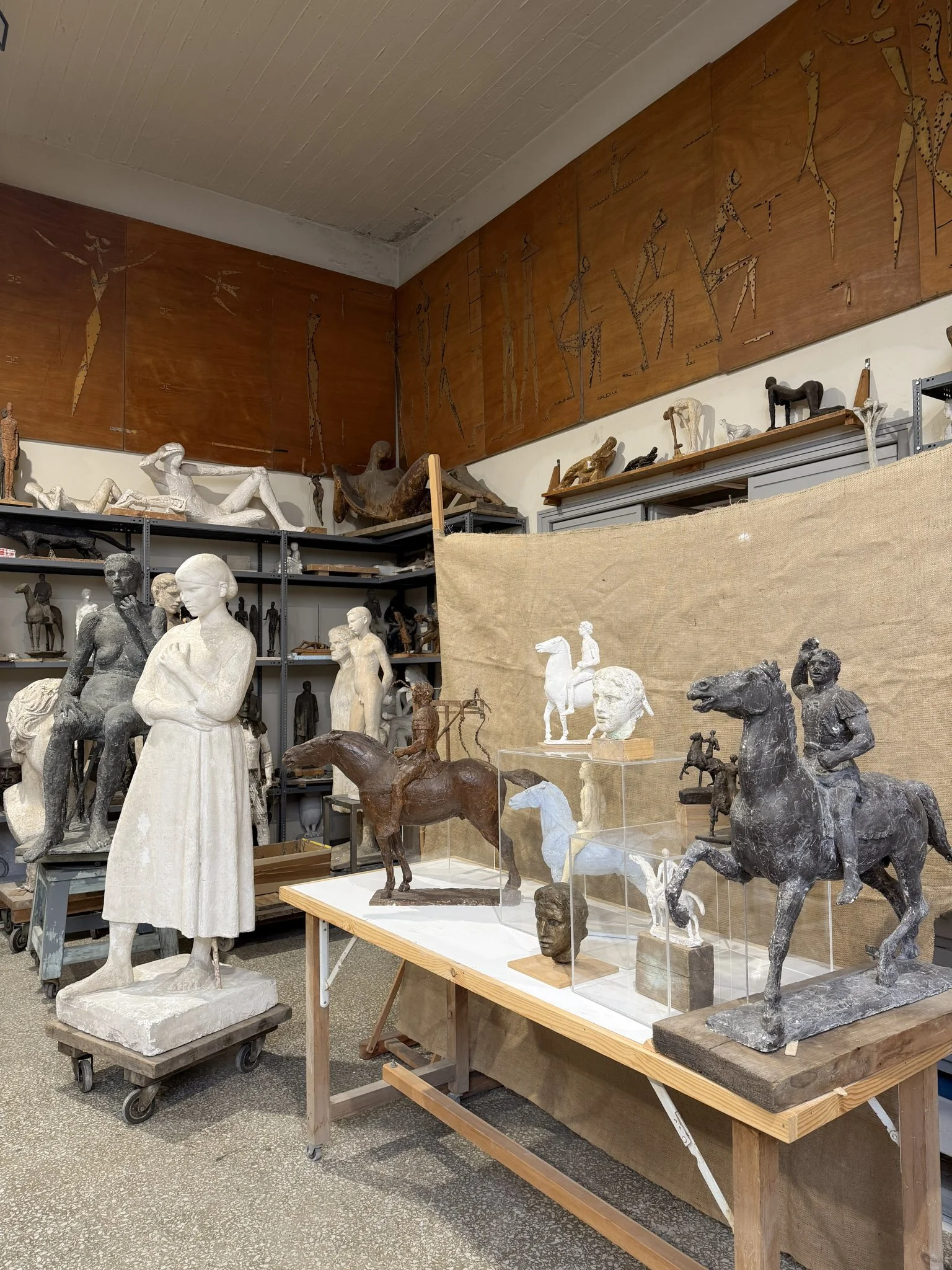
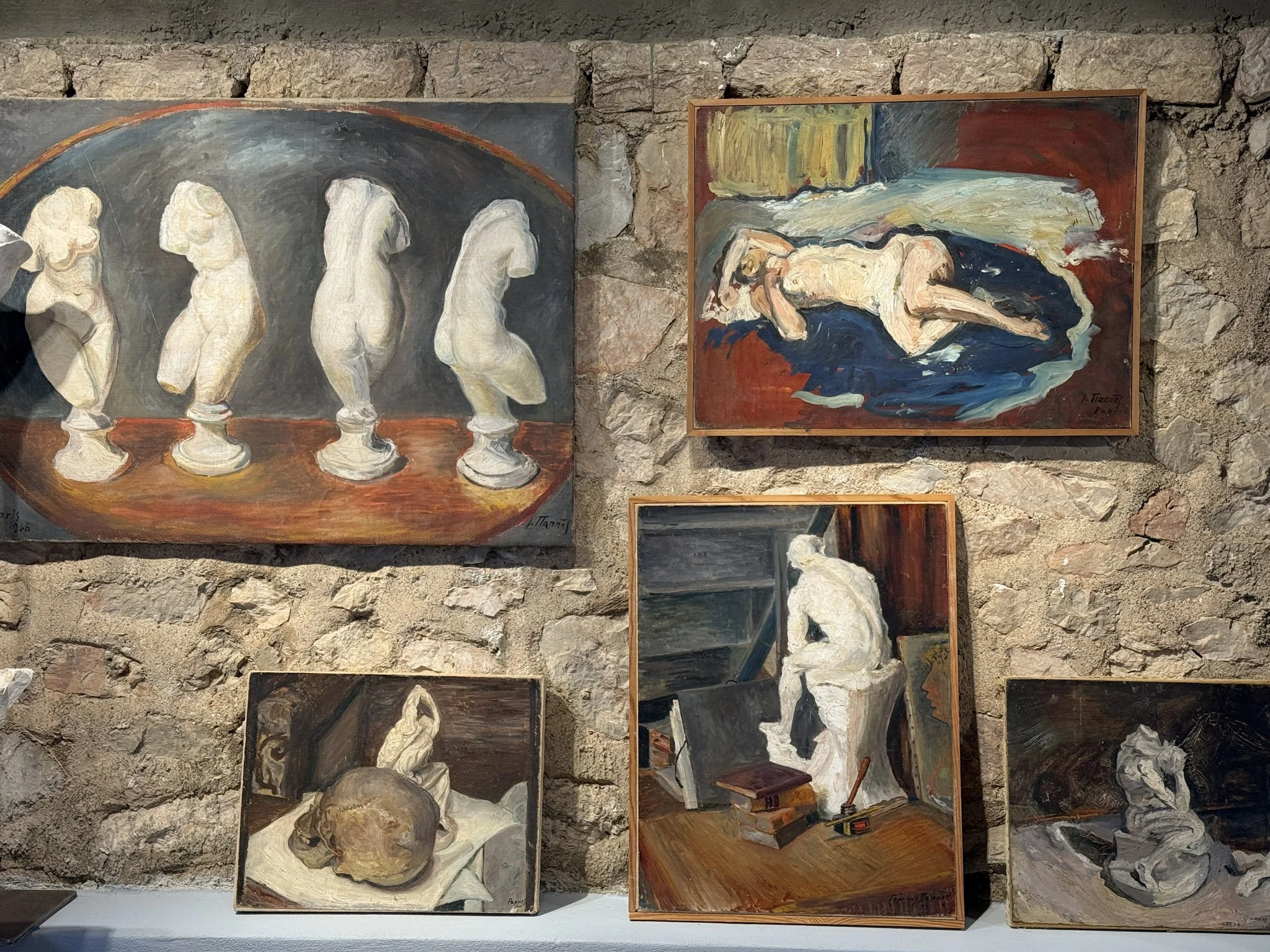
The practical approach is to plan outdoor sites on the sunny days and save museums for the rain. Athens has enough excellent indoor options that a rainy day does not feel like a wasted one. I spent ours at the Yannis Pappas Studio and Archeological Museum, which turned out to be one of the best days of the trip.
Mid to late February is safer than early February for weather. If you have flexibility in your dates, it is worth waiting for the second half of the month.
Athens sites without the crowds
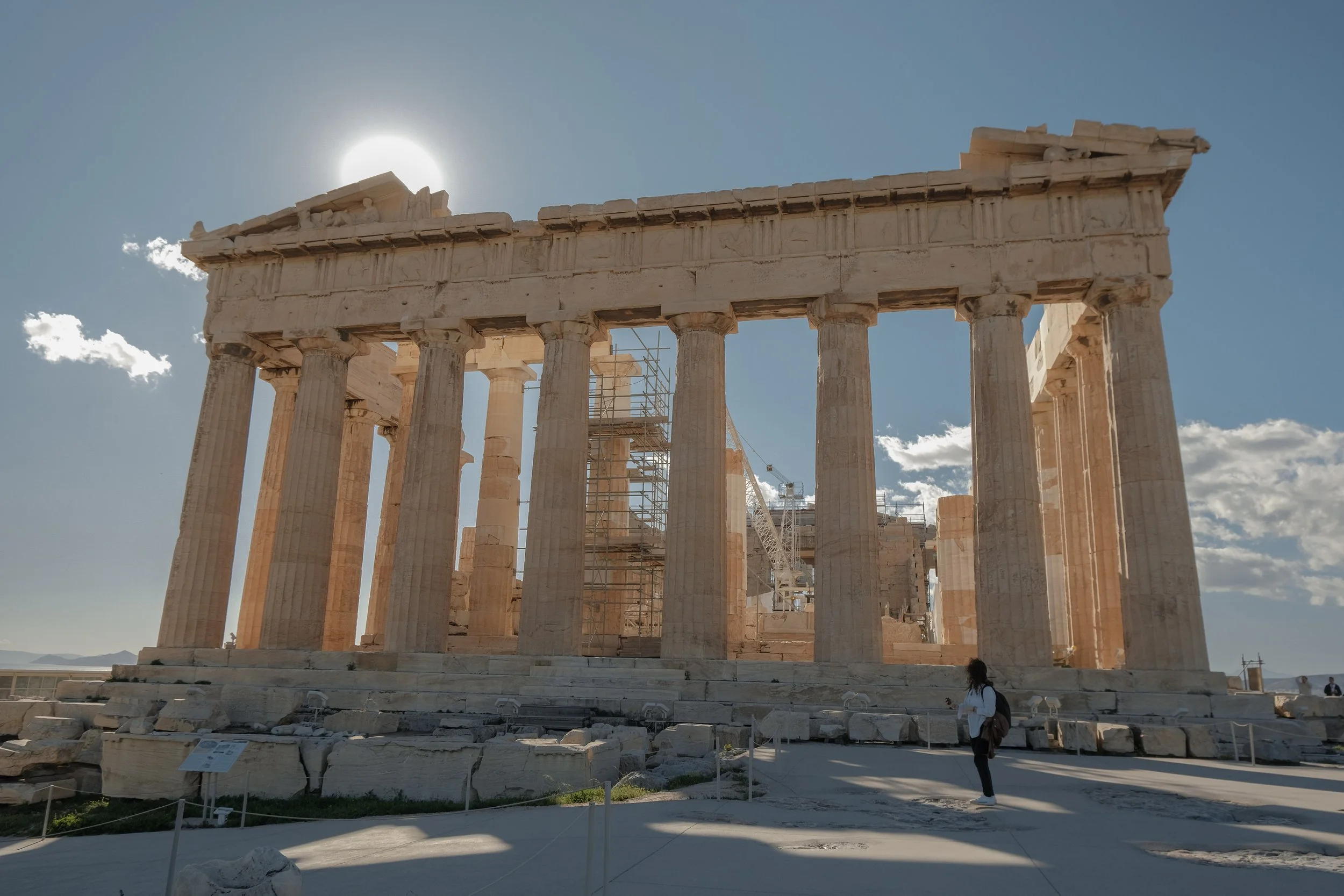
Acropolis
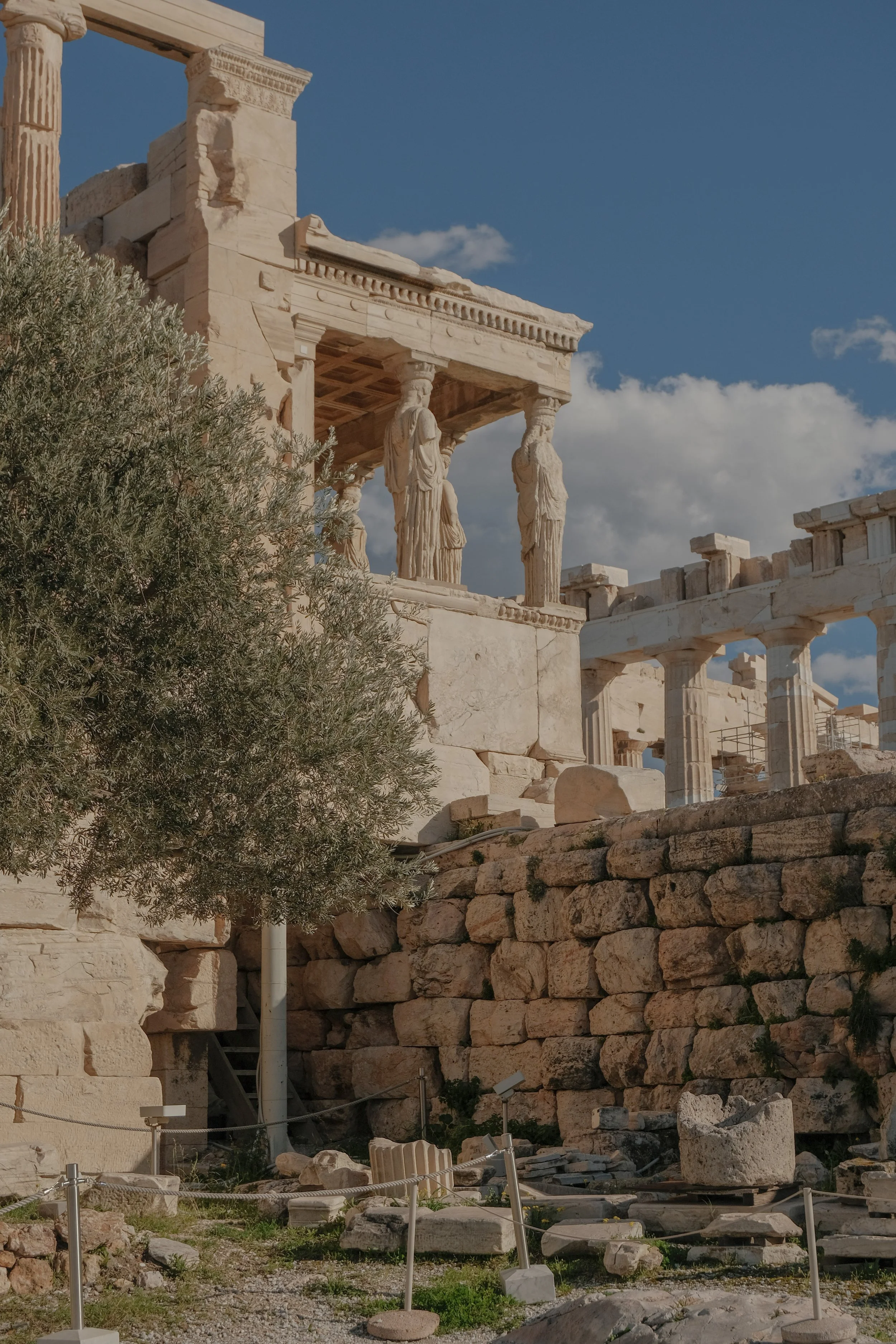
The Acropolis in February is a different experience from the Acropolis in summer, and not just because of the temperature. We walked straight in, took our time at every point, and could stand in front of the Erechtheion and the Caryatids without feeling rushed or hemmed in. There was space to actually think about what we were looking at.
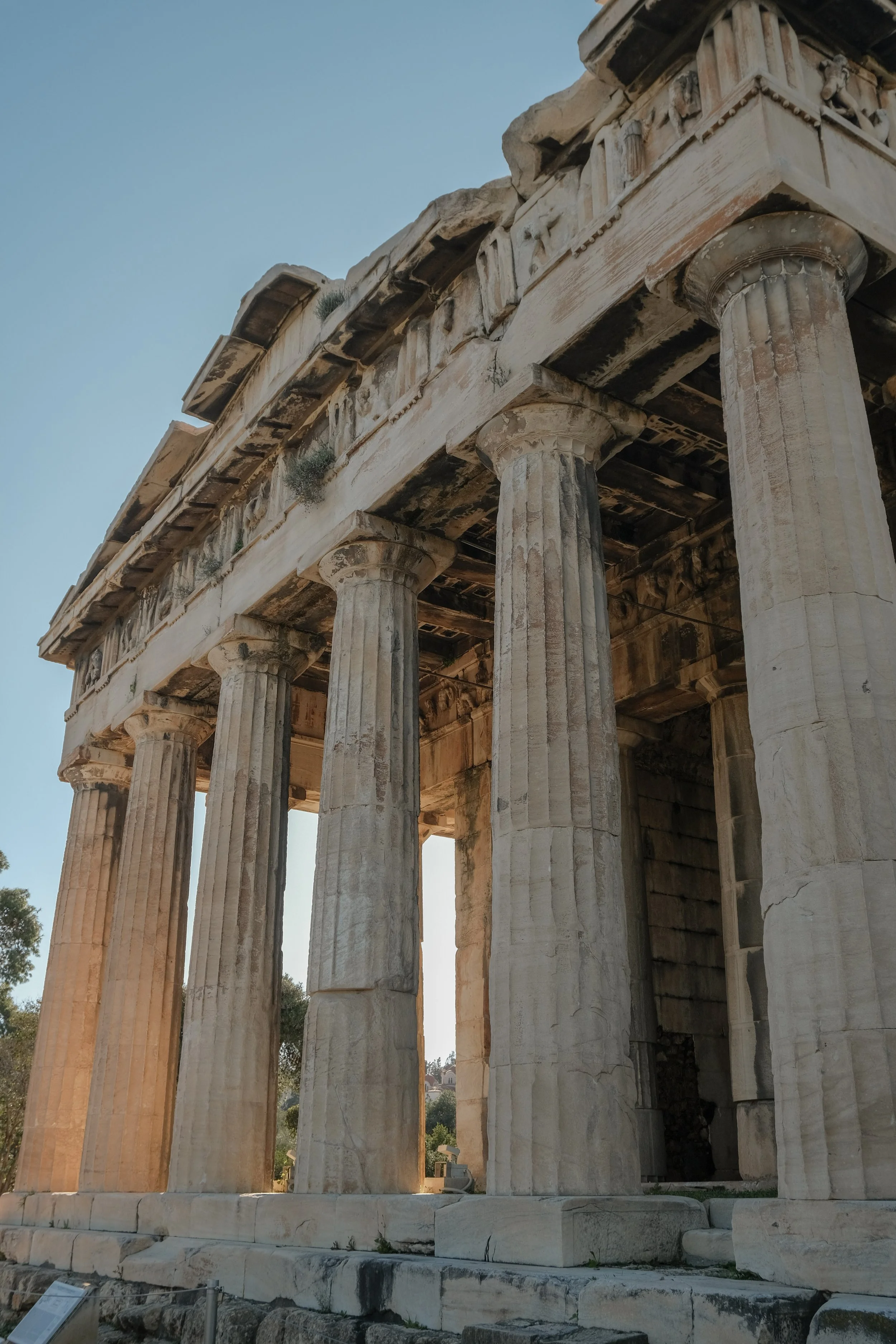
Ancient Agora
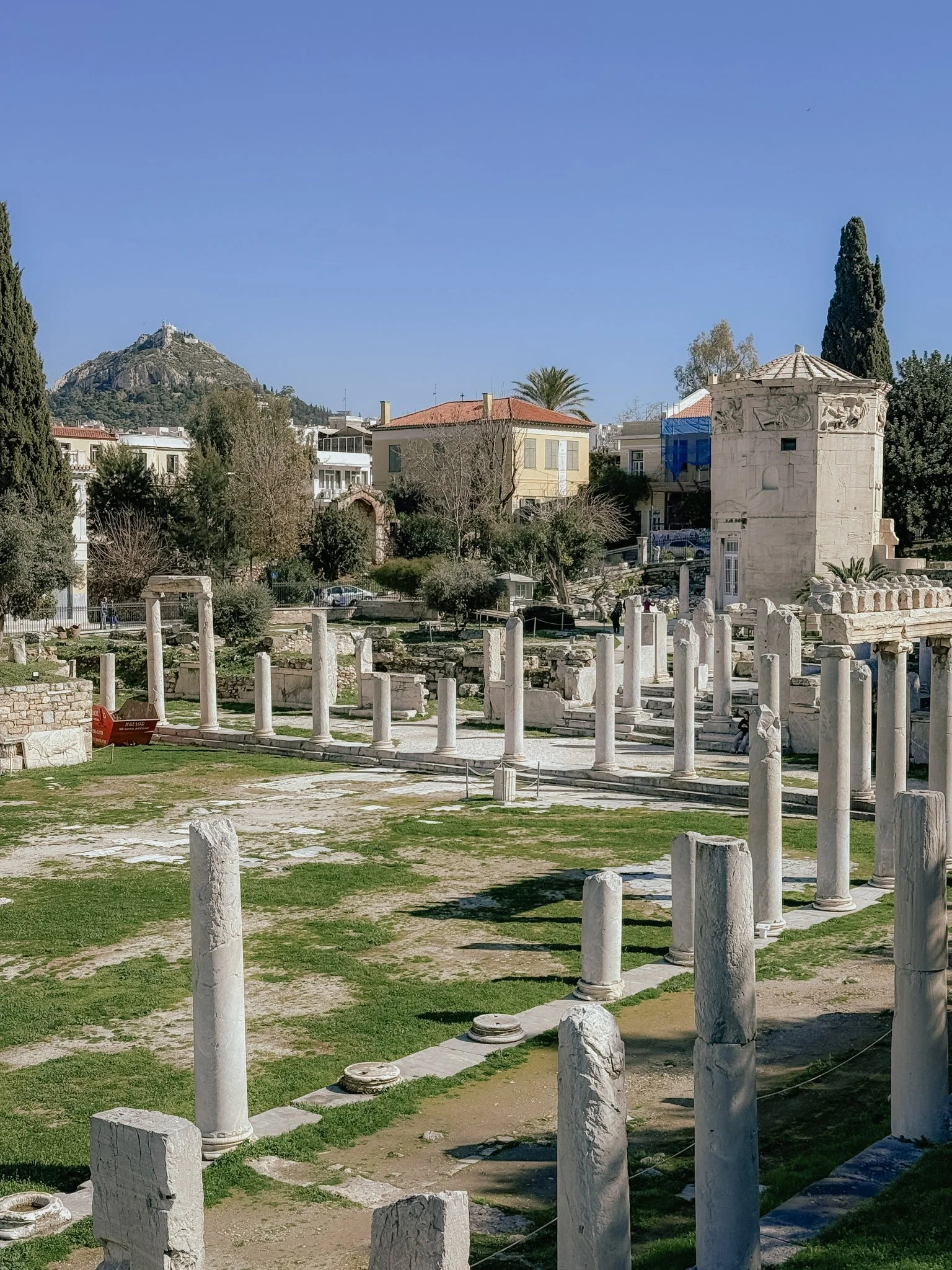
The Ancient Agora was the same. We visited twice, once briefly in the morning when we spotted a long queue and decided to come back in the afternoon, and the second time we walked straight in. It is a beautiful site to wander, with the remarkably intact Temple of Hephaestus sitting above the excavations and views up toward the Acropolis from almost every angle. Socrates taught here. Athenian democracy was conducted here. It rewards slow, unrushed visits.
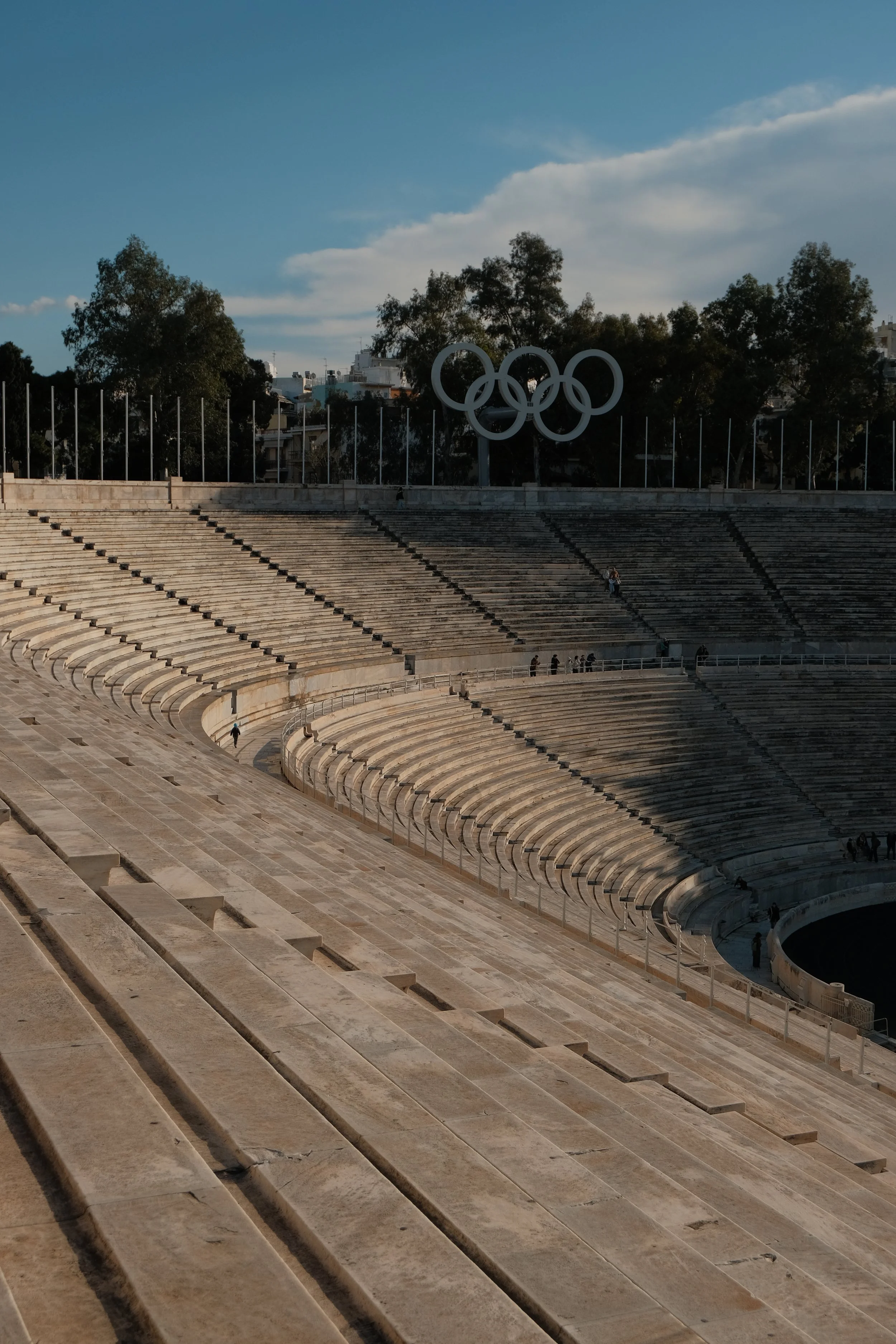

Panathenaic Stadium
We spent an afternoon at the Panathenaic Stadium, sitting on the smooth Pentelic marble steps with the sun dropping slowly behind the Acropolis in the distance. We had the place almost entirely to ourselves.
Anafiotika
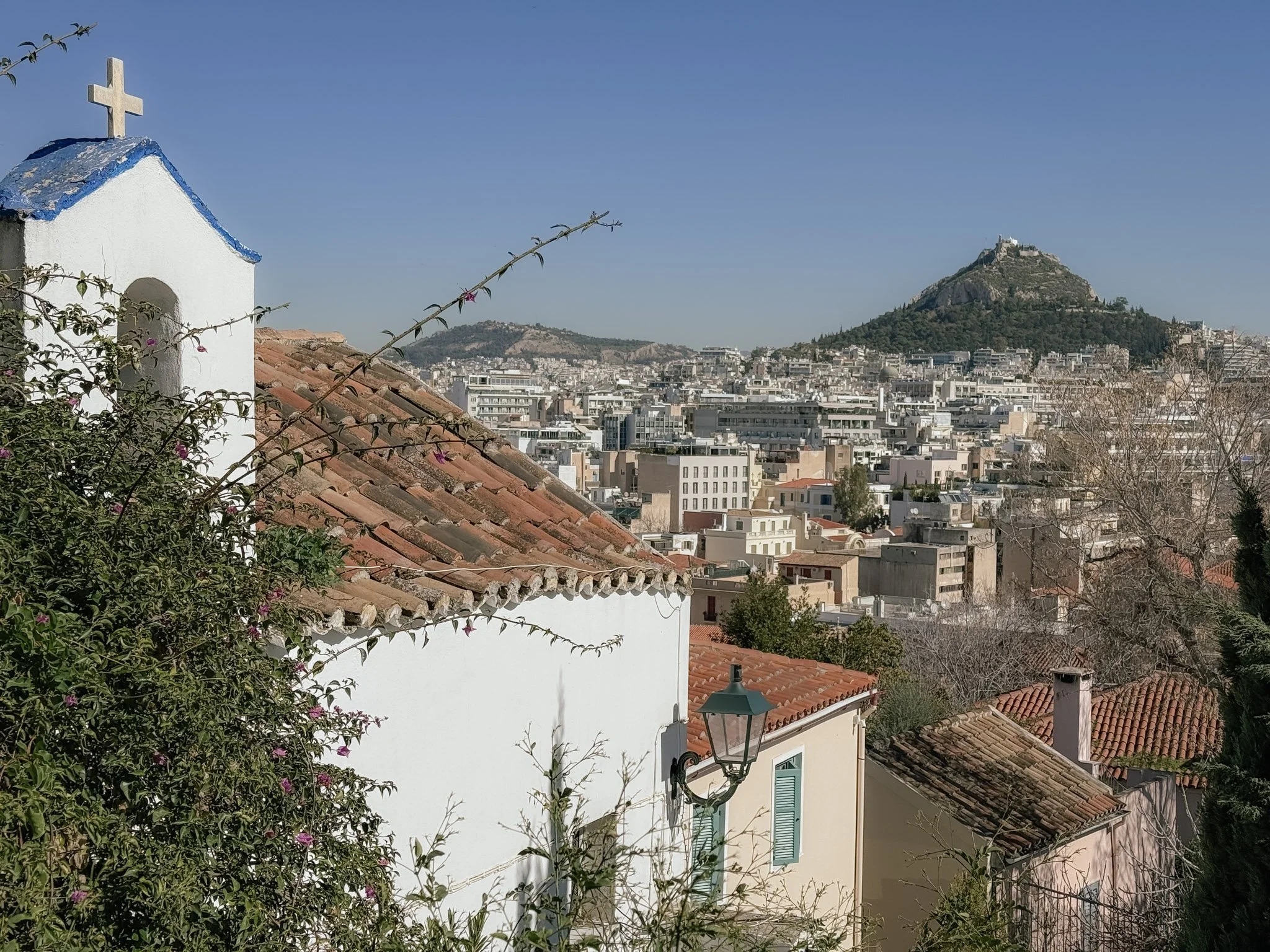
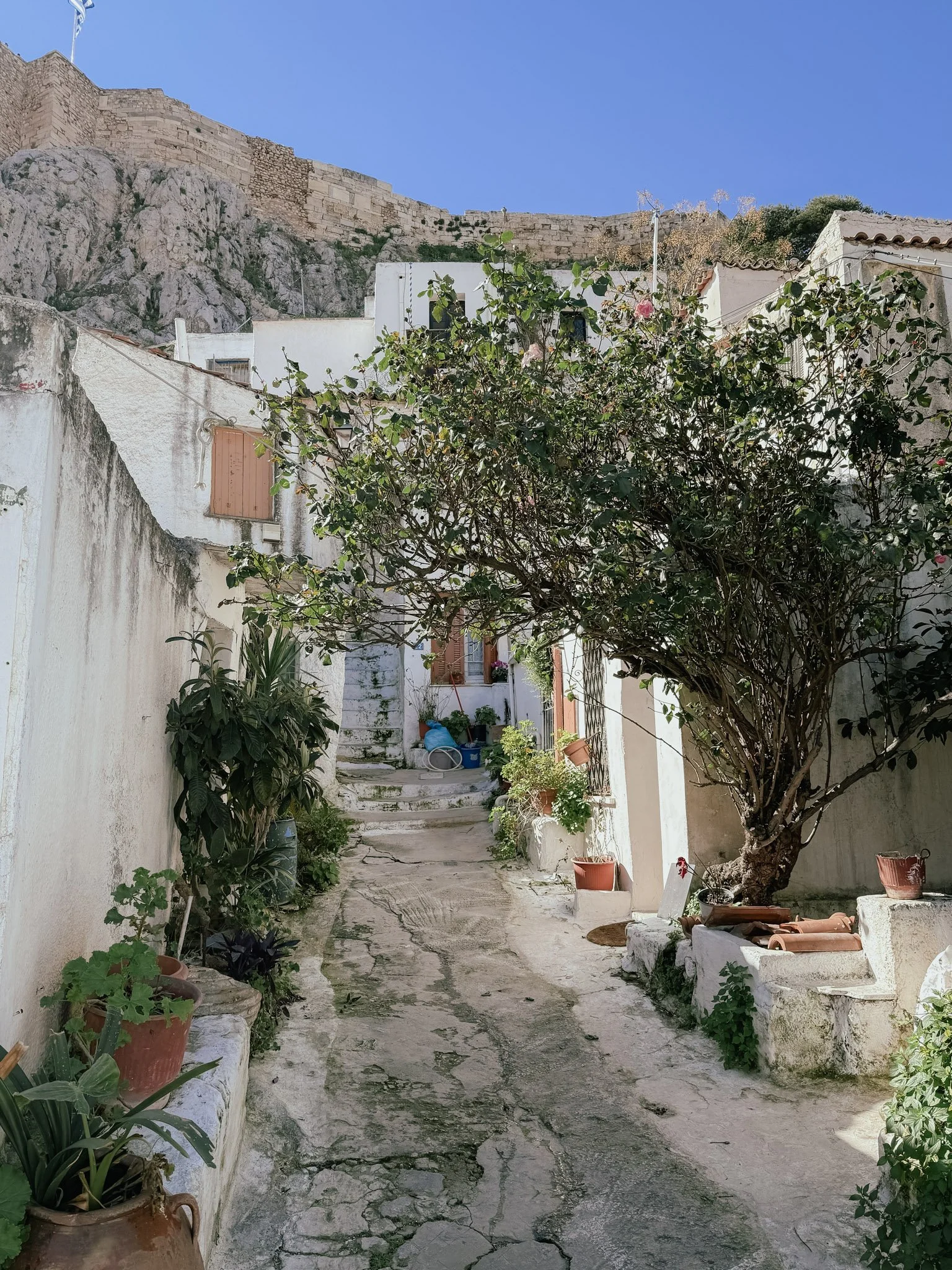
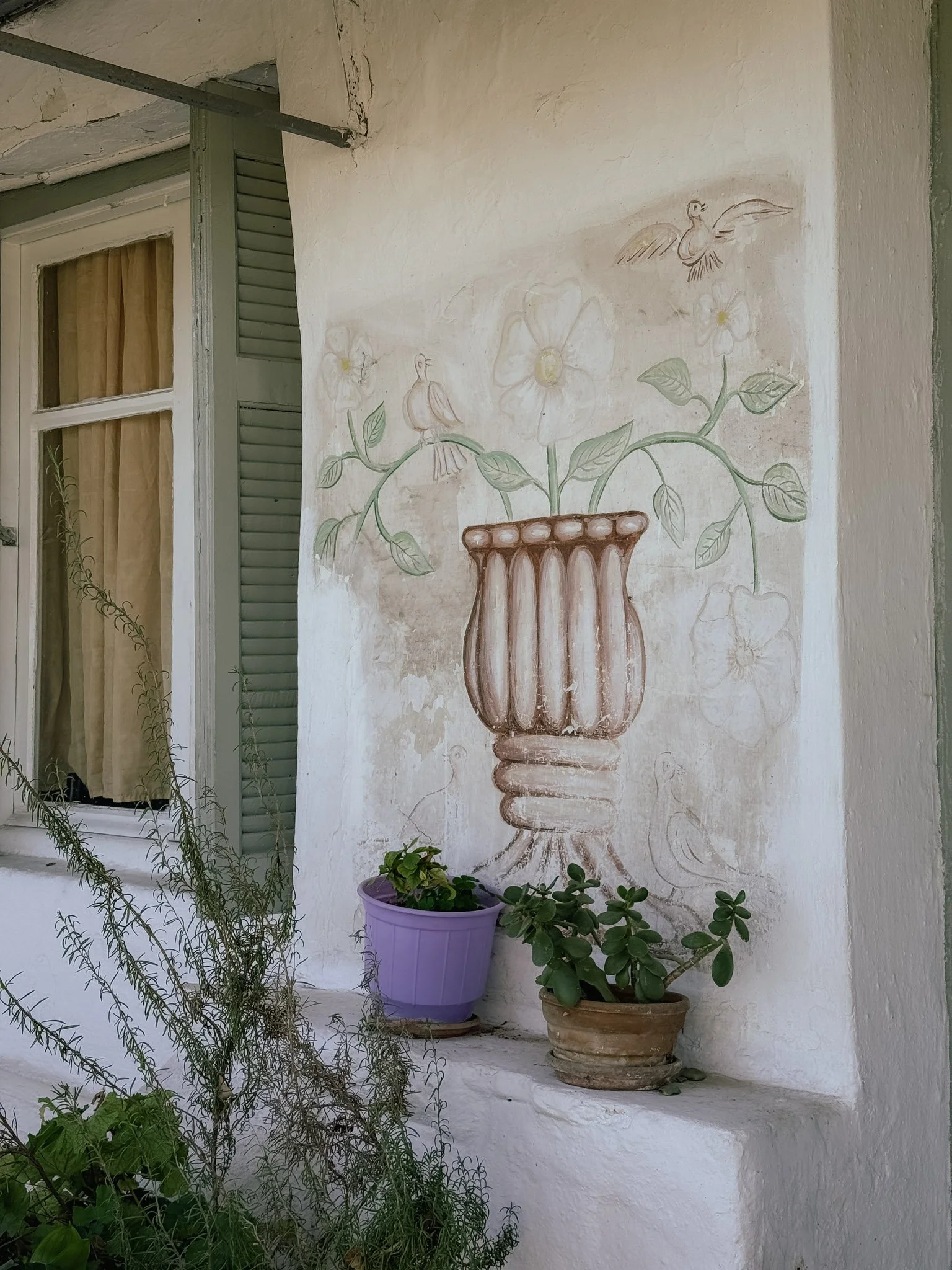
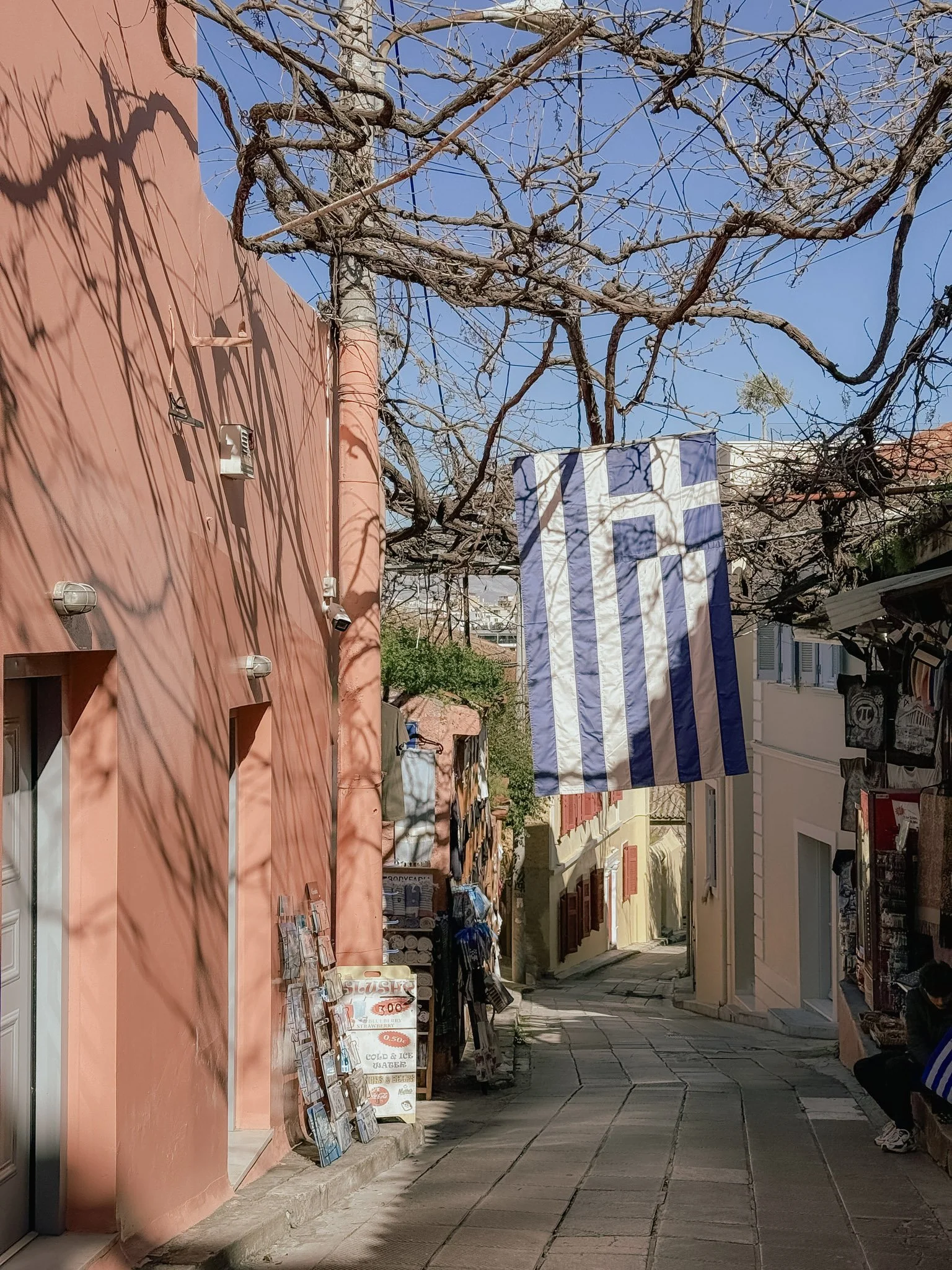
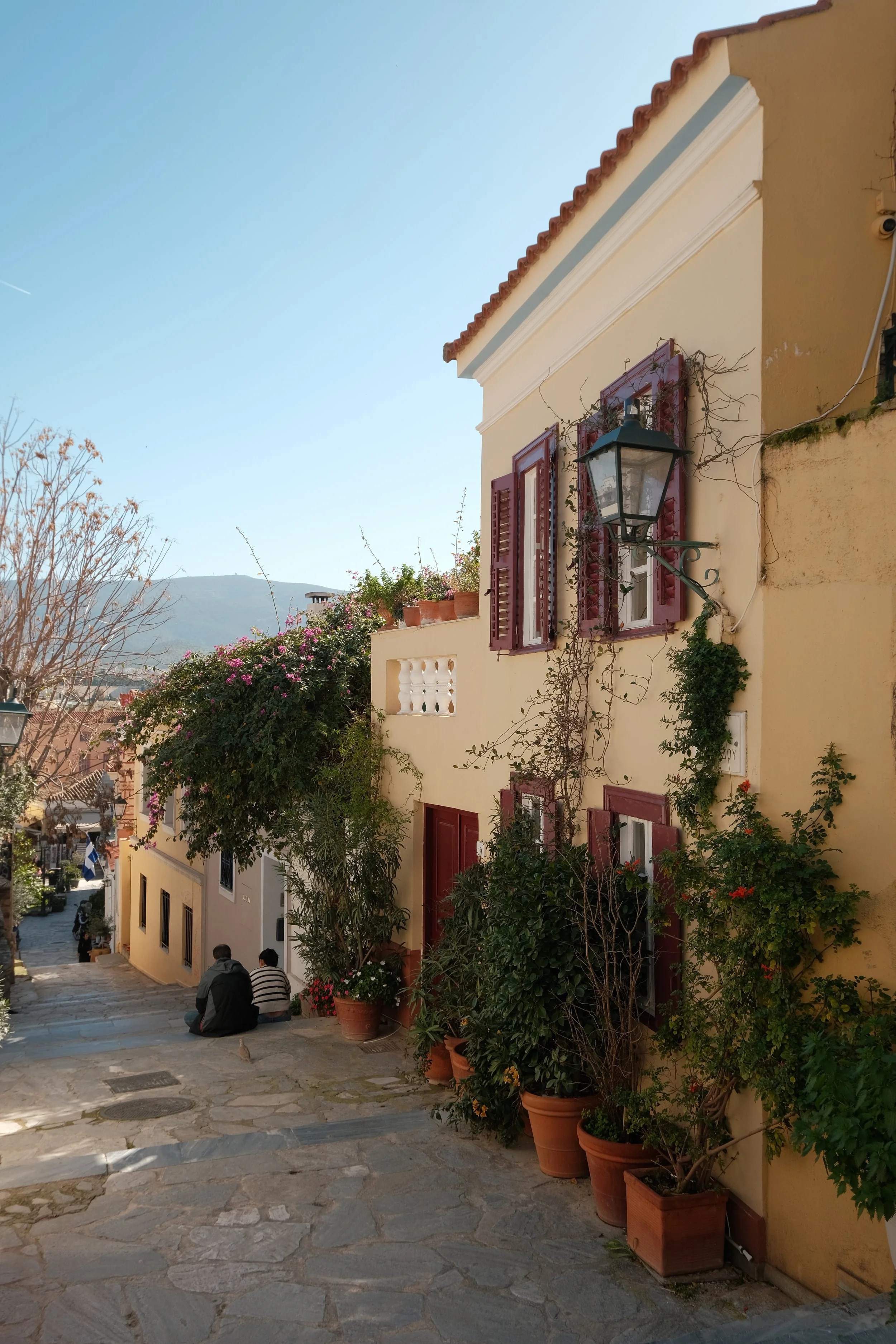
Anafiotika, just above Plaka, was quiet enough on a February morning that we barely crossed paths with anyone. That matters in a neighbourhood of 45 houses with lanes barely wide enough for two people. Read more about Anafiotika here.

Advice
A couple of practical notes worth knowing before you go. Opening hours for archaeological sites are shorter in winter, generally 8am to around 3 or 5pm rather than the summer closing time of 8pm, so it is worth checking before you plan your day. And on the first Sunday of every winter month, admission to all major sites is free. We missed it by a single day, which was a genuine blow, as site admission adds up quickly. If your dates are flexible, it is worth planning around.
Athens museums
Winter is a good time to slow down in museums, and Athens has some excellent ones. Without the pressure of heat pushing you back to your accommodation by mid-afternoon, there is time to actually look at things properly.
National Archeological Museum
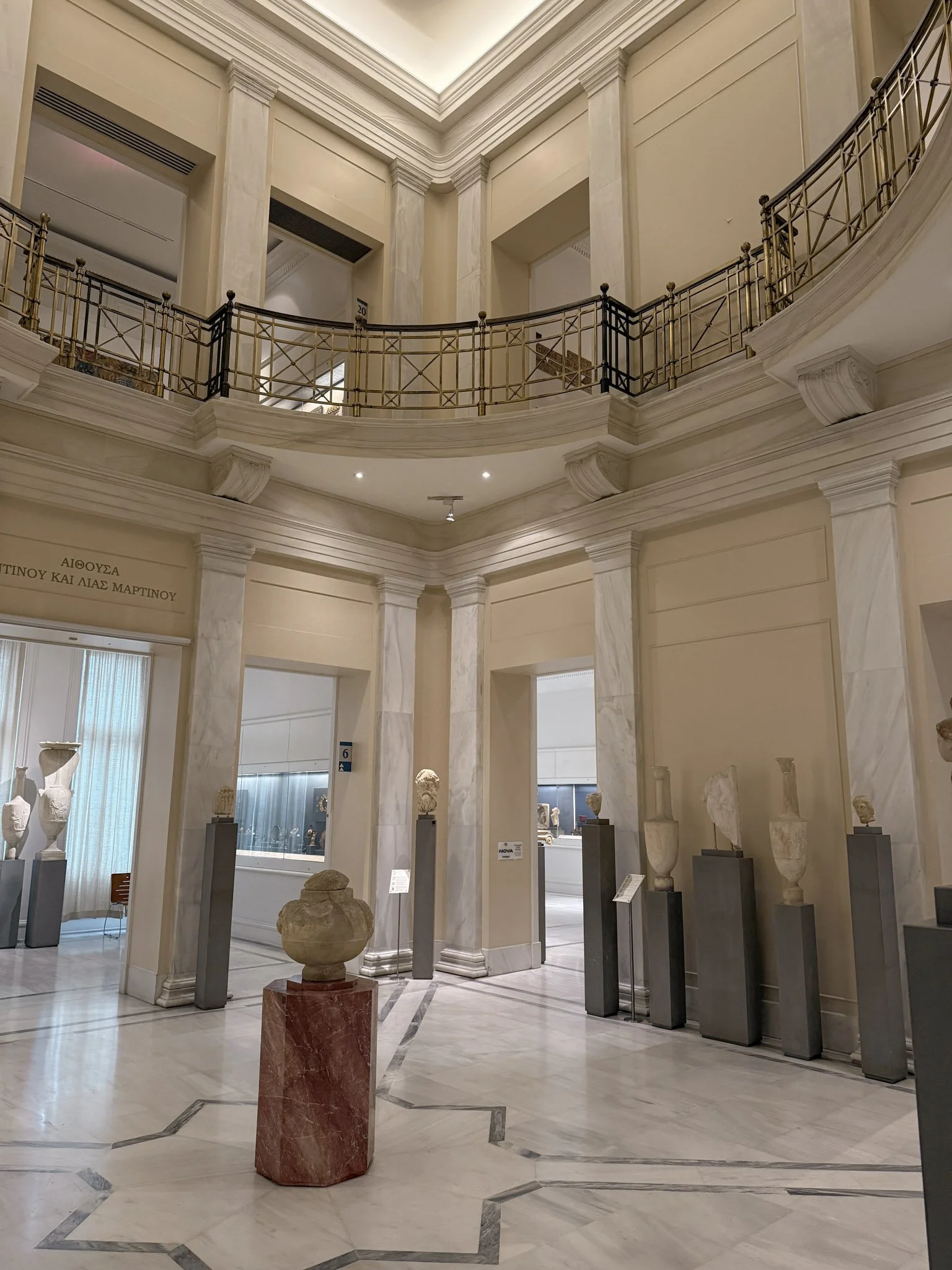
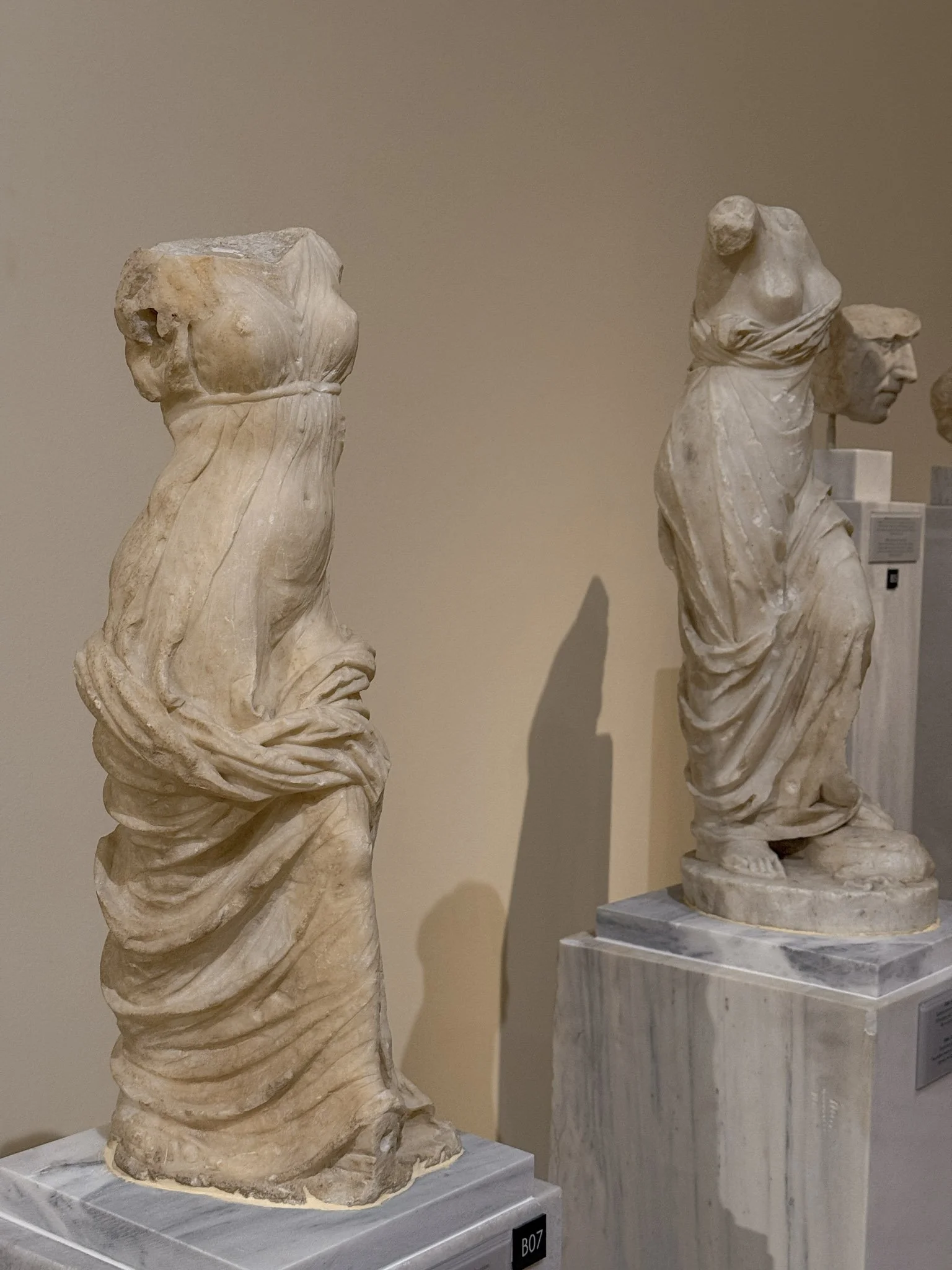
The National Archaeological Museum is vast and worth a full morning, or a Tuesday evening when it stays open until 8pm, while closing at 3:30pm on all other winter days. I found the Cycladic art and the Mycenaean gold the most compelling sections: the Mask of Agamemnon, the ancient jewellery, the small objects that tell you something about what people found beautiful thousands of years ago.

Benaki Museum of Greek Culture
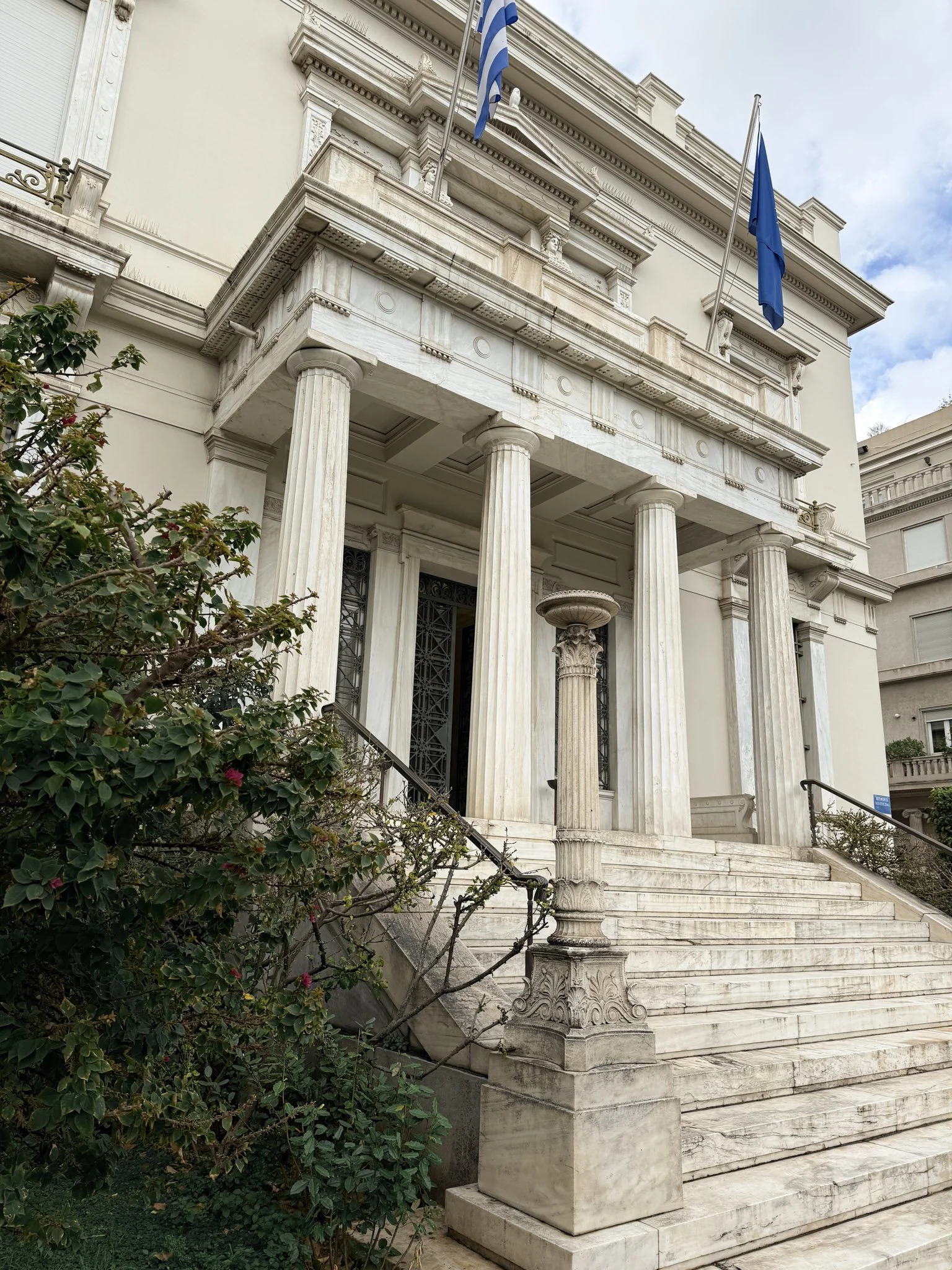
The Benaki Museum is one of the best-organised museums I visited, with a collection spanning prehistoric antiquities through to modern Greek history. Around 90 minutes is enough to see it well. There are numerous other small museum sites throughout the city, including the Museum of Islamic Art, the Byzantine and Christian Museum, and the Museum of Cycladic Art, each of which could fill a separate morning.
Alekos Fassianos Museum
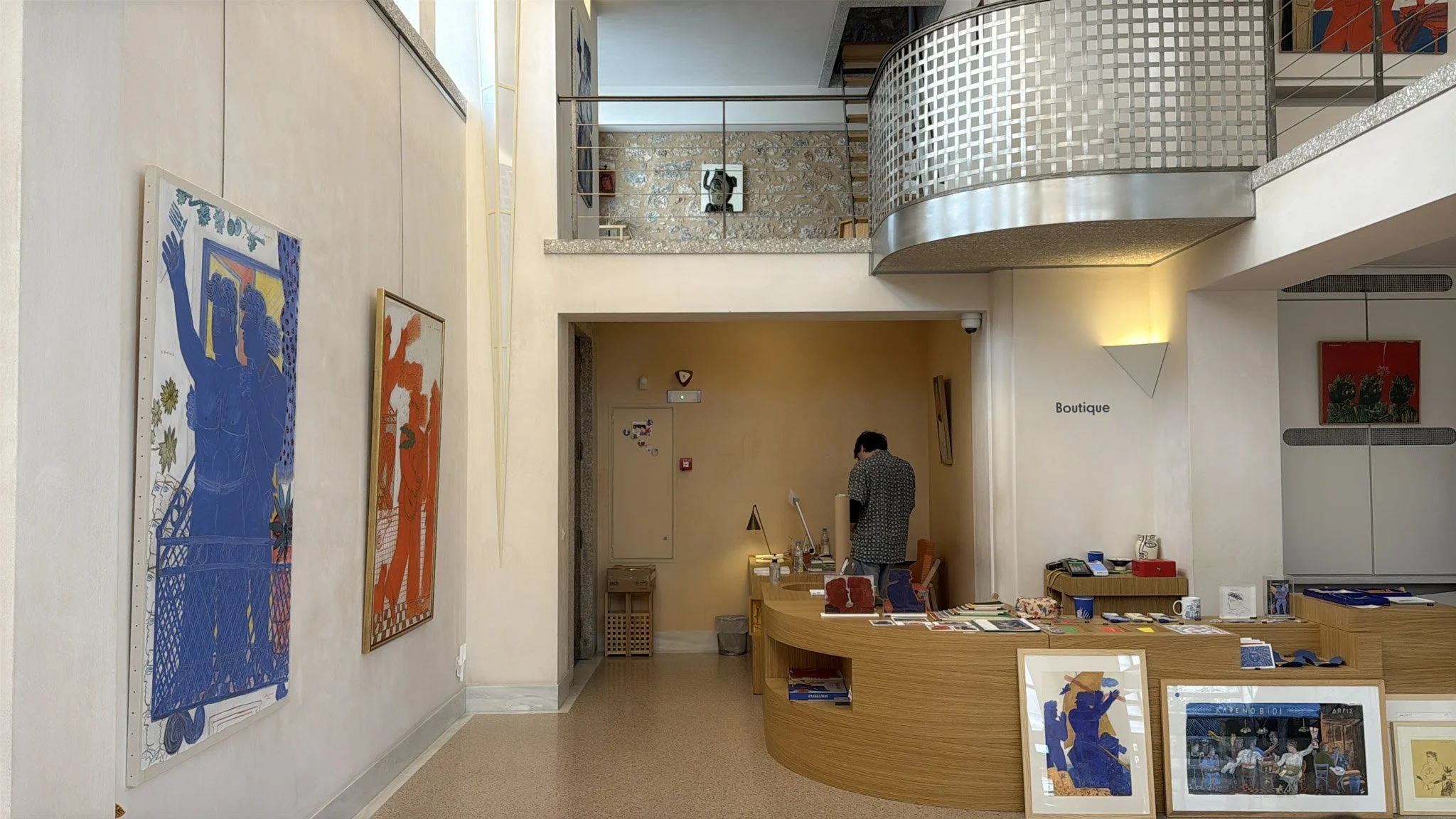
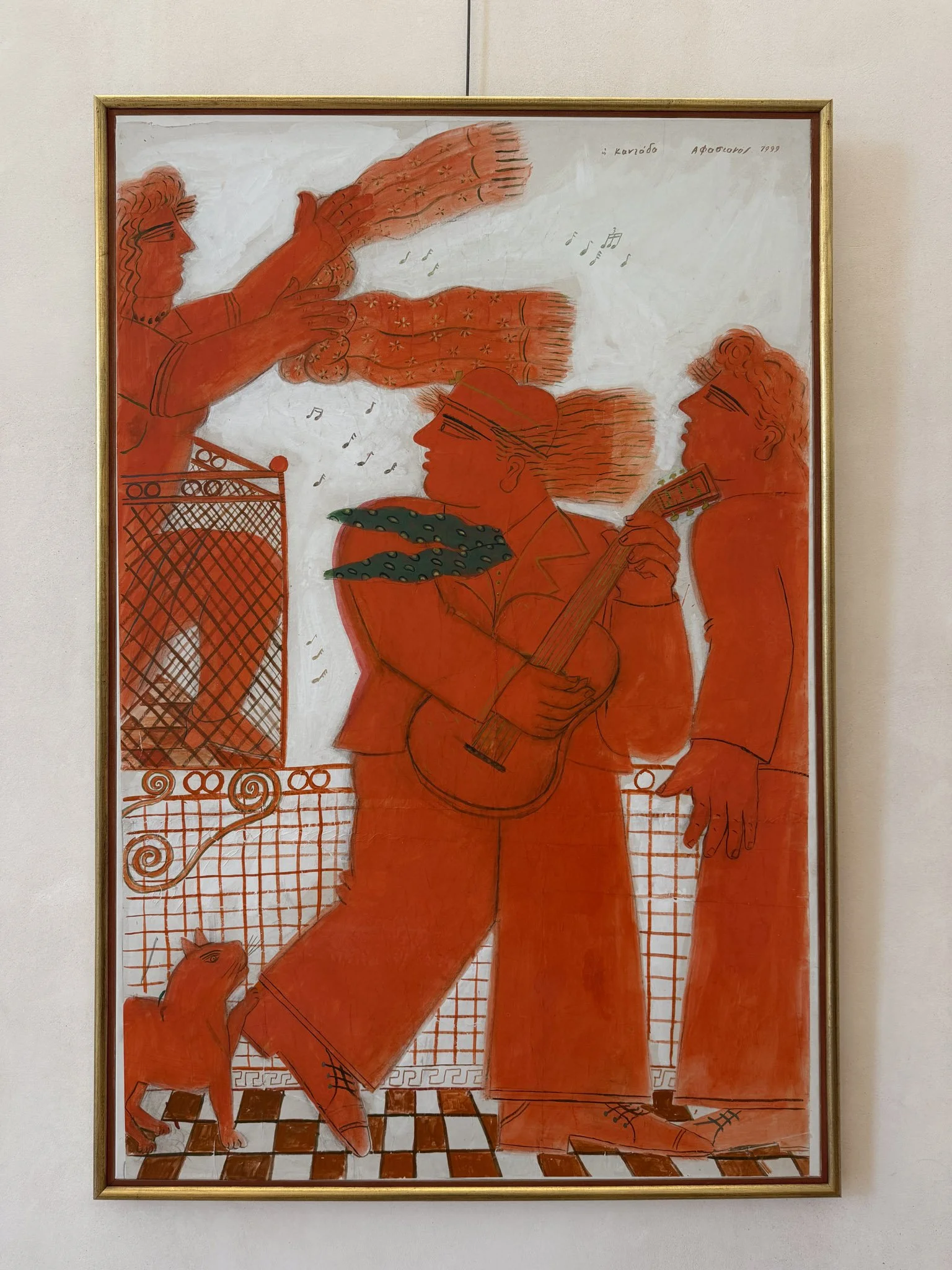
For something smaller and more personal, the Fassianos Museum was one of the highlights of the trip. Alekos Fassianos was a modern Greek painter with a very distinct style, influenced by modernism but rooted in Greek mythology and daily life. The museum is his former studio, beautifully designed and opened to the public after his death in 2022. I loved his painted furniture and the mythological references woven through everything. It is a little further from the centre but easy to reach by bus or metro.
Yannis Pappas Studio
The Yannis Pappas Studio, run by the Benaki Museum, is a free and tiny museum preserving the workspace of the Greek sculptor in the Zografou district. It is only open on certain days so check before you go, but on our very rainy day it was a worthwhile and absorbing visit.
Athens food scene
I expected the food in Athens to be good. It exceeded that by some distance. Bright flavours, generous portions, nothing fussy. Greek food in February also feels particularly right, warming without being heavy, and even the produce in the middle of winter was remarkable.
Breakfast, brunch and coffee
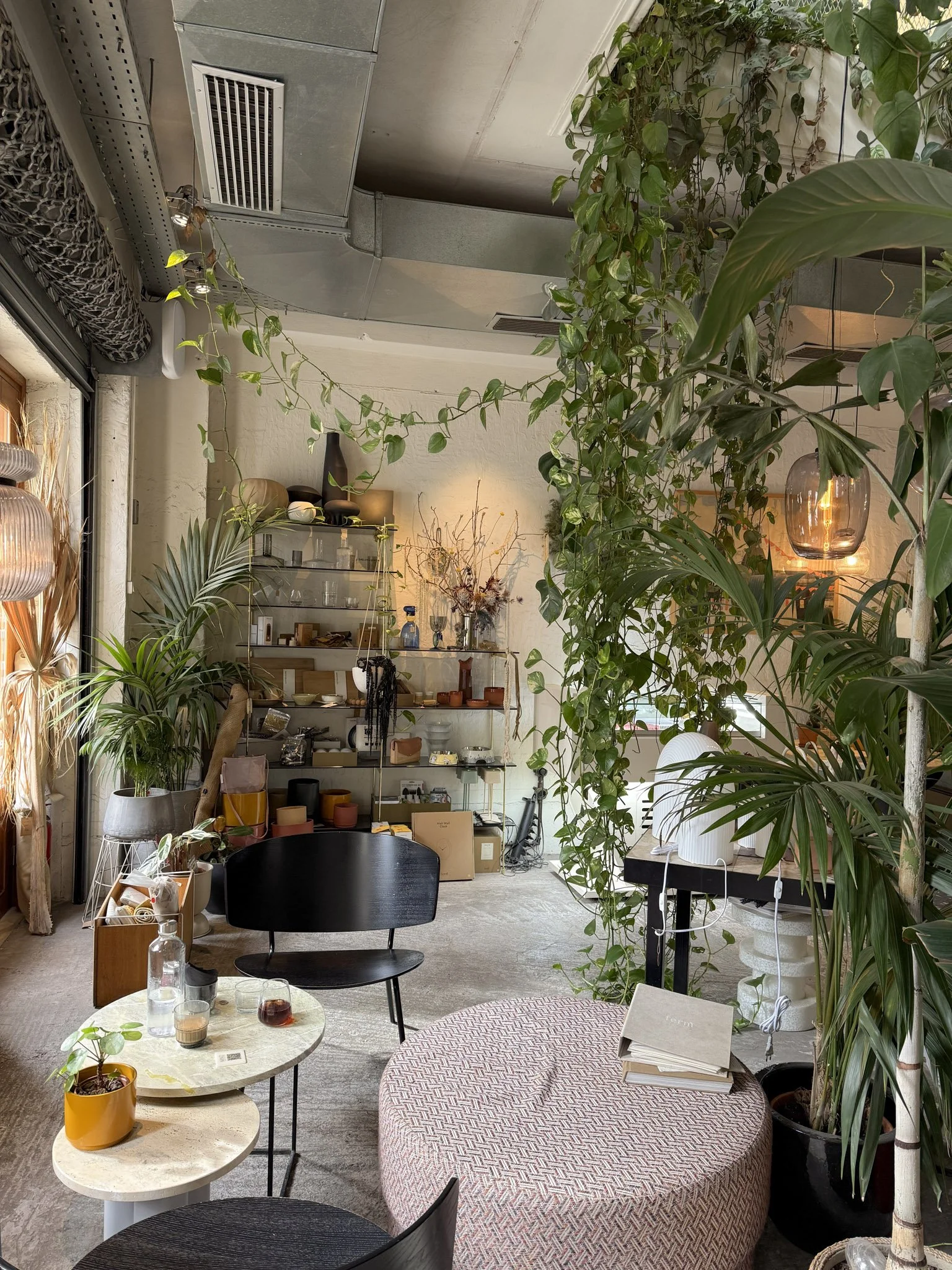
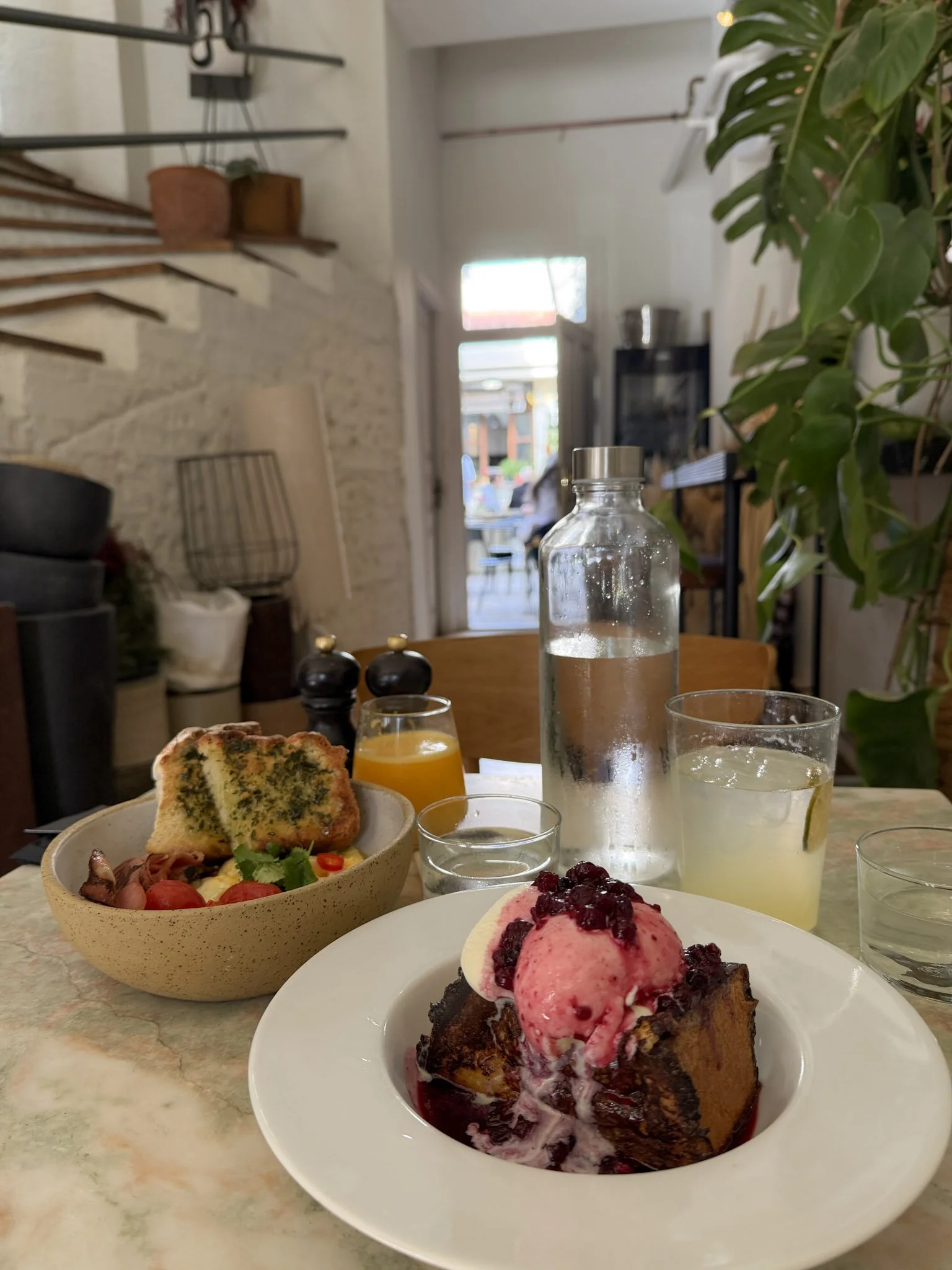
Minu is a beautiful cafe, spacious and full of greenery, and a good place to start a slow morning. I had french toast topped with ice cream and oregano bread with scrambled eggs, feta and tomatoes. It is a little pricey but the space alone makes it worth it for a relaxed start to the day.
If you are planning to walk up Lycabettus Hill, Kora Bakery is a small yellow shop nearby that makes a good stopping point beforehand. I had a brown butter white chocolate cookie that I am still thinking about, though by the end of the day the selection had thinned out considerably so go early.
Also worth knowing about: Μουρ Μουρ is a brunch spot with murals on the walls in an abstract fresco style that looks very charming, and 10am Apotheke is a minimalist concept store with a highly rated coffee shop and bakery attached, good for something a little different.
Souvlaki and quick eats
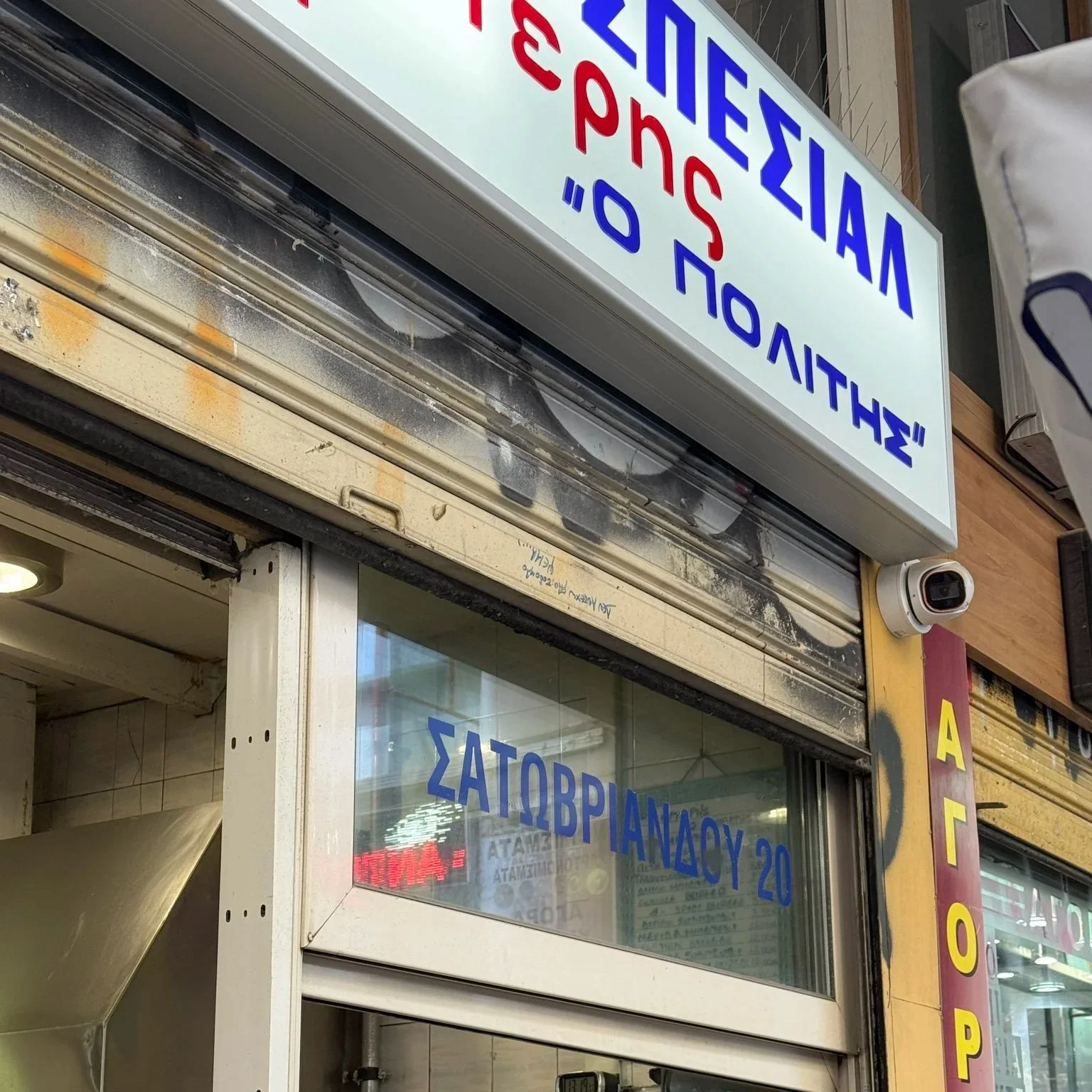
Lefteris o Politis has been open since 1951 and is patronised heavily by elderly men of the neighbourhood, which tells you everything you need to know. The beef souvlaki is phenomenal, all the flavour of the meat infused into the pita with a little heat. Go for lunch.


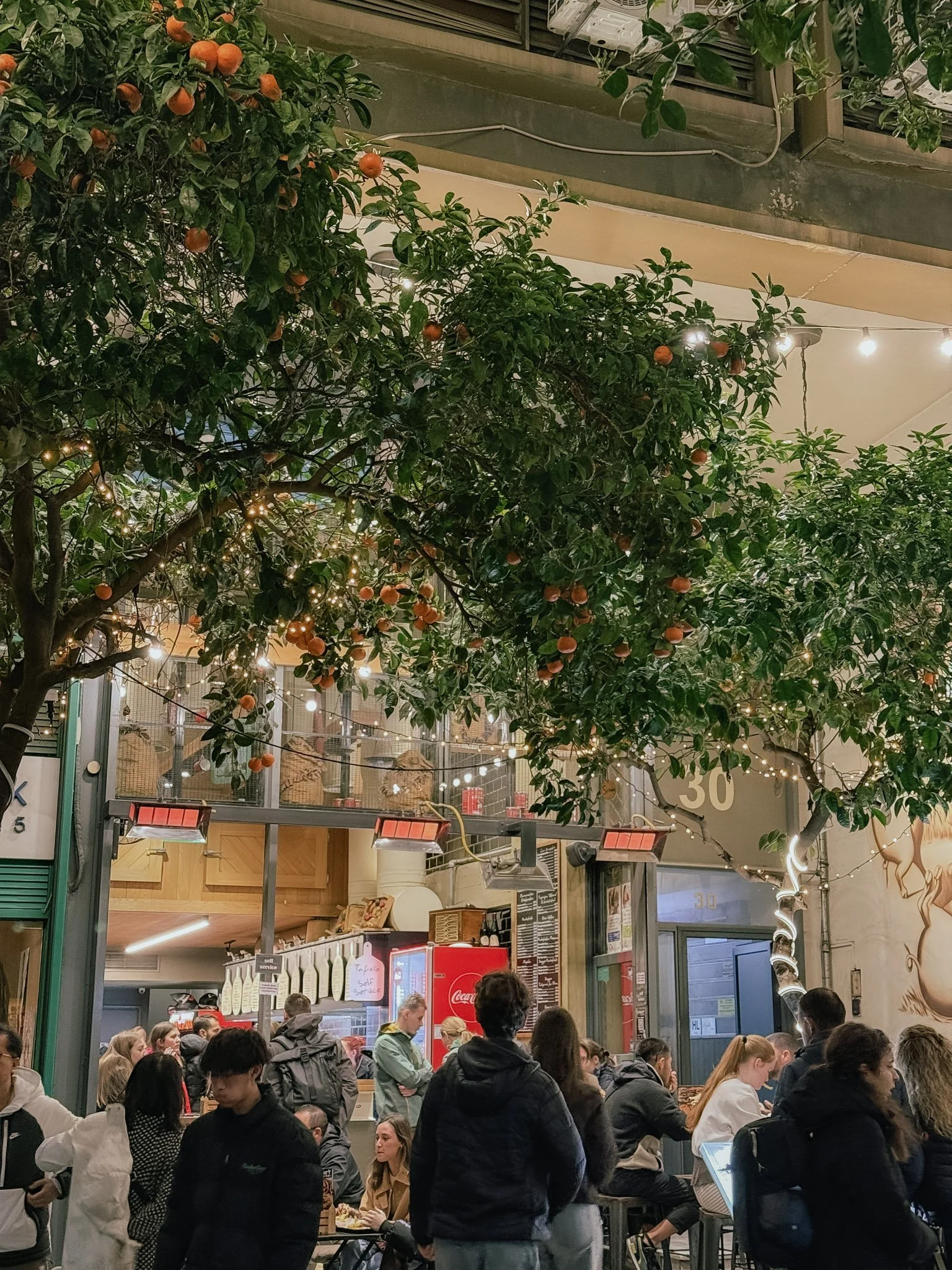
Directly afterwards, if you have any room (make some), go to Stani. It is a dairy and dessert shop a short walk away, serving Greek yogurt with walnuts and honey, loukoumades, rice pudding and ice cream. The yogurt was the best thing I ate in Athens. I had been sceptical about how extraordinary yogurt could be. It was extraordinary. They also sell their yogurt in cartons to take away, which I wished I had known sooner.
Ringo is a more modern take on souvlaki with different flavour combinations to choose from, and the meat was the most flavourful I tried across the trip. Still cheap, which feels like an achievement given the quality.
Restaurants
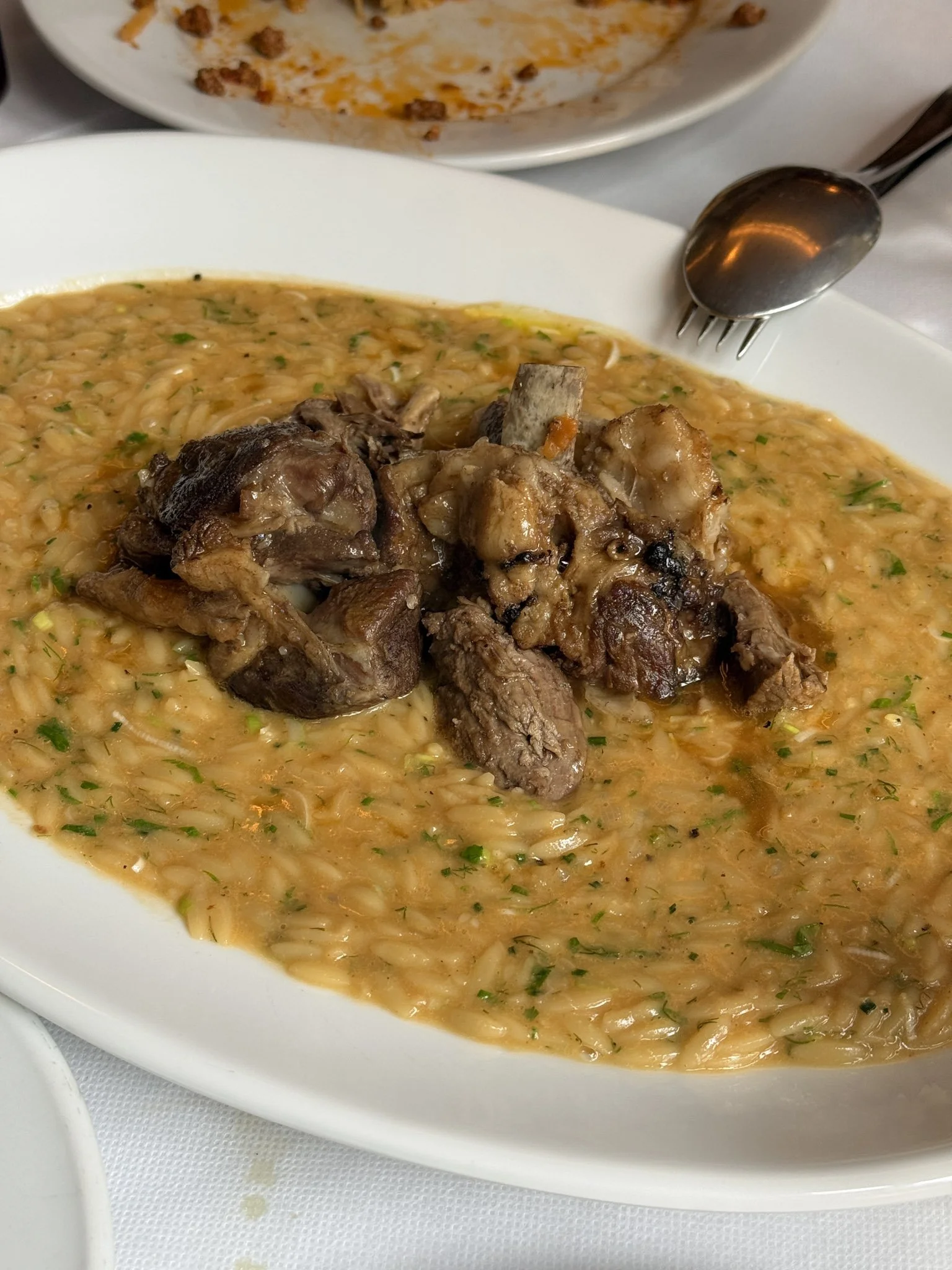
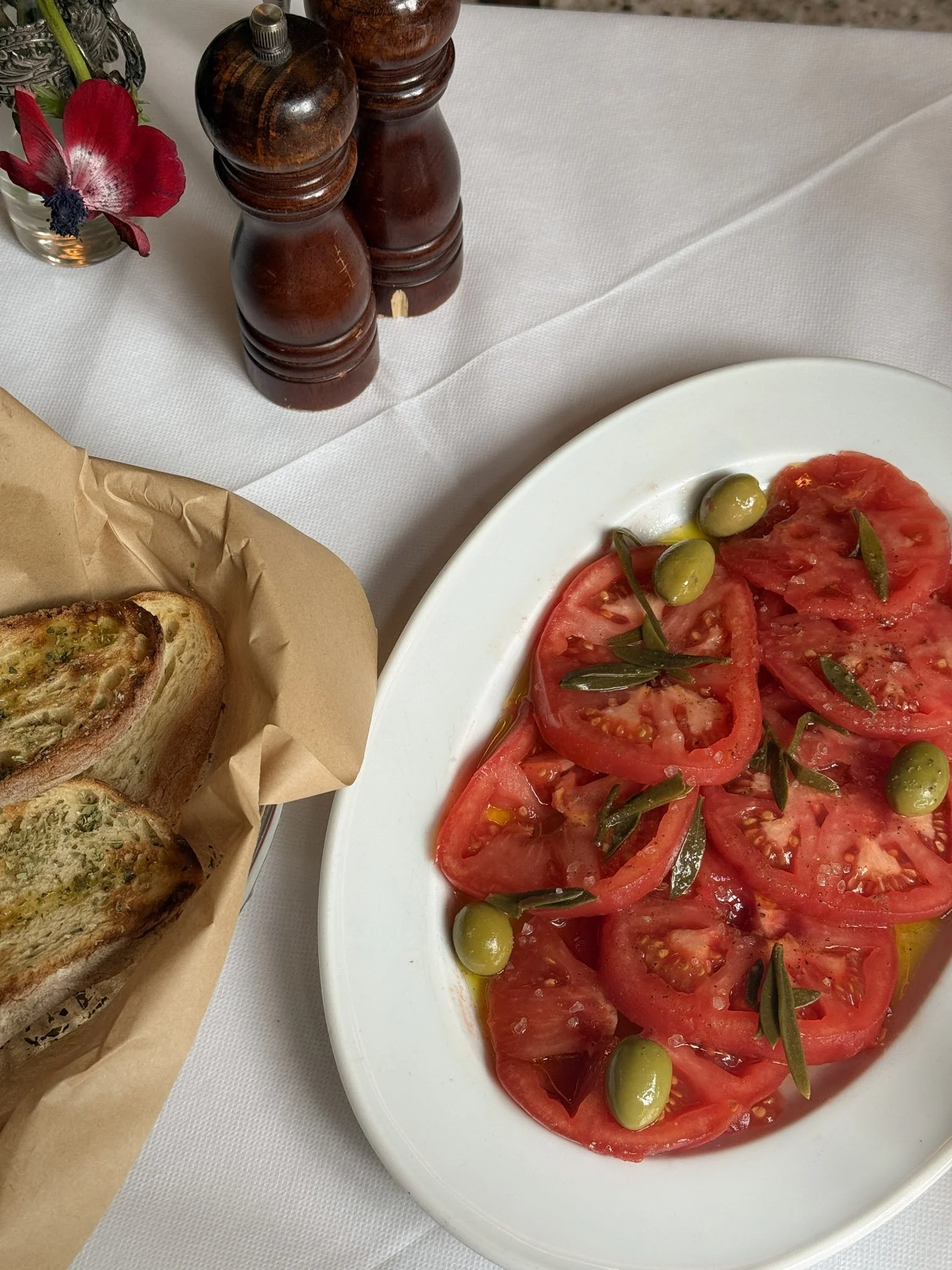
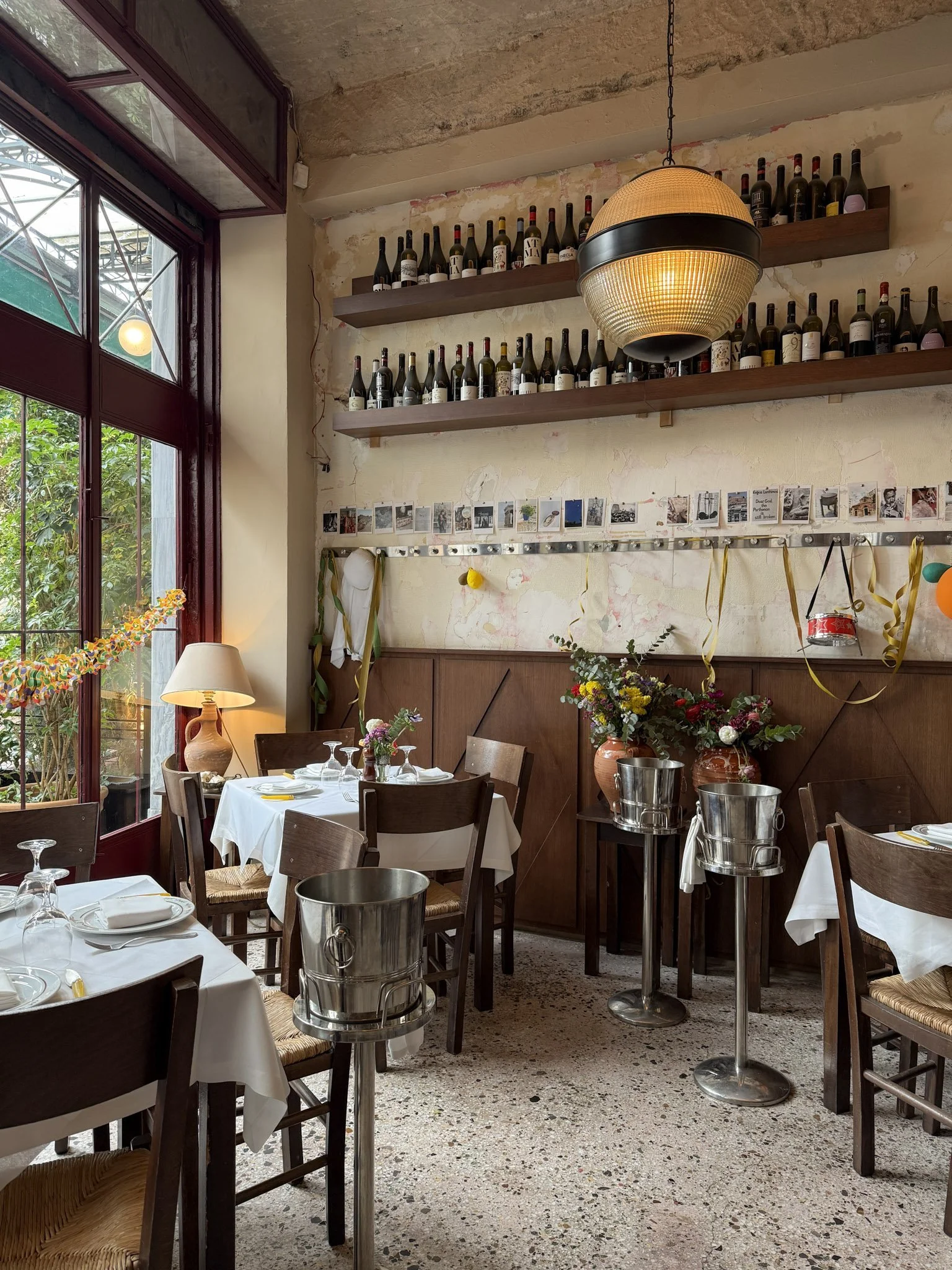
Manari Taverna is the most winter-appropriate restaurant I visited in Athens. It has an open fire grill, a vintage feel, old Greek songs playing, and some seats positioned directly in front of the flames. Book ahead, particularly for the evening. The tomato salad with olives and samphire, simply salted and dressed with olive oil, was the most flavourful tomato I have ever eaten. The fried courgette and aubergine with yogurt dip was simple and excellent. The mutton giouvetsi was reimagined with a bright, herby, lemony flavour profile that divided opinion at the table but has stayed with me since. Stick to their more distinctive dishes rather than the pastitsio, which you can get anywhere.
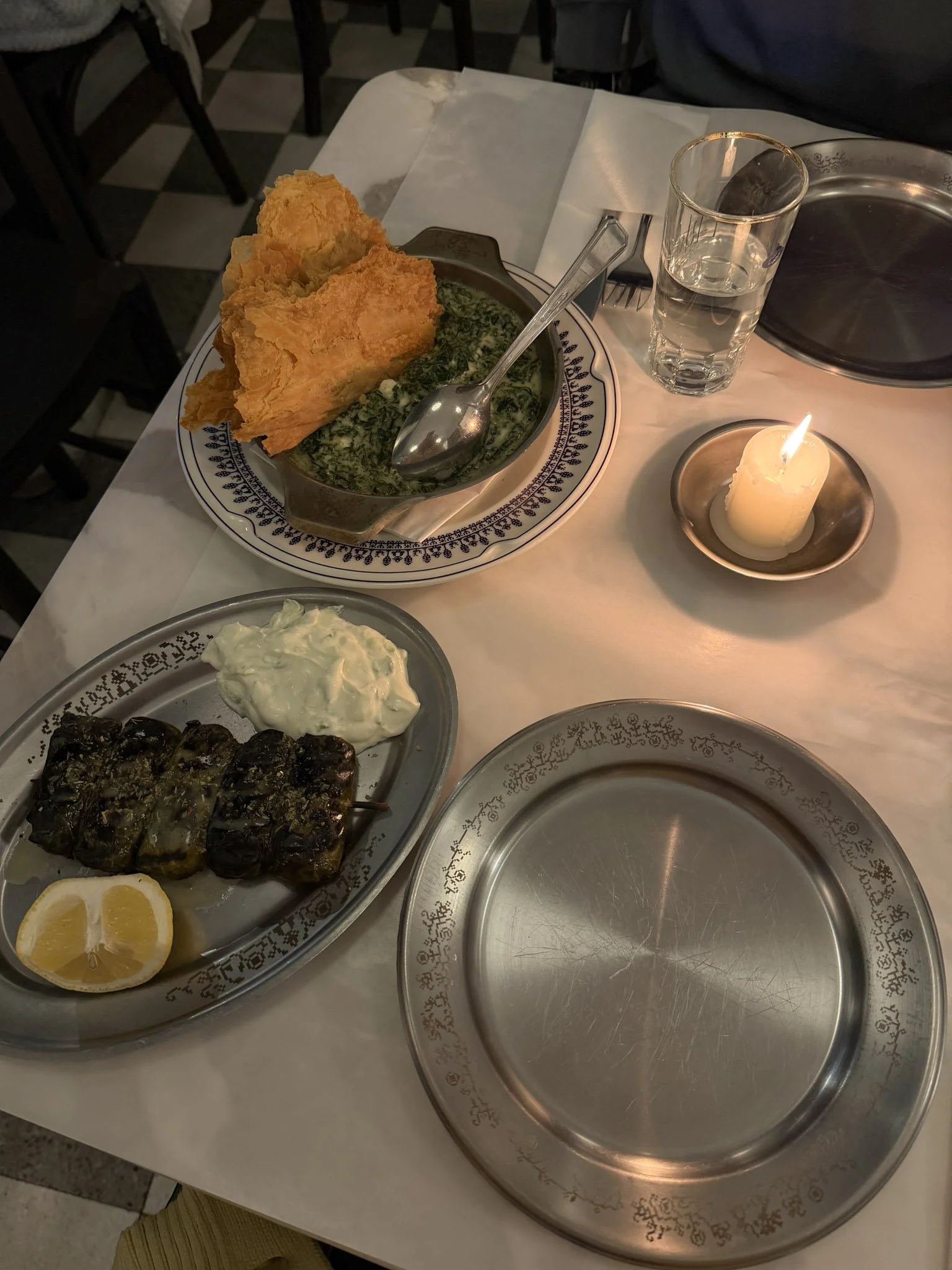
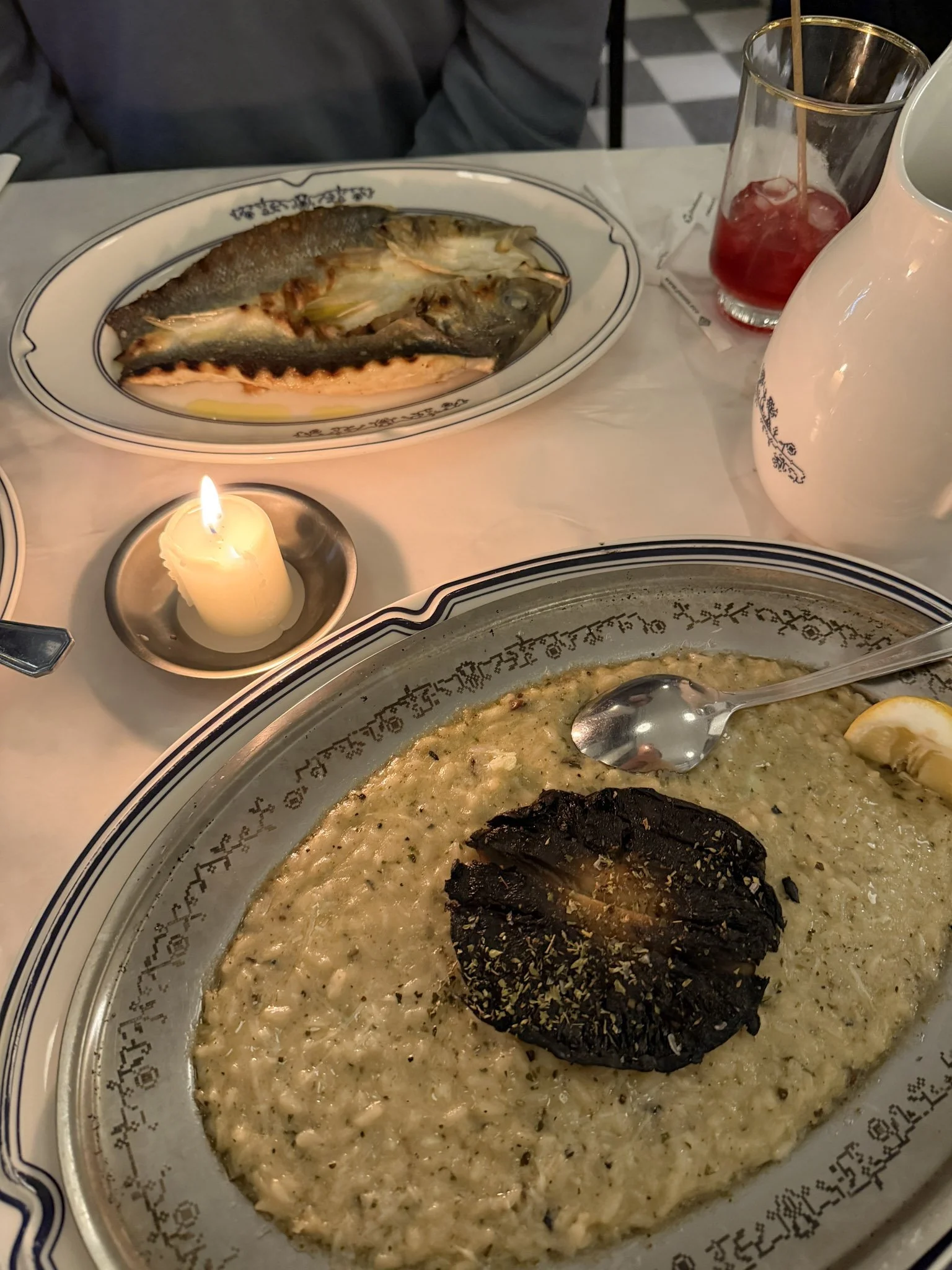
Taverna Ermou was the most consistently delicious meal of the trip, and better than I expected given its slightly more upscale feel. Grilled vine leaves, a spinach dip with filo that tasted like a deconstructed spanakopita, a butterflied sea bass with lemon olive oil sauce, and a mushroom pilaf with a grilled mushroom on top that was one of the best things I ate all trip. Beautiful tableware and a warm atmosphere.
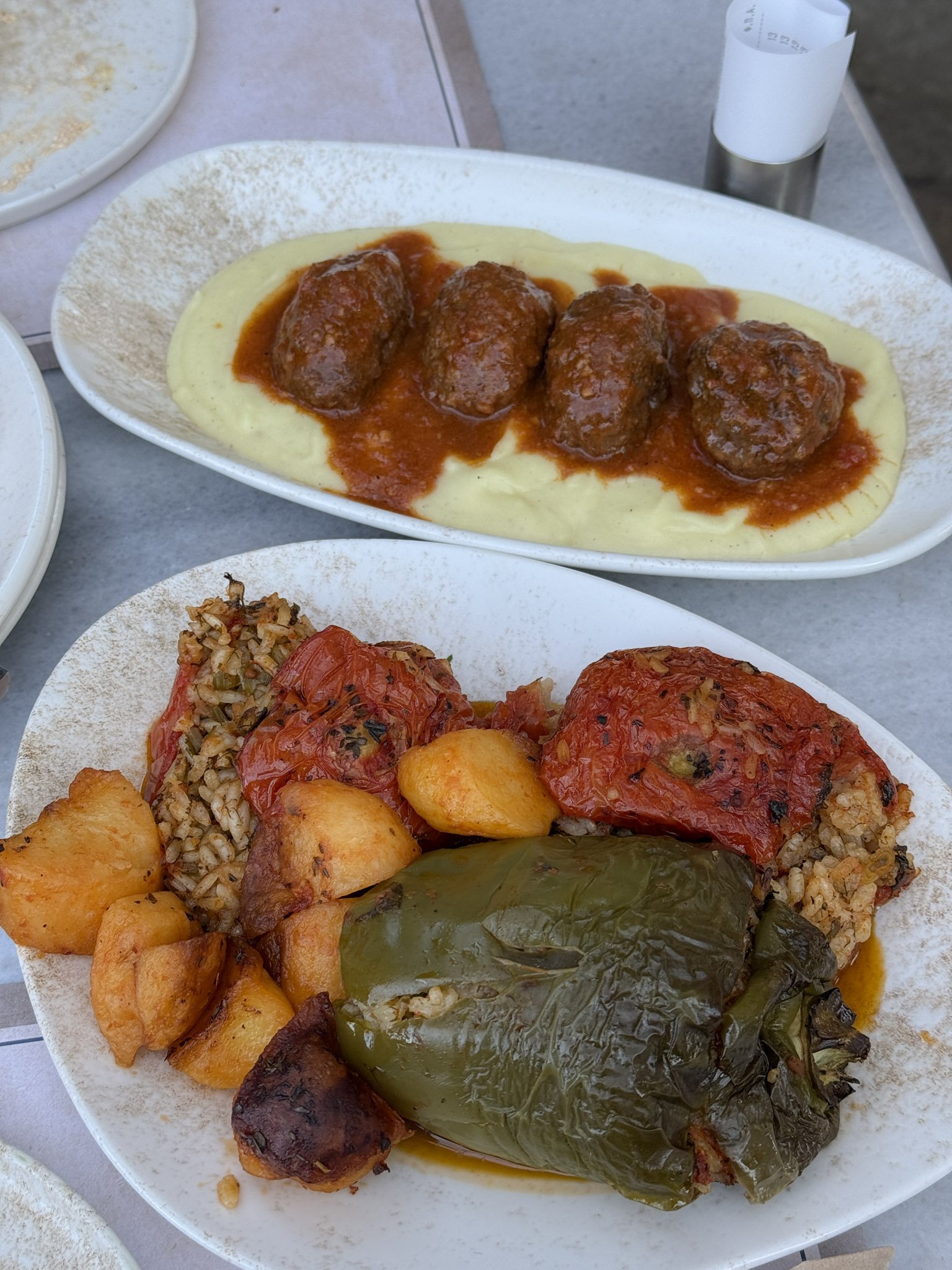
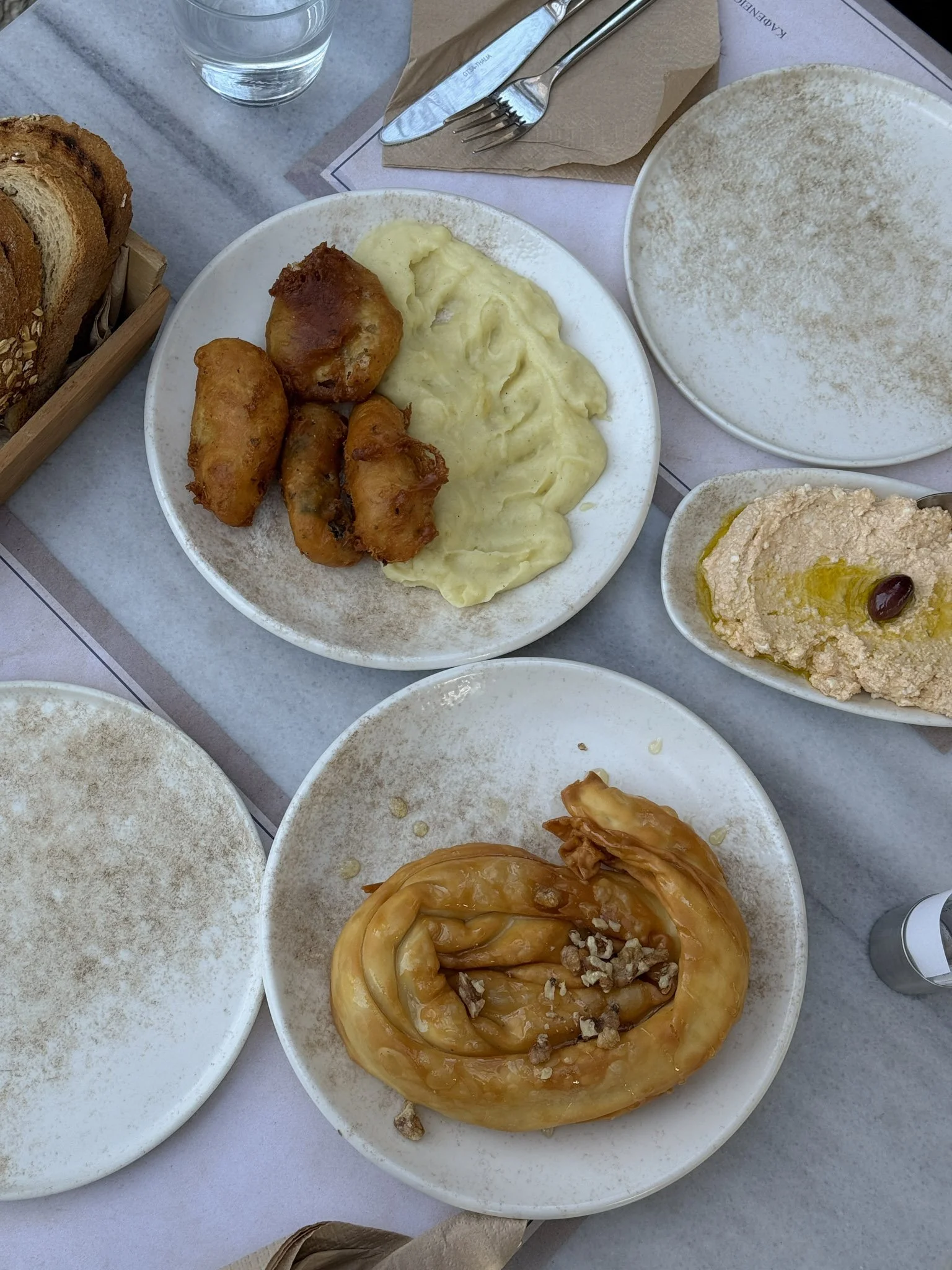
Aerides Plaka is a good option for a relaxed lunch in one of the most charming squares in the neighbourhood. It has outdoor seating with heat lamps, which keeps it viable on a mild winter afternoon, though the cats who patrol the square become increasingly bold once the food arrives. The spicy feta dip, fried cod with garlic mash and cheese pie with walnuts and honey are all worth ordering.
For something more unique, Diporto is a basement taverna that has become somewhat well known for its format: no menu, a quietly grumpy owner who delivers the dishes of the day without ceremony, simple bean dishes, sardines and wine. It sounds like exactly the right place for a cold afternoon.
Athens neighbourhoods
Athens rewards wandering, and winter is the right season for it. The streets are quieter, the light is low and flattering, and you are not fighting the heat to get from one place to another.
Plaka and Anafiotika
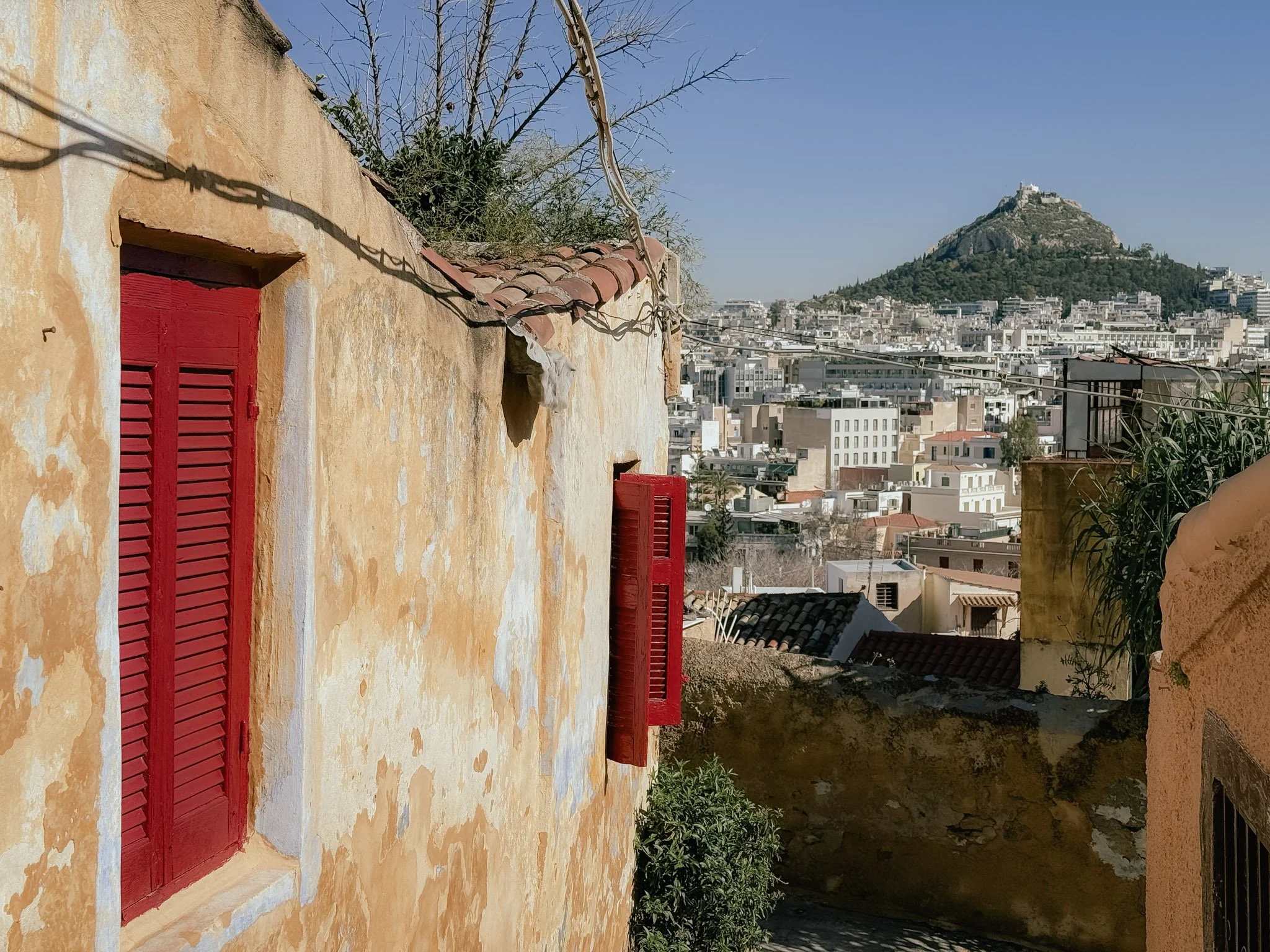
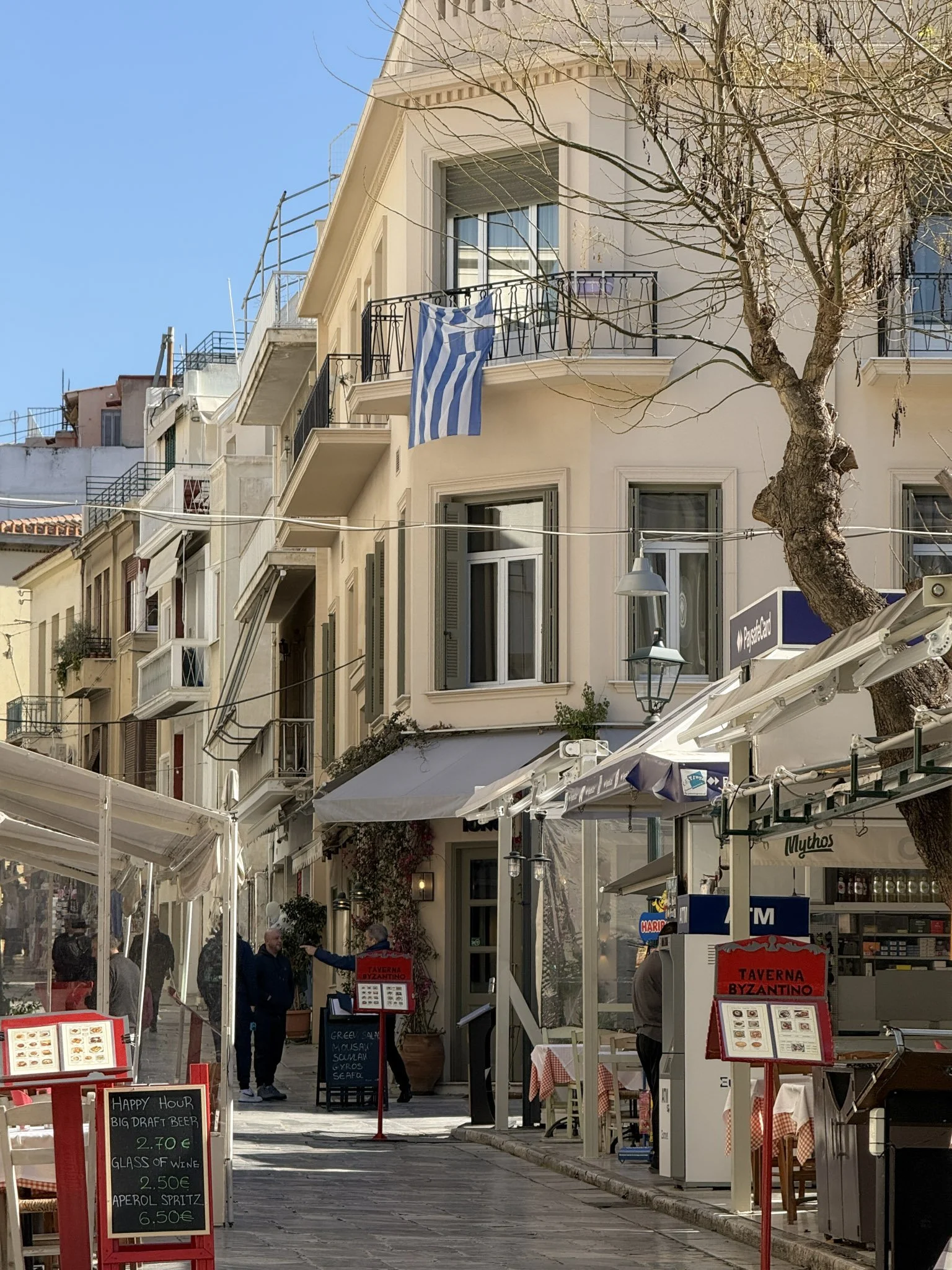
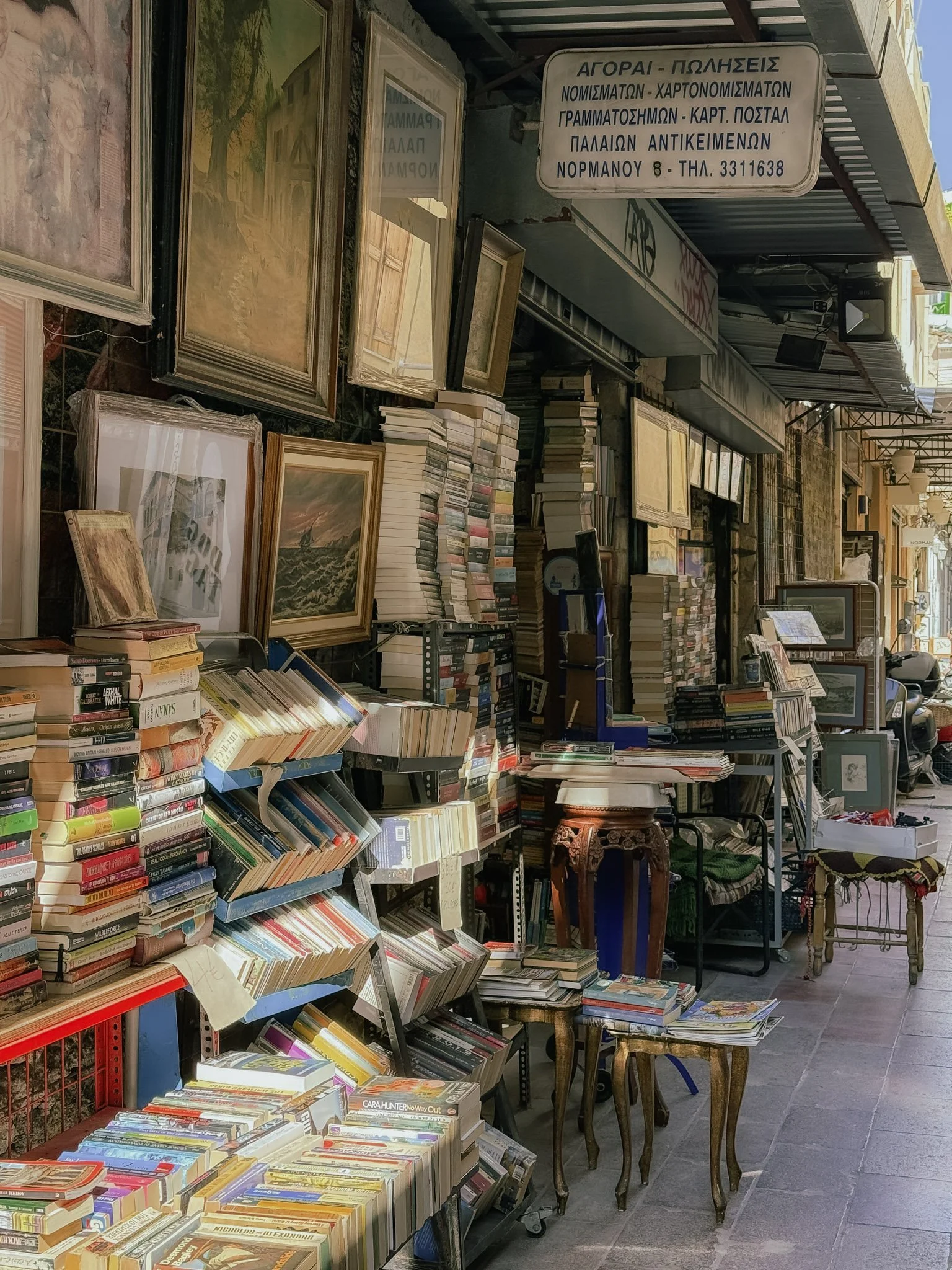
Plaka is the natural starting point, the oldest continuously inhabited neighbourhood in the city, with neoclassical facades, Byzantine churches and Roman ruins compressed together under the Acropolis. It is undeniably touristy on the main streets, but one block off Adrianou or Kydathinaion and it quiets down quickly. At the top of Plaka sits Monastiraki, with the flea market at Abyssinia Square running daily and expanding considerably on Sundays when more sellers arrive. It is a good place to browse antique stalls and watch the city move around you, with views up toward the Acropolis from the square. From Plaka, the streets climbing toward the Acropolis rock lead you into Anafiotika, the tiny Cycladic neighbourhood of whitewashed houses and unnamed lanes that sits just below the ancient site. I have written about both in more detail separately, but they are best explored together on the same morning, early, before the day fills up.
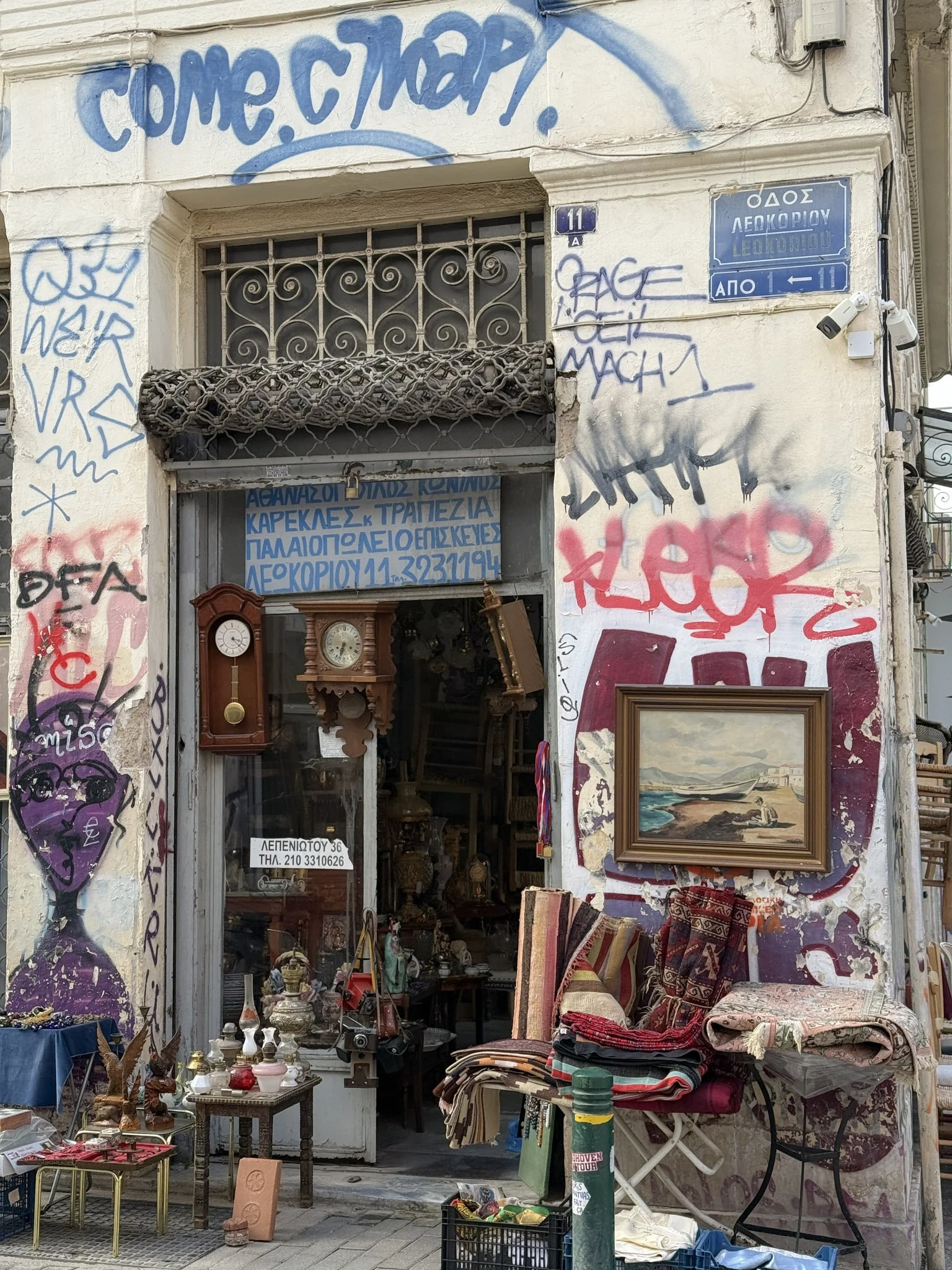

Central
We stayed in the streets between Monastiraki and Syntagma, which turned out to be an ideal base. Silk n Cotton, a newly renovated apartment in a former textile factory run by a local family, was central to everything and well connected by public transport. The area had a good mix of local places within walking distance, including a traditional bakery at the end of our street that I visited more than once. It also sits close to Ermou, the main pedestrianised shopping street, which I largely avoided, but which would suit visitors with different priorities.
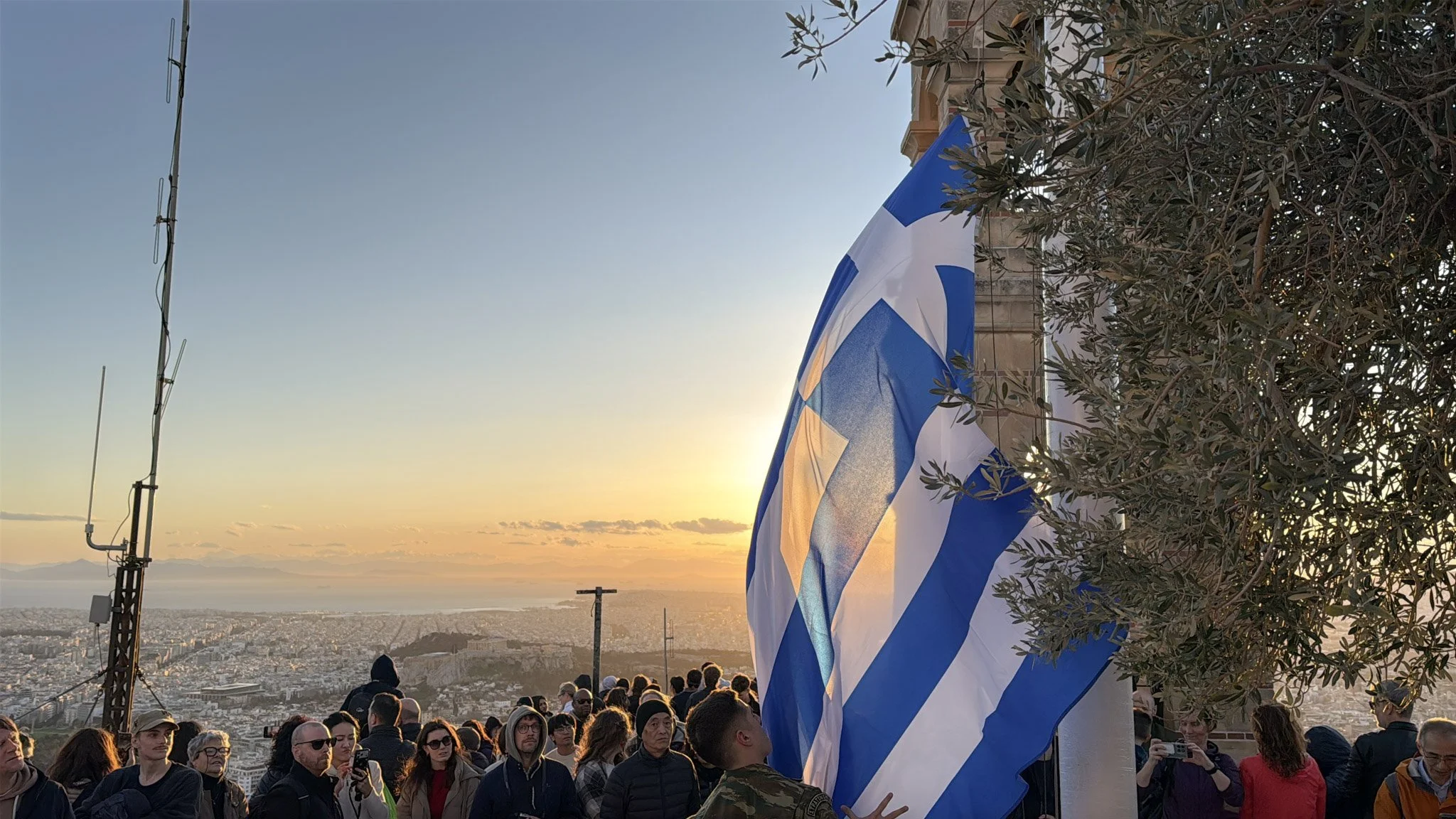
On top of Lycabettus Hill
Kolonaki
Kolonaki, to the northeast, has a more affluent, residential feel. It sits at the base of Lycabettus Hill, which is worth climbing for the views across the city, and has some of Athens' best museums on its edges: the Museum of Cycladic Art and the Benaki Museum are both within easy walking distance. Kora Bakery is here too, if you need fortification before the hill.
Exarcheia
Exarcheia, just north of the National Archaeological Museum, is a deliberately different Athens. It has a long history as a politically radical neighbourhood, and that character is still visible in the street art covering almost every wall, the independent bookshops, record stores and small galleries, and the general sense that this part of the city is not particularly interested in being curated for visitors. We stopped at Beholdtheman, a coffee shop with an extensive hot chocolate menu and aesthetic lighting, where we felt significantly less cool than everyone else present. It was a fun hour. The National Archaeological Museum being just on the edge makes it a natural combination.
Ano Petralona
One neighbourhood I didn't make it to but is firmly on my list for next time is Ano Petralona, a quieter residential area that comes highly recommended for its neighbourhood tavernas and independent shops. Mourmoур for brunch, Adad Books and Cafe, and Oikonomou Tavern are all there and all on my list.
Getting to Athens and getting around
Flights to Athens in February are significantly cheaper than summer, though we travelled during half term, which pushed prices up to around £150 return from London. Outside school holiday dates, you could pay considerably less. Accommodation follows the same pattern: we paid around £100 a night for a large, newly renovated apartment right in the centre, which felt like exceptional value.
The metro and buses are clean, easy to use and take contactless and Apple Pay, which makes getting around almost frictionless. Note that the airport line requires a separate ticket, bought before you board. Uber and FreeNow both operate in Athens, though we found cars occasionally difficult to book when we actually needed one. It didn't matter much: public transport was quick and reliable, and the tourist area of the city is compact enough that you cover a lot on foot.
Where to stay in Athens
We stayed at Silk n Cotton in Psyrri, a renovated apartment in a former textile factory run by a local family. It is central, well connected, and excellent value.
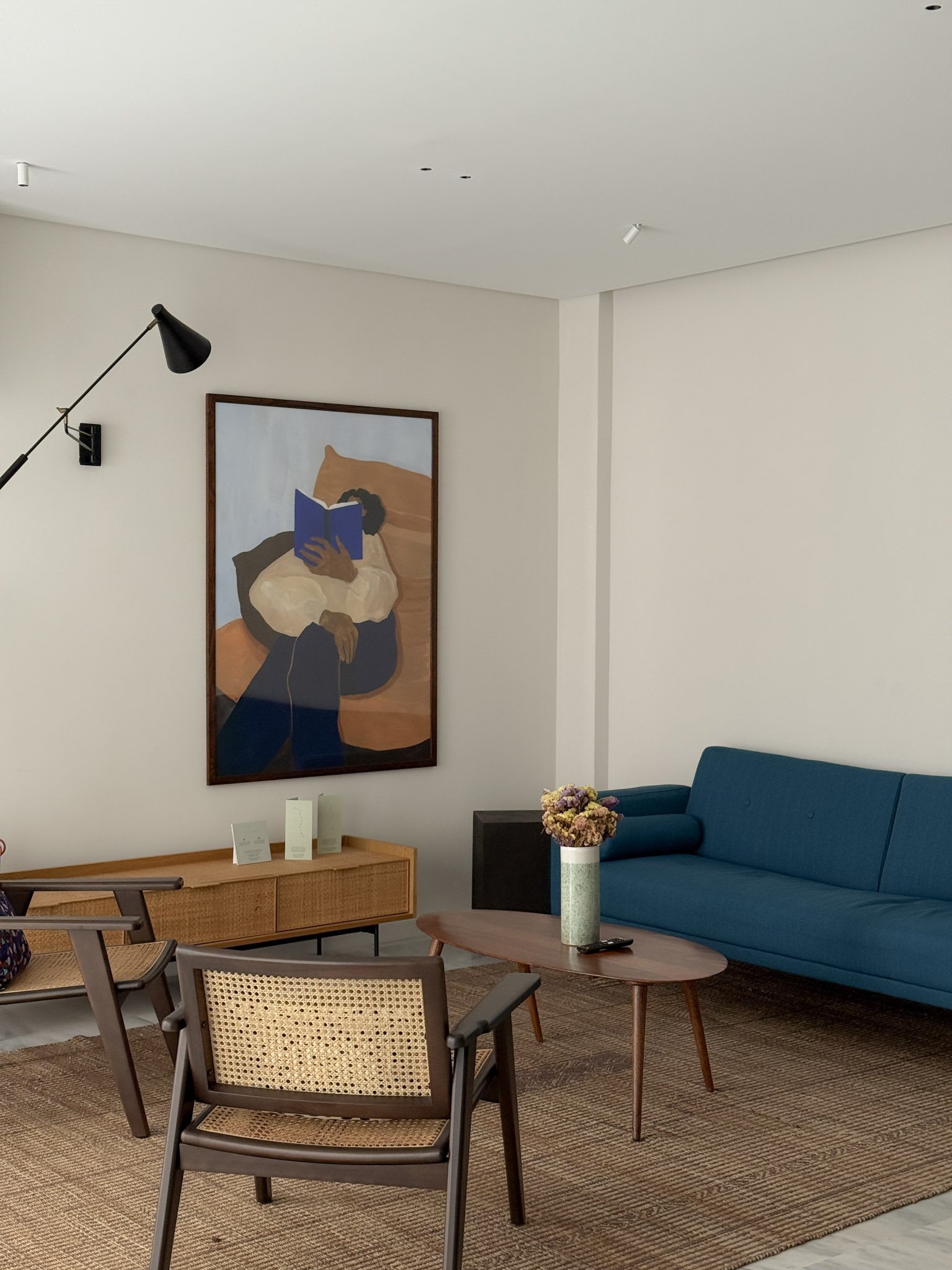
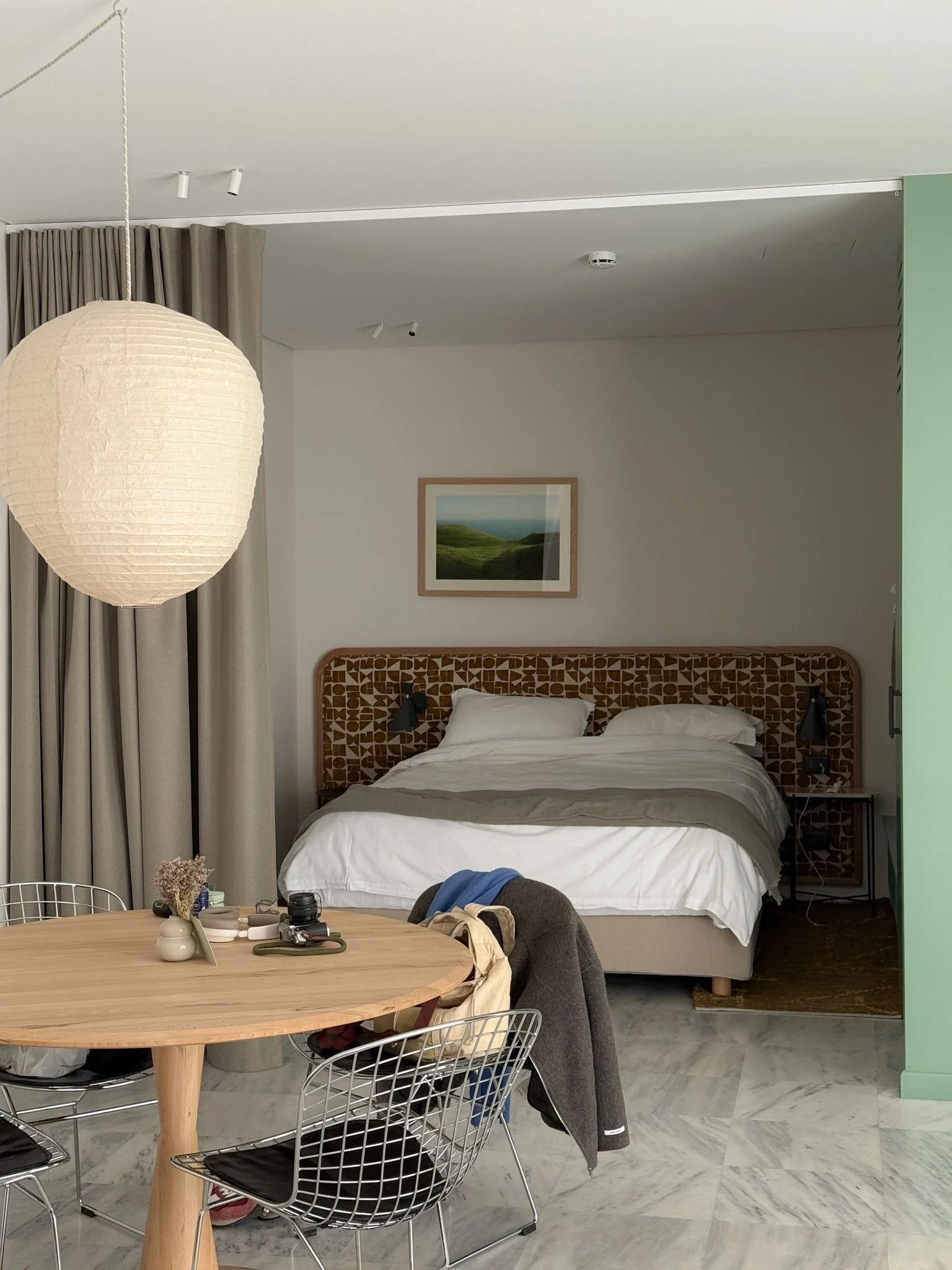
For a hotel, Monsieur Didot is a beautifully designed option that I would happily recommend.
One thing worth doing when choosing where to stay is a quick check on whether your accommodation genuinely contributes to the local economy. I nearly booked a five-star hotel before realising it had breached local laws preserving Acropolis views for residents, which put me off entirely.
Practical things to know
Admission to most archaeological sites and state museums is free on the first Sunday of the month between November and March. We missed it by a single day, which was a genuine blow, as site admission adds up quickly if you are visiting everything. Plan around it if you possibly can.

Winter opening hours are shorter than summer: most sites open at 8am and close between 3pm and 5pm. The National Archaeological Museum stays open until 8pm on Tuesdays, which is worth knowing, as on other days it closes at 3:30pm.
You do not need to book the Acropolis far in advance in February, but I would still recommend booking a day or two ahead rather than leaving it open. That way you can keep an eye on the forecast and choose your morning accordingly.
Pack layers and a waterproof. Temperatures in mid-February sit around 13 to 15 degrees in the daytime, which is comfortable for walking, but evenings are cold and rain can arrive without much warning. Shoes matter more than anything else you bring.
Athens in February
Athens in February is quieter, cheaper and easier than it gets credit for. The sites are quiet, the food is excellent, and the city is easier to understand when it is not overwhelmed by the version of itself that exists for summer visitors. If you are the kind of traveller who finds heat and crowds actively counterproductive, it is close to an ideal trip.
The practical case is straightforward: cheaper flights, cheaper accommodation, no queues at the Acropolis, and a free entry Sunday if your dates fall right. But the better argument for winter in Athens is less transactional than that. The light in February is low and interesting, the tavernas are warm, and the city feels like it has room in it. That is not nothing, in February, when most of the alternatives are grey.
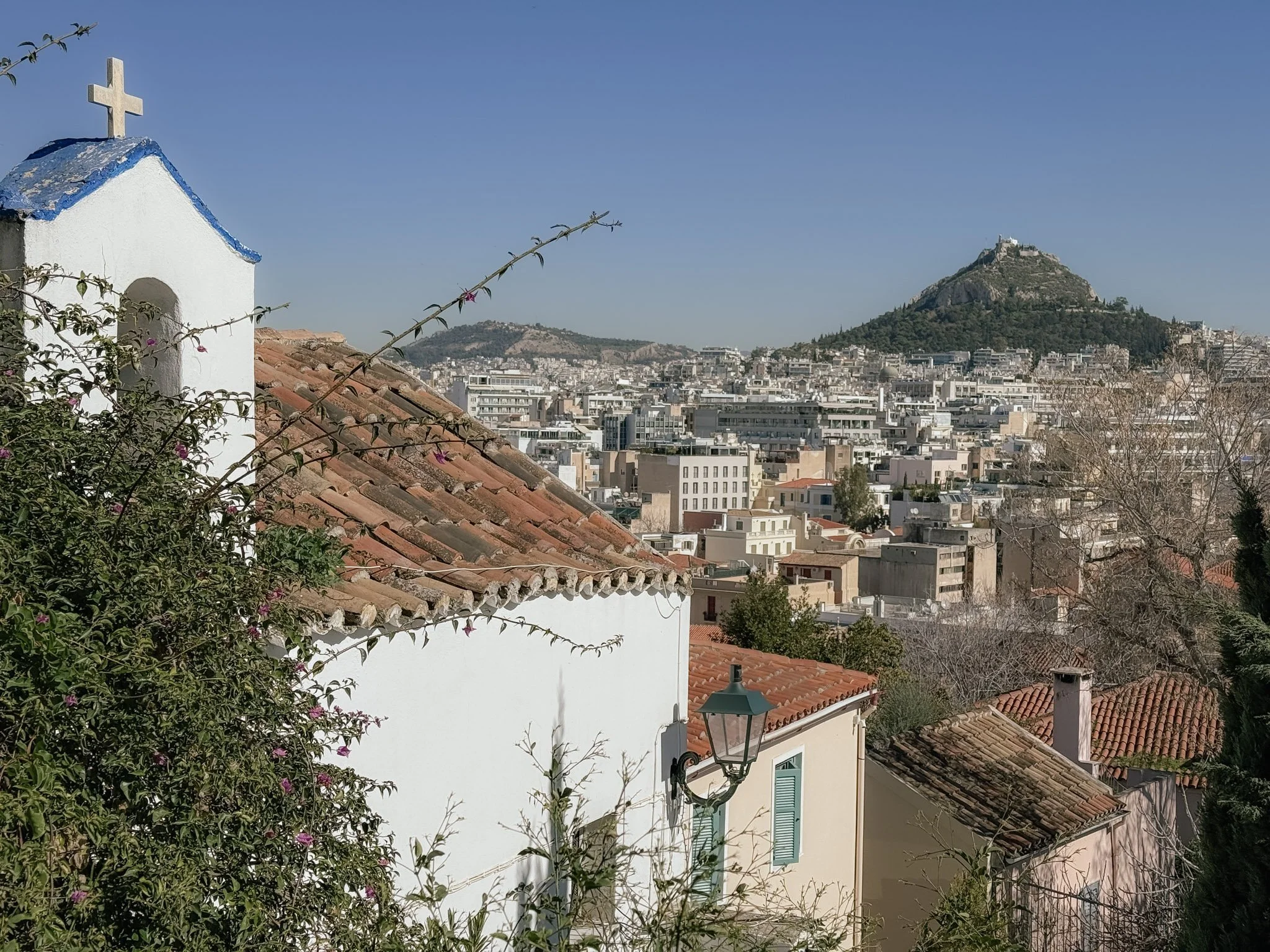


The ancient sites are quiet, the food is extraordinary, and February in Athens turns out to be one of the better-kept secrets in European winter travel.