
Anafiotika: the Cycladic village hidden beneath the Acropolis
I visited Athens for the first time in February, and I had barely left Plaka on my first morning when the city pulled a surprise. Walking uphill through the neoclassical streets, following the steps toward the Acropolis, the architecture suddenly changed. The grandeur dropped away. Instead: whitewashed walls, narrow cobbled lanes, terracotta pots, bougainvillea climbing over blue shutters. A cat soundly asleep, cradled in a green bush. The Acropolis rock rising directly above. I had found Anafiotika, and for a moment it felt less like Athens and more like a Cycladic island village that had ended up in the middle of a capital city.
That is not entirely wrong. Anafiotika is a genuine island transplanted to a hillside, and its origin story is one of the best in Athens. I’ll explain its history and how to visit in this post.
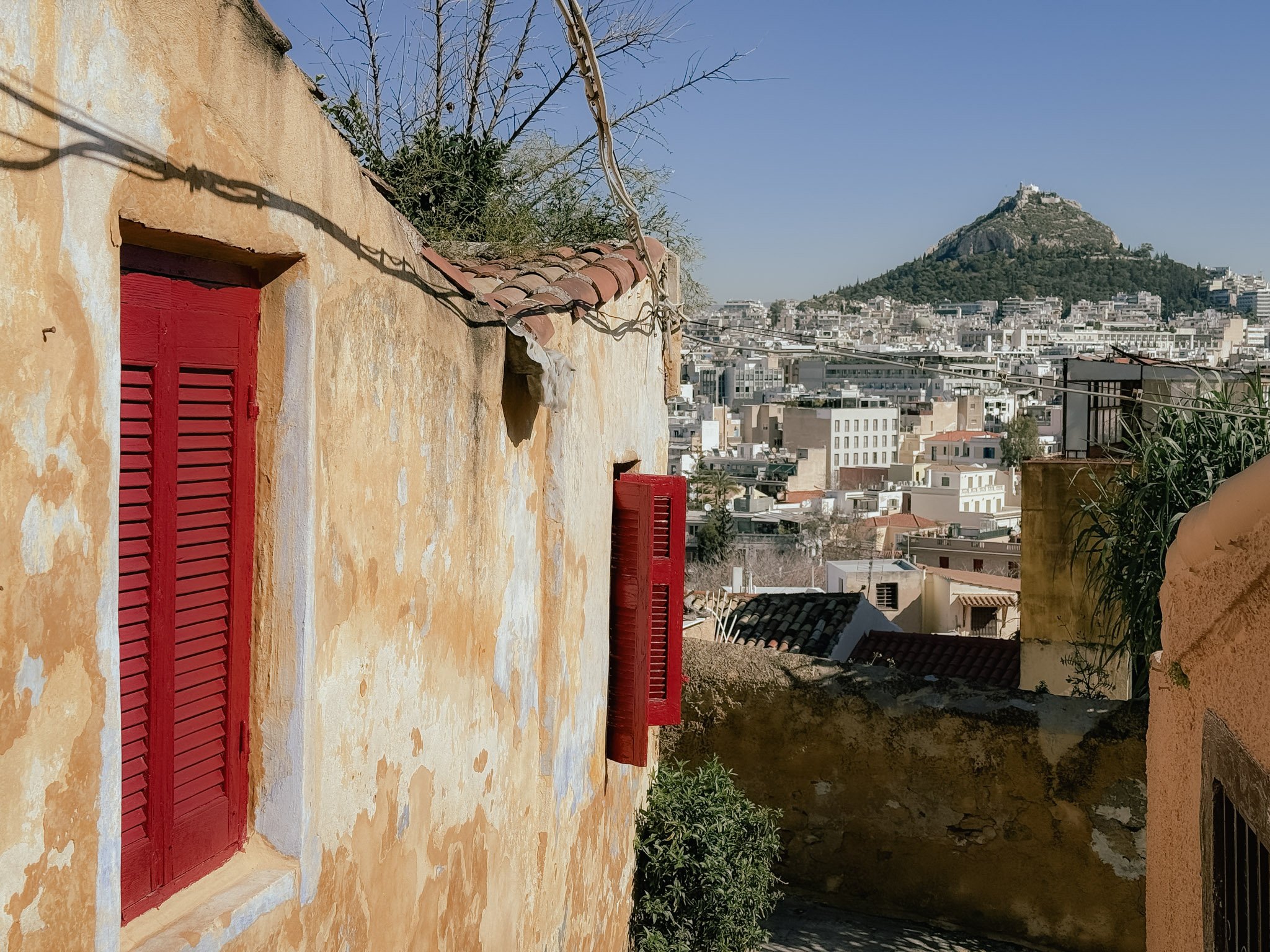
How a Cycladic village ended up under the Acropolis
In the 1840s, King Otto I was rebuilding Athens into a capital city, and he needed skilled hands. Stonemasons and carpenters arrived from across Greece, including from the small Cycladic island of Anafi, which had a long reputation for producing exceptional craftsmen. They came to work on the royal palace and the Acropolis excavations, and they built themselves somewhere to live on the rocky northeastern slope of the hill. Quickly, at night, exploiting a law that granted ownership of any structure completed between sunset and sunrise. The land had been designated an archaeological zone since 1834. Anafiotika was illegal from the first stone. They built in the only style they knew: whitewashed, cubic, thick-walled, with coloured shutters, just like the island they had left behind. They called it "little Anafi."
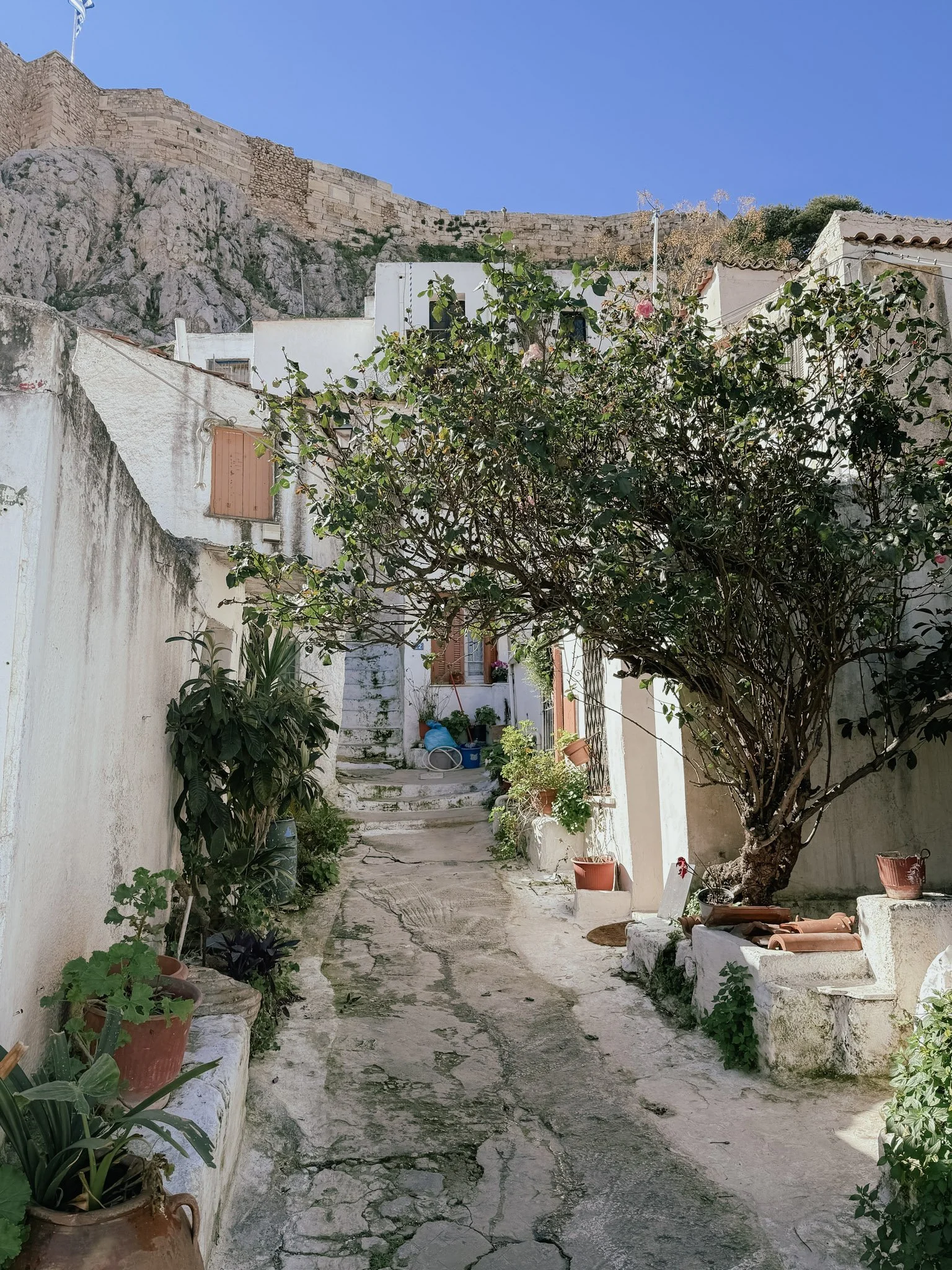
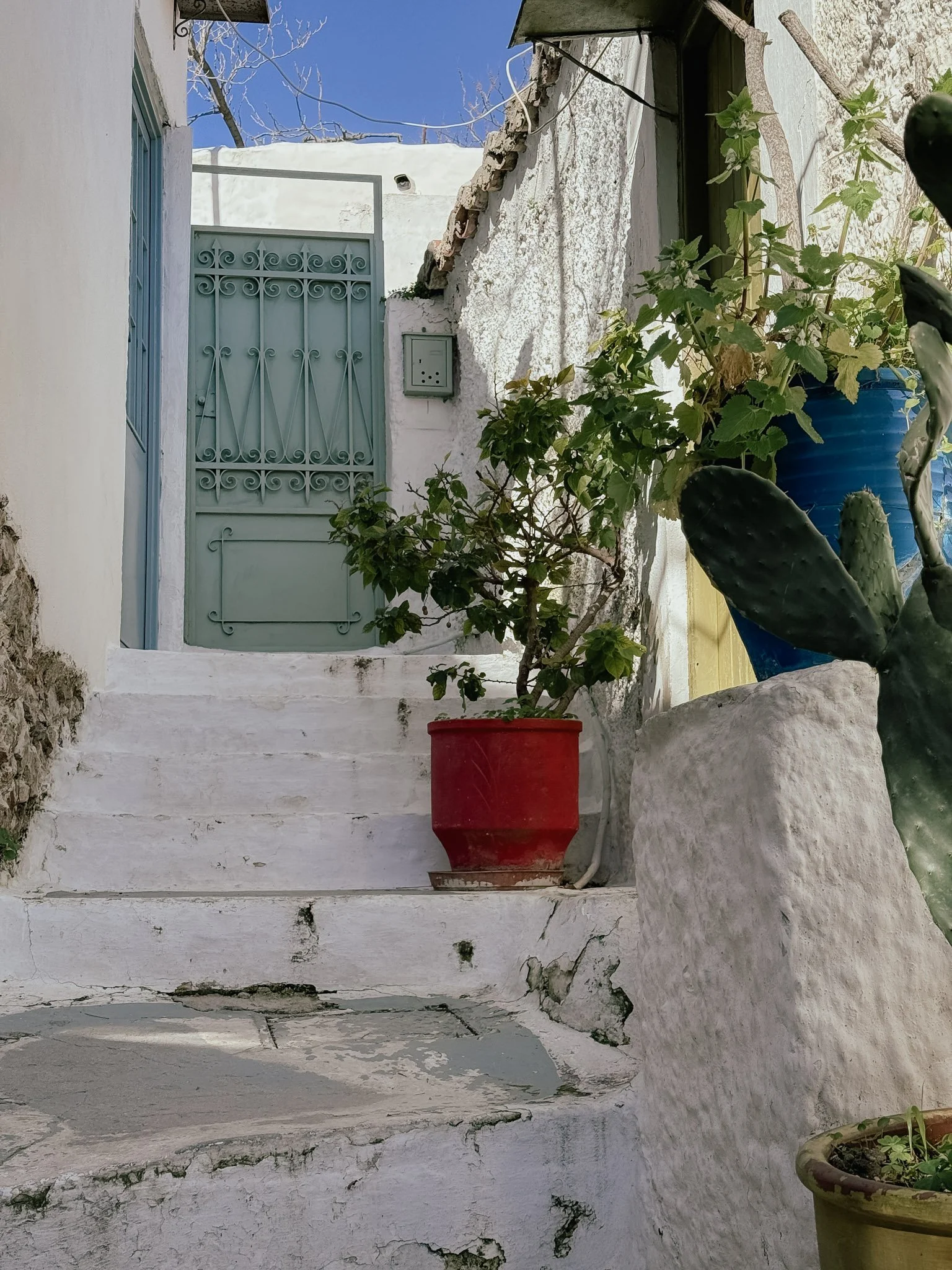
The neighbourhood was contested almost from the start, partially demolished during excavations in the 1950s and reduced again when the government began buying and clearing houses in the 1970s. Around 45 houses remain. They are owned almost entirely by descendants of the original families, and by law can only be passed down or returned to the state, never sold on the open market. The streets have no names. Each house is simply numbered, Anafiotika 1, Anafiotika 2, as though the city never quite accepted that the place existed at all.
What to expect when you visit
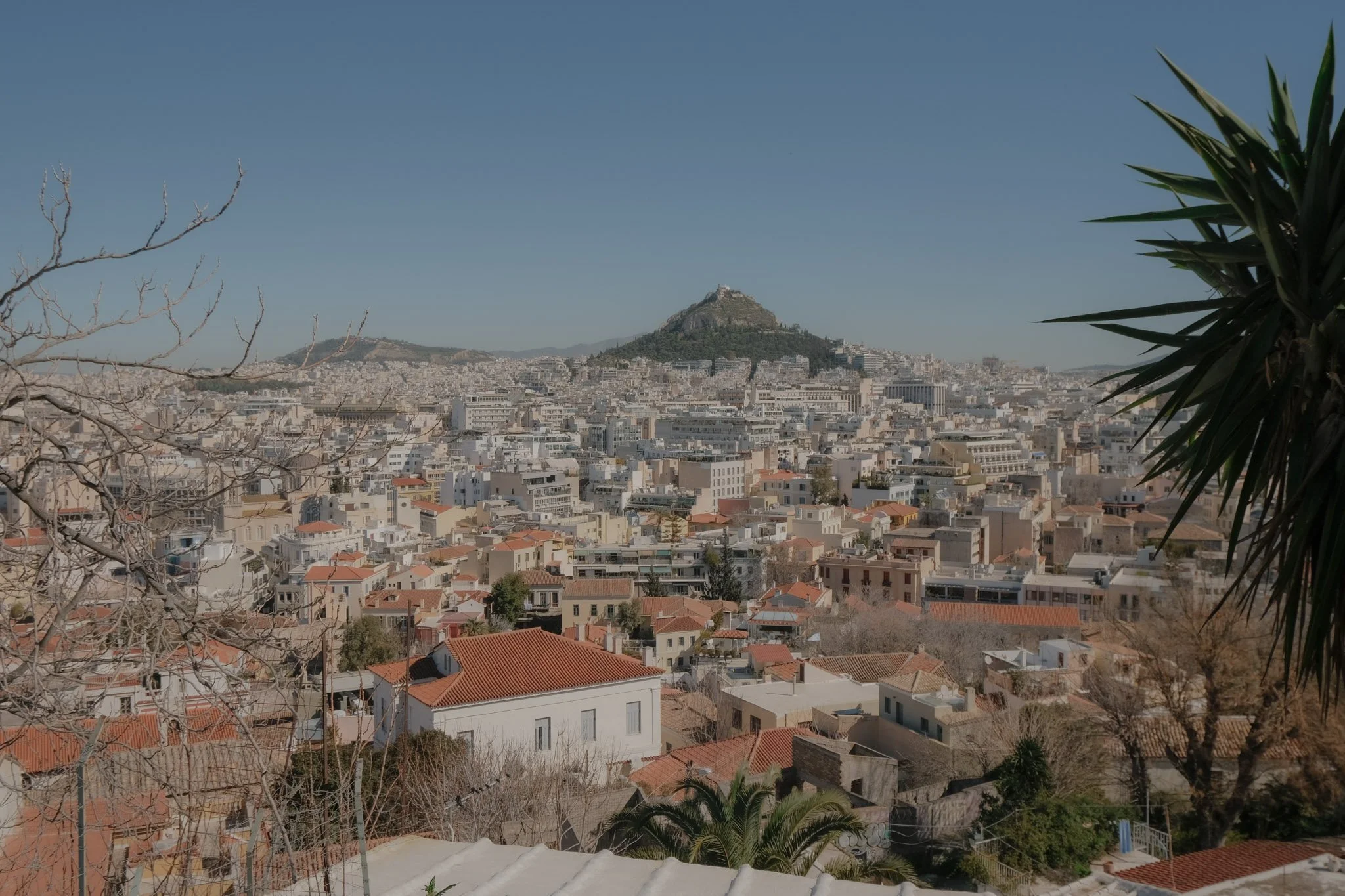
Anafiotika is a residential neighbourhood, and it looks and feels like one. There are no cafes, no souvenir shops, no restaurants. What you find instead is evidence of ordinary domestic life: window boxes, laundry, potted herbs, cats in various states of repose. The lanes are narrow enough that two people can just about pass each other, and some end in staircases or small terraces with views across the city toward Lycabettus Hill.
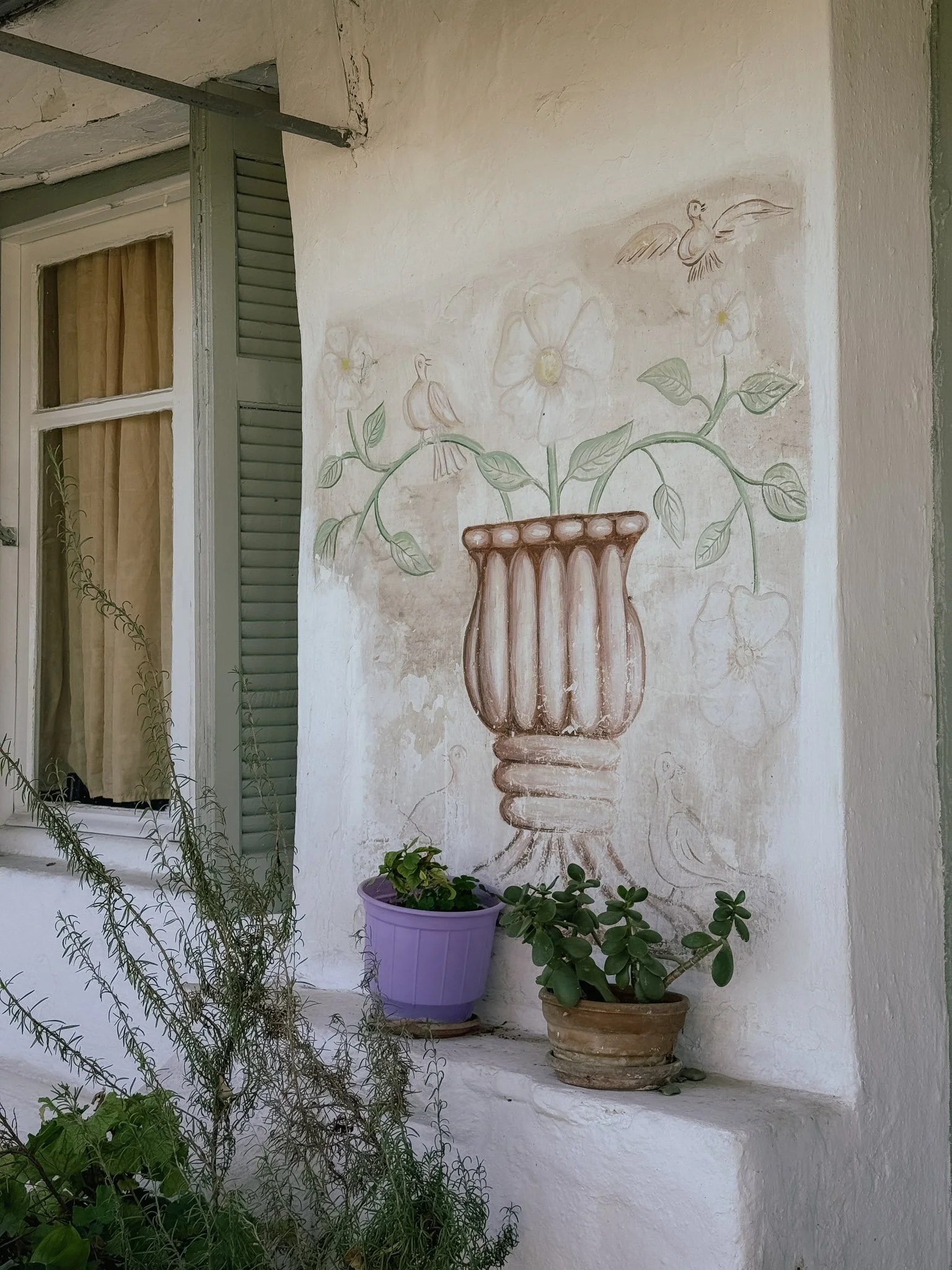

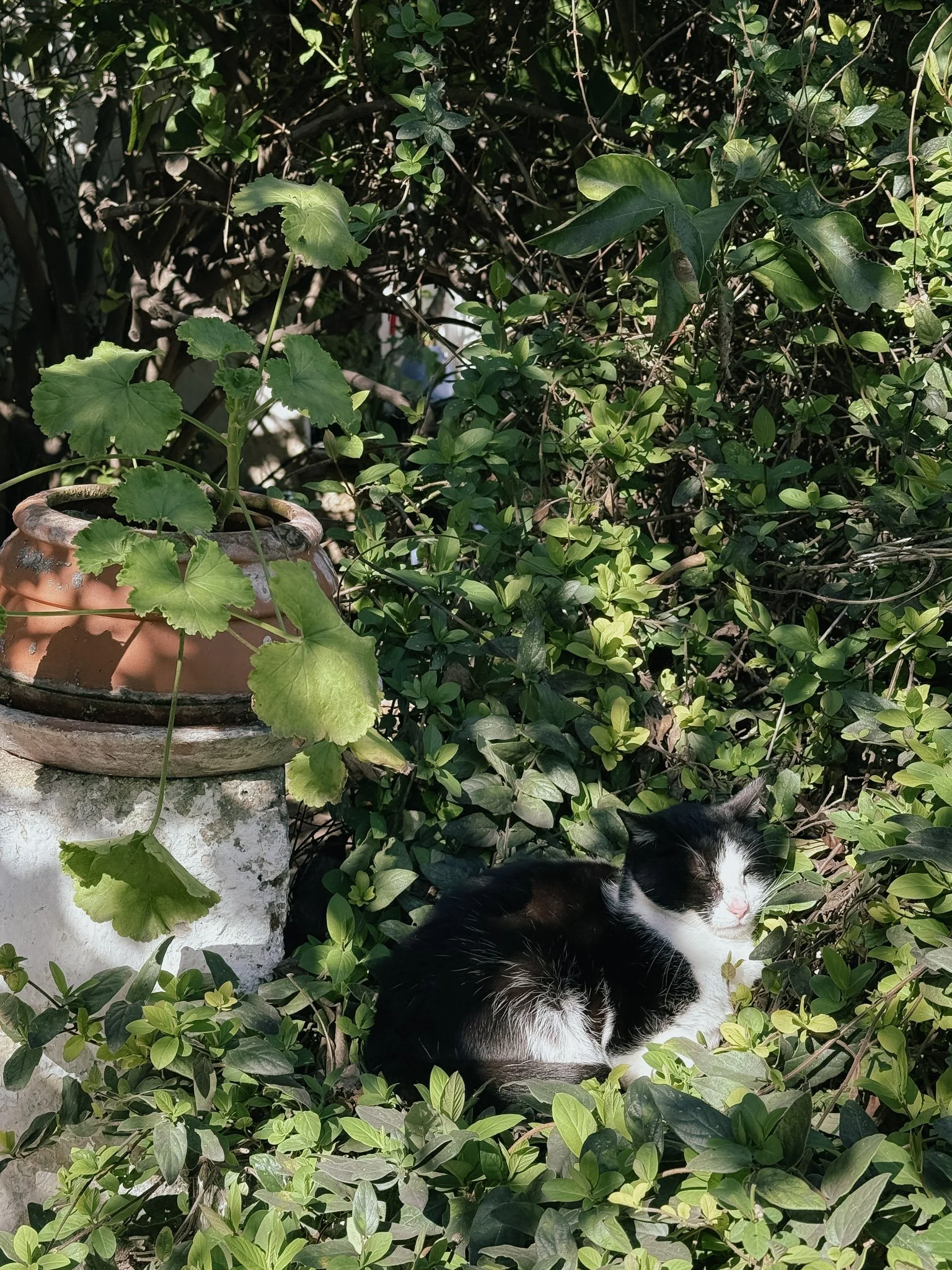
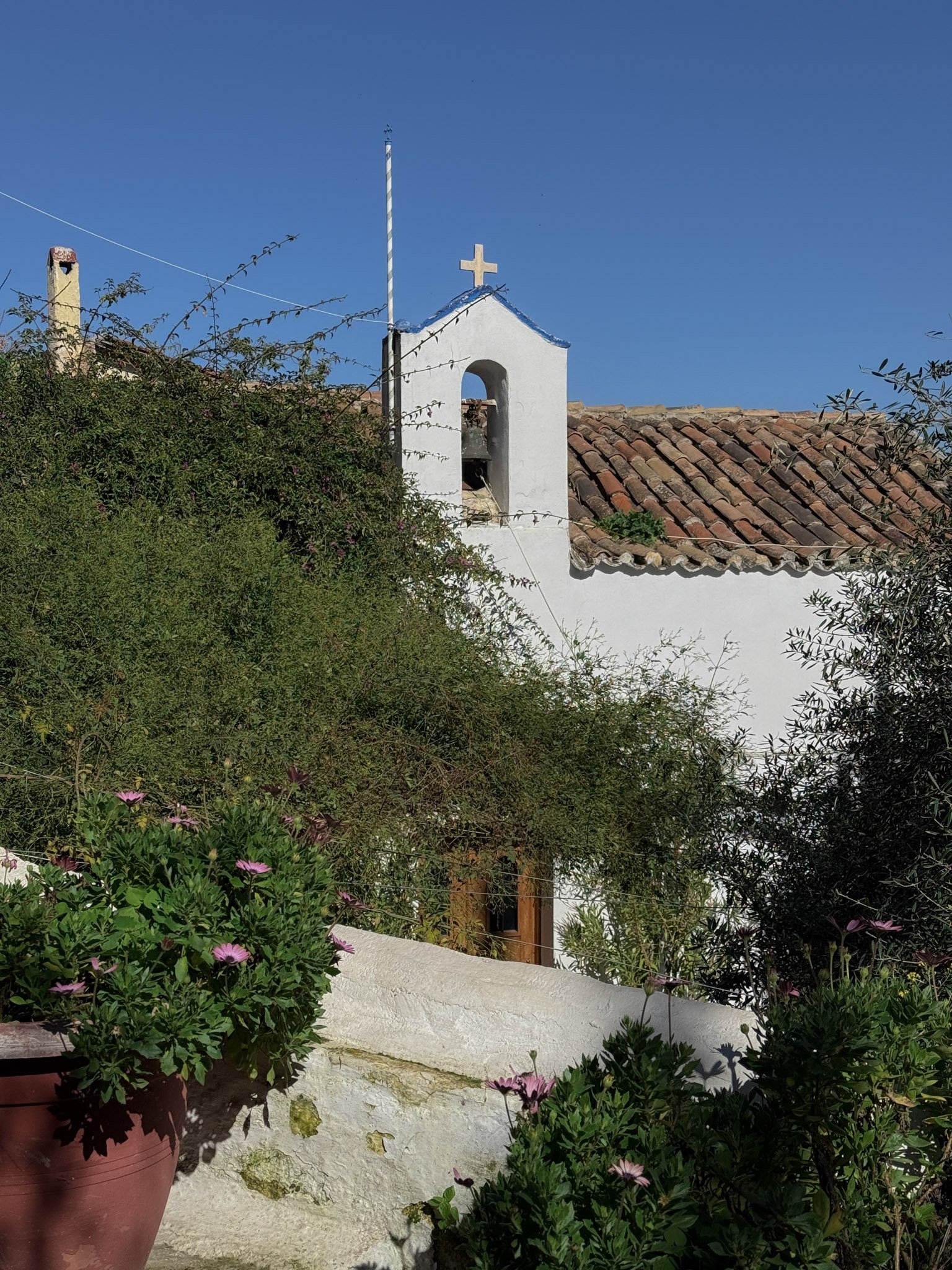
The architecture is a genuine surprise in the context of Athens. Where the rest of the city is neoclassical grandeur or utilitarian concrete, Anafiotika is all whitewash and simplicity, the same Cycladic vernacular you would find in Naxos or Folegandros. For anyone yet to visit the Greek islands, it offers an unexpected first taste.
I visited on a quiet February morning, and there were almost no other visitors around. Even a few winter flowers were blooming. The light that early, especially in winter, is soft and cool, and the white walls reflect it beautifully. I wandered back on myself several times trying to follow the lanes. There is no correct route, and no particular reason to find one.
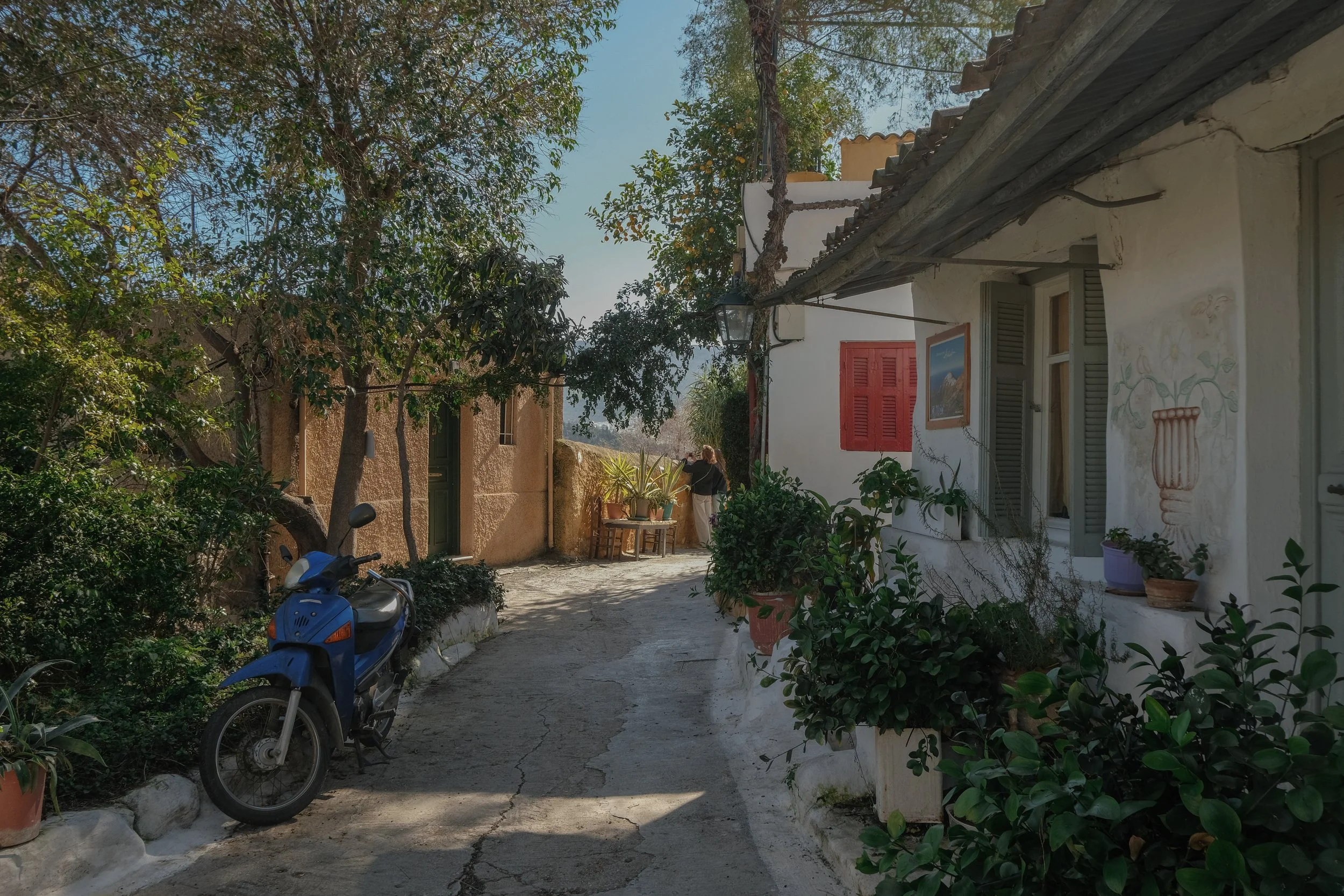
If you visit in summer, early morning or the hour before sunset will give you the best light and the fewest people. Anafiotika is well-known enough now that it can fill with tourists by mid-morning in peak season, but the absence of shops means the crowd moves through relatively quickly.
Go quietly. People live here, and several signs remind you of that. The neighbourhood has survived almost two centuries of demolition, legal challenges and tourism pressure, and it deserves the consideration.
The churches
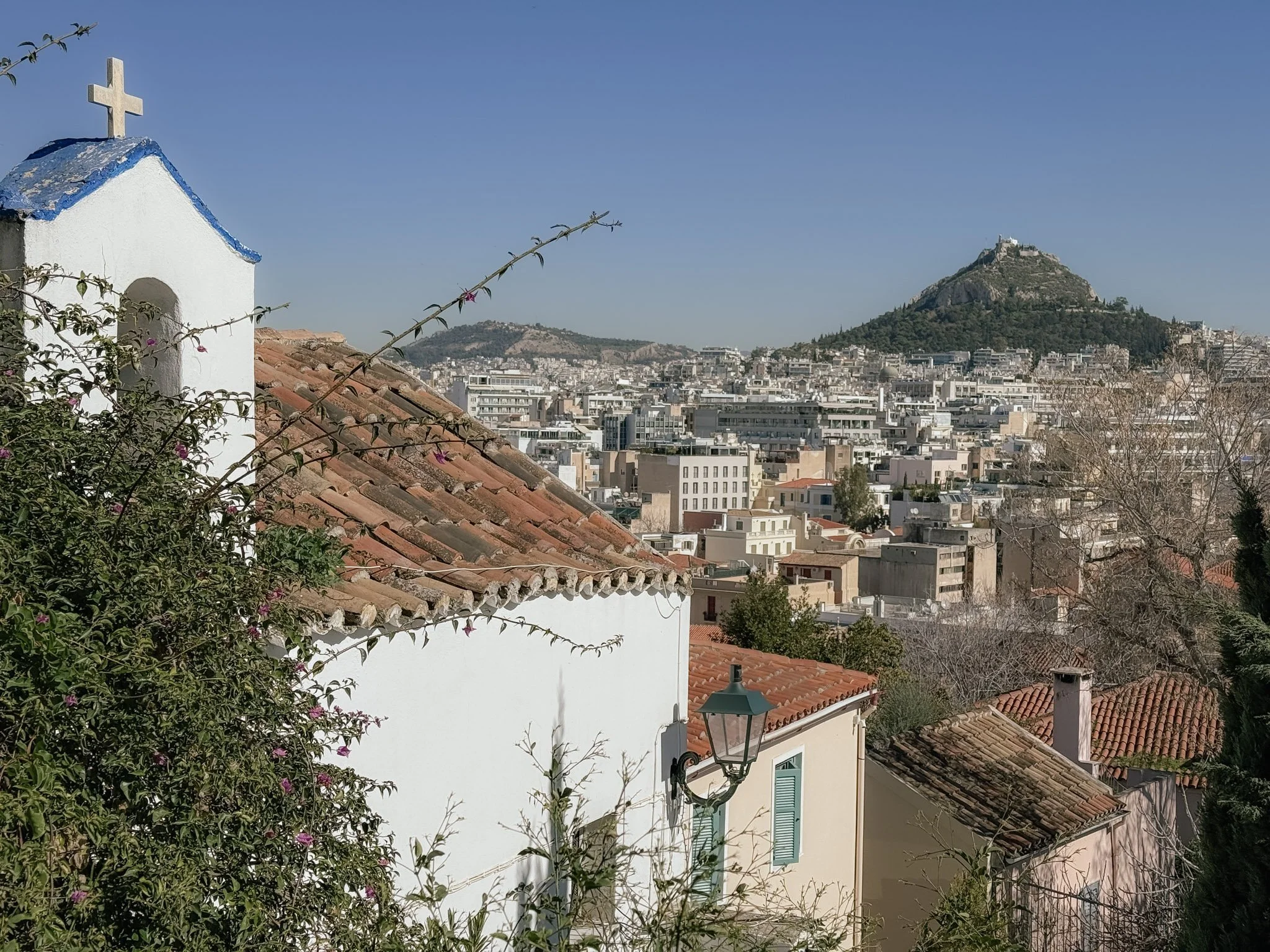
Walking toward Anafiotika from the south side of Plaka, the first landmark you reach is Agios Georgios tou Vrachou, the Church of St George of the Rock. It was the moment the neighbourhood announced itself to me, a shift in atmosphere that felt like stepping into a different city entirely. Next to the church is one of the best viewpoints in the area, looking out toward Lycabettus Hill with flowers in the foreground, well worth stopping for.
The garden of the Church of St George of the Rock contains a memorial to Konstantinos Koukidis, an Evzone guard who, when the German army entered Athens in 1941, wrapped himself in the Greek flag he was protecting and leapt from the Acropolis rather than hand it over.
The 11th-century Church of Agios Nikolaos Ragavas, just below Anafiotika on the edge of Plaka, is one of the most significant Byzantine monuments in the city. Its outer walls were exposed over centuries by rain and wind, revealing the ancient columns on which it was built.
Getting there through Plaka
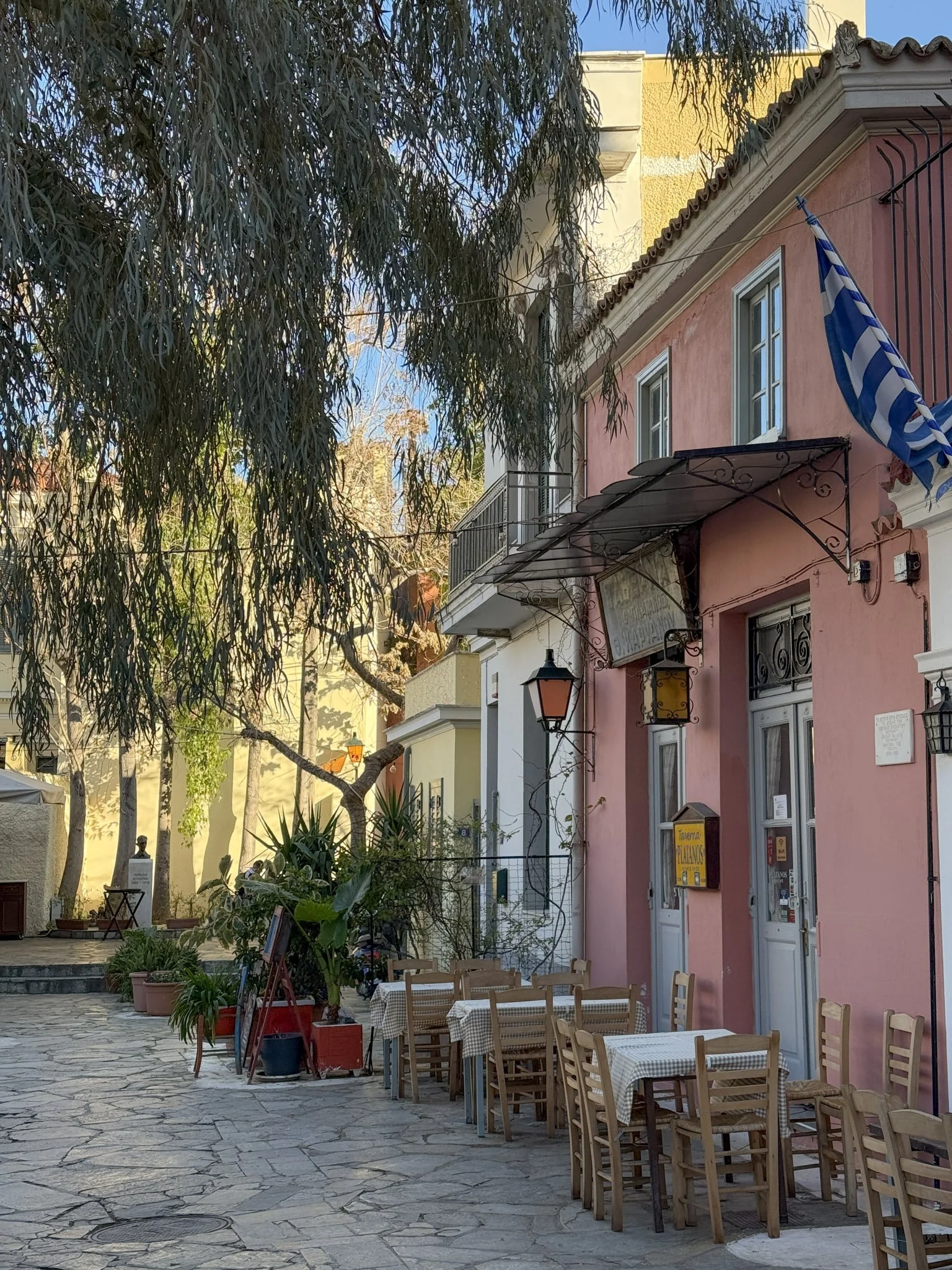
Anafiotika sits above Plaka, and walking through Plaka on the way up is half the pleasure. Plaka has been continuously inhabited for around 3,000 years, which gives it a layered, slightly accidental quality: neoclassical facades beside Byzantine churches beside Roman ruins, all compressed together under the Acropolis.
A few things worth looking for on the way through. Tripodon Street, which follows an ancient route and is said to be the oldest road in Europe, was once lined with choregic monuments erected by wealthy sponsors of the drama festivals at the nearby Theatre of Dionysus. Only one survives in anything like complete form: the Monument of Lysicrates, a 4th-century BC podium topped by an ornate tower with embedded Corinthian columns, sitting in a small shaded square near Hadrian's Arch. Lord Byron reputedly wrote part of Childe Harold in this square. There are a few cafes here with outdoor seating, an ideal place to have breakfast before or after wandering Anafiotika.
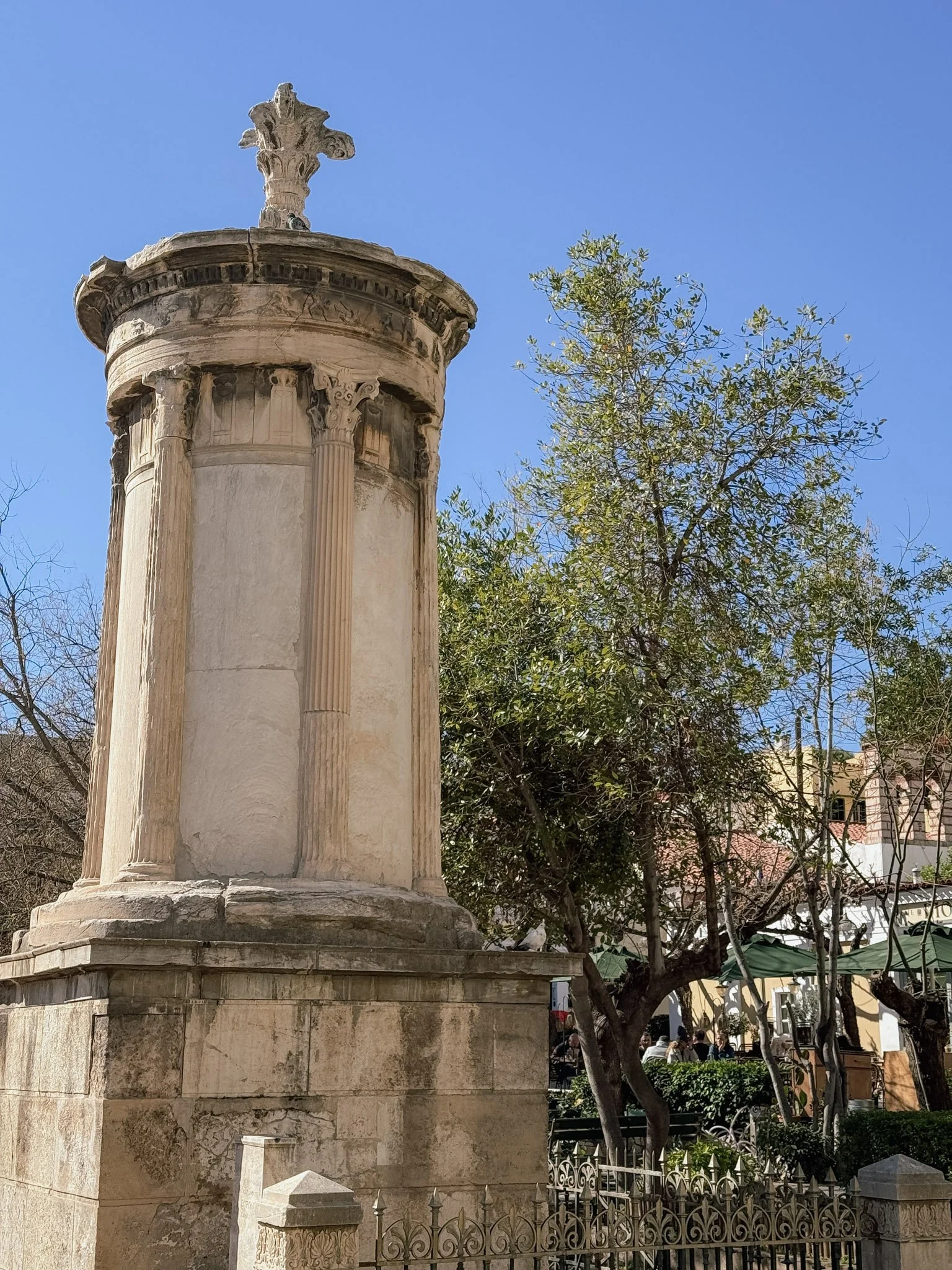
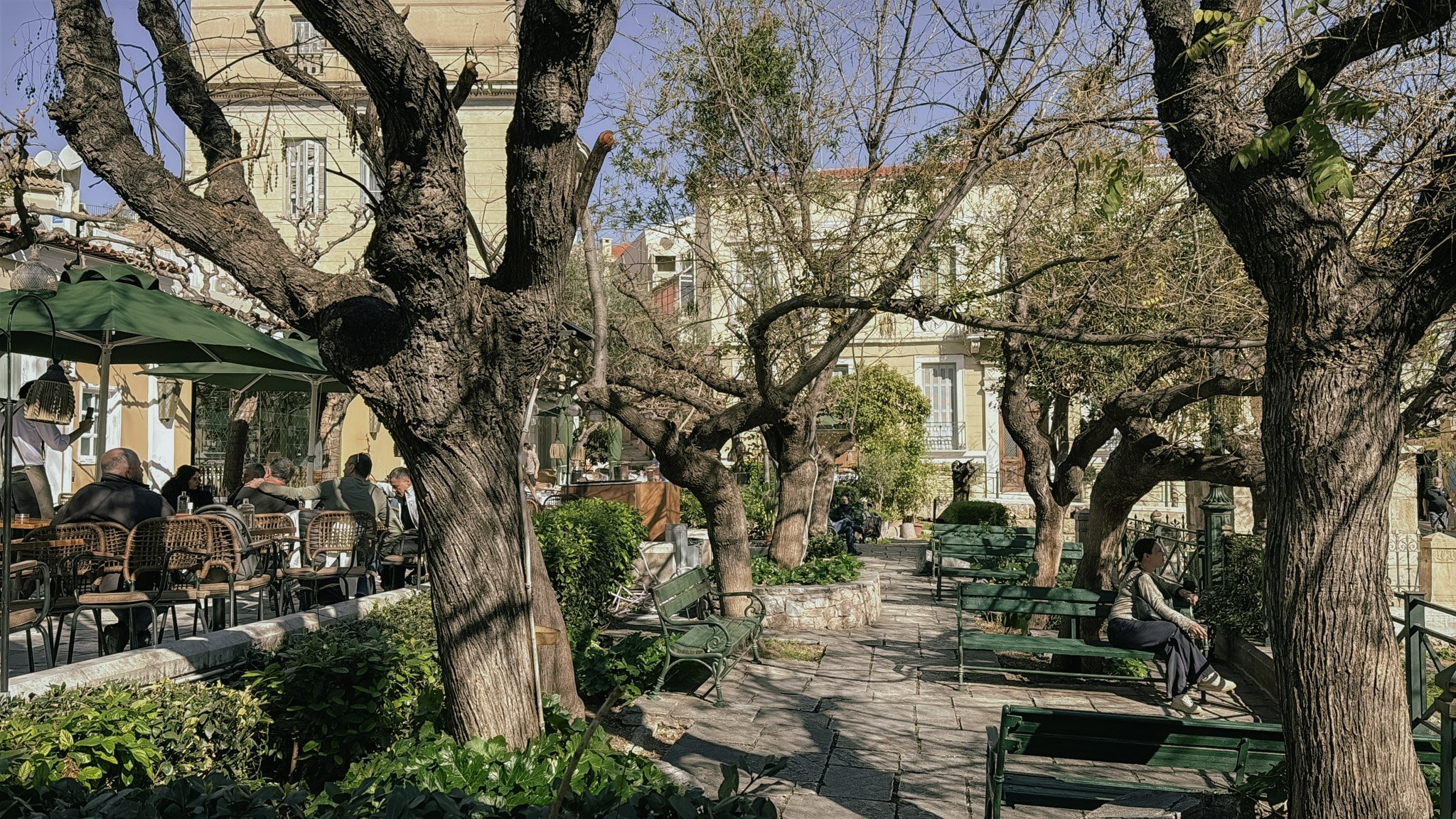
Two streets in particular are worth taking on the way up. Thespidos climbs the hill with a pair of restaurants sheltering under heavy bougainvillea, Restaurant Athen and Thespis, which look particularly charming in the warmer months. Epimenidou, just nearby, is a quieter and very pretty street with a yellow house and restaurant at the top that has some of the best views in the area. From either street you can join Stratonos, which runs along the base of the Acropolis rock. Follow it until you reach the Church of St George of the Rock, then take the green park path uphill to enter the cobbled lanes of Anafiotika.
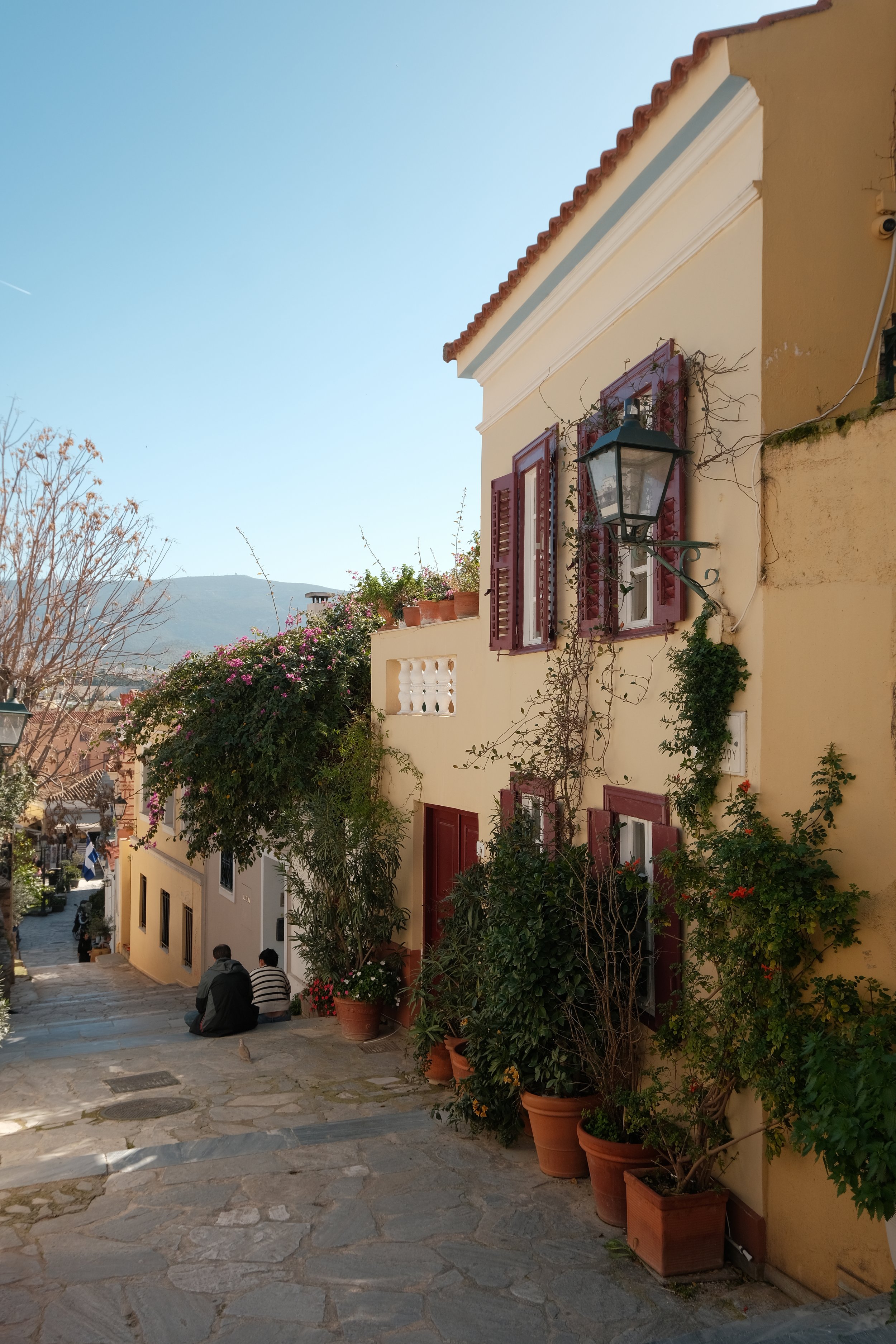
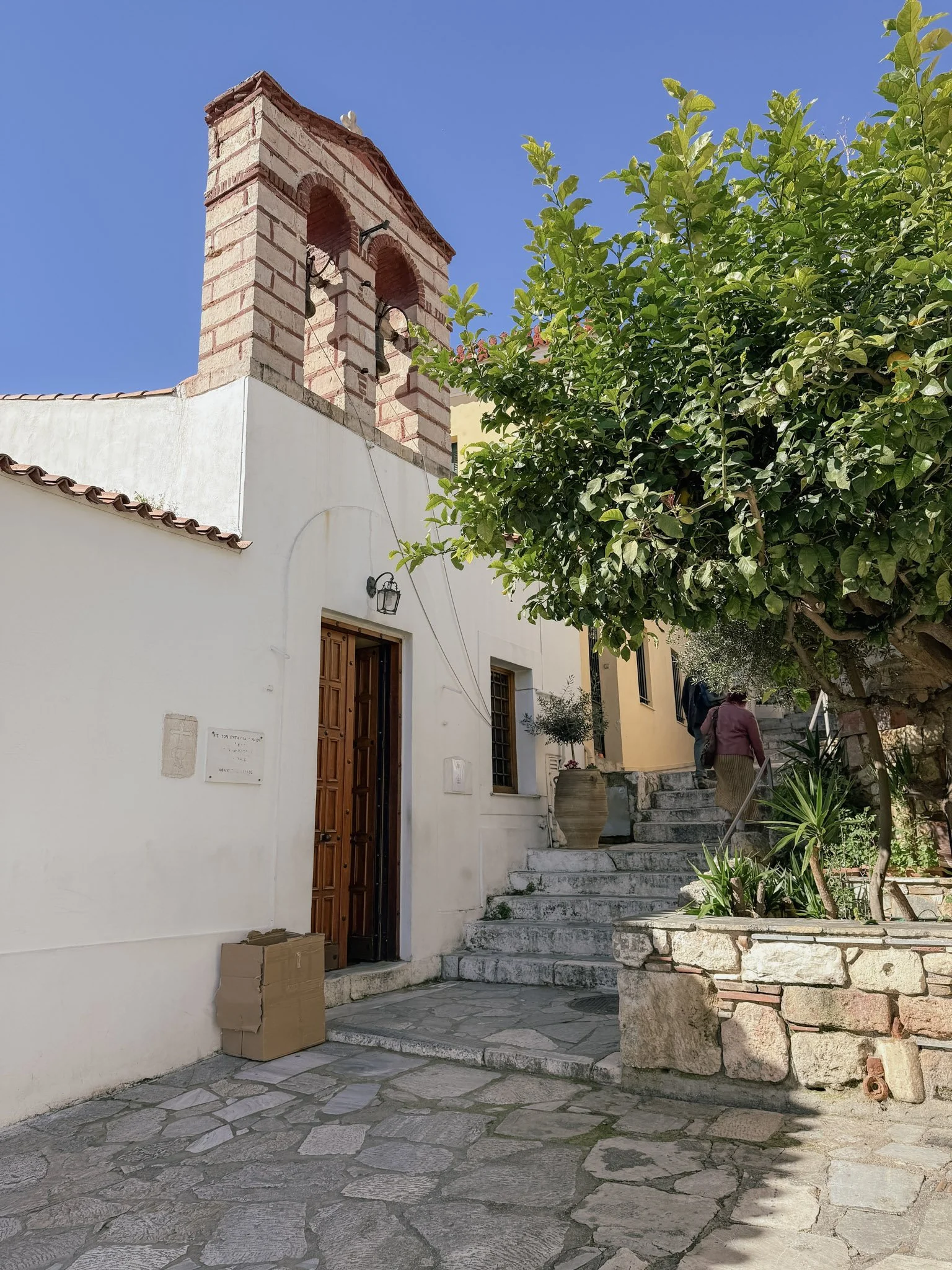
The Benizelos Mansion, tucked into Plaka's streets, claims to be the oldest house in Athens, an 18th-century Ottoman-era building with an enclosed south-facing balcony and evidence of a sophisticated water system built into the staircase.
At the Monastiraki edge of Plaka, the Tower of the Winds is a 1st-century BC marble octagonal tower that served simultaneously as a water clock, sundial and weather vane. It has carved reliefs of the eight wind gods on each face and is more remarkable than its relatively modest profile suggests.
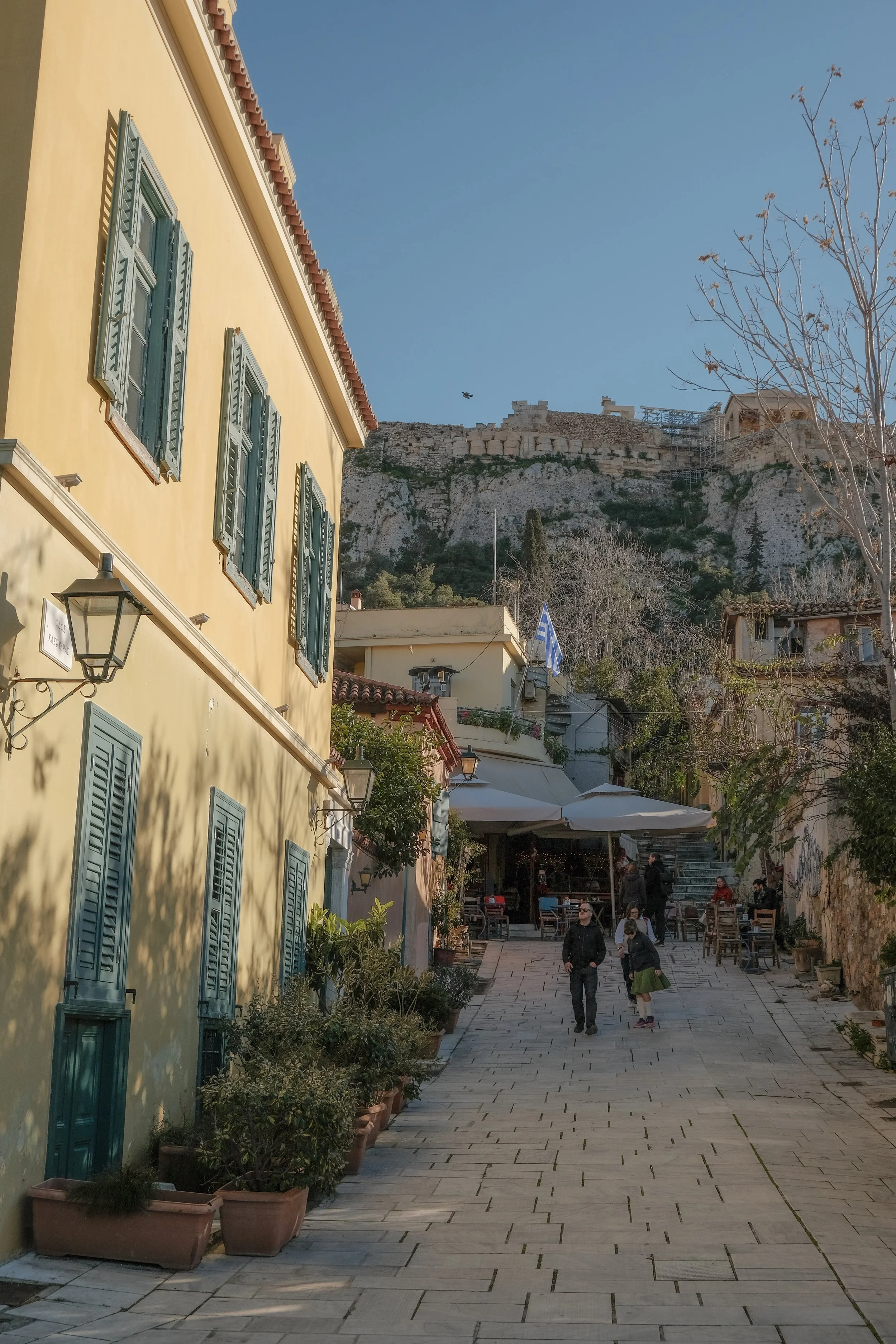
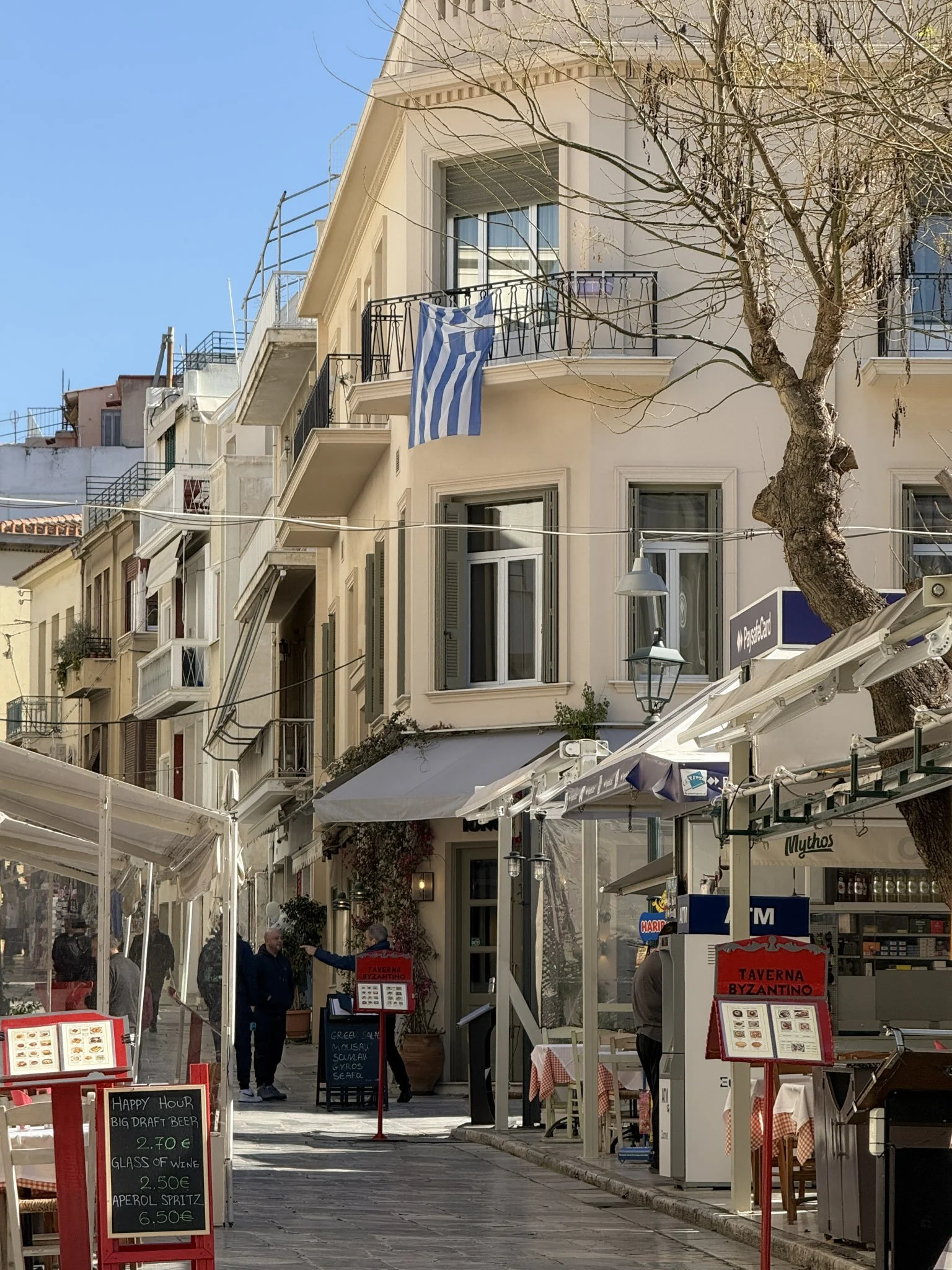
The Plaka stairs themselves are worth a slower look: the pathway around the Acropolis was designed in the 1950s by architect Dimitris Pikionis, who used fragments of demolished buildings, ancient pottery, marble and stone to create what amounts to a compressed timeline of Athens' history underfoot. Most people walk across it without realising it was designed at all, which was precisely the intention.
Where to eat nearby
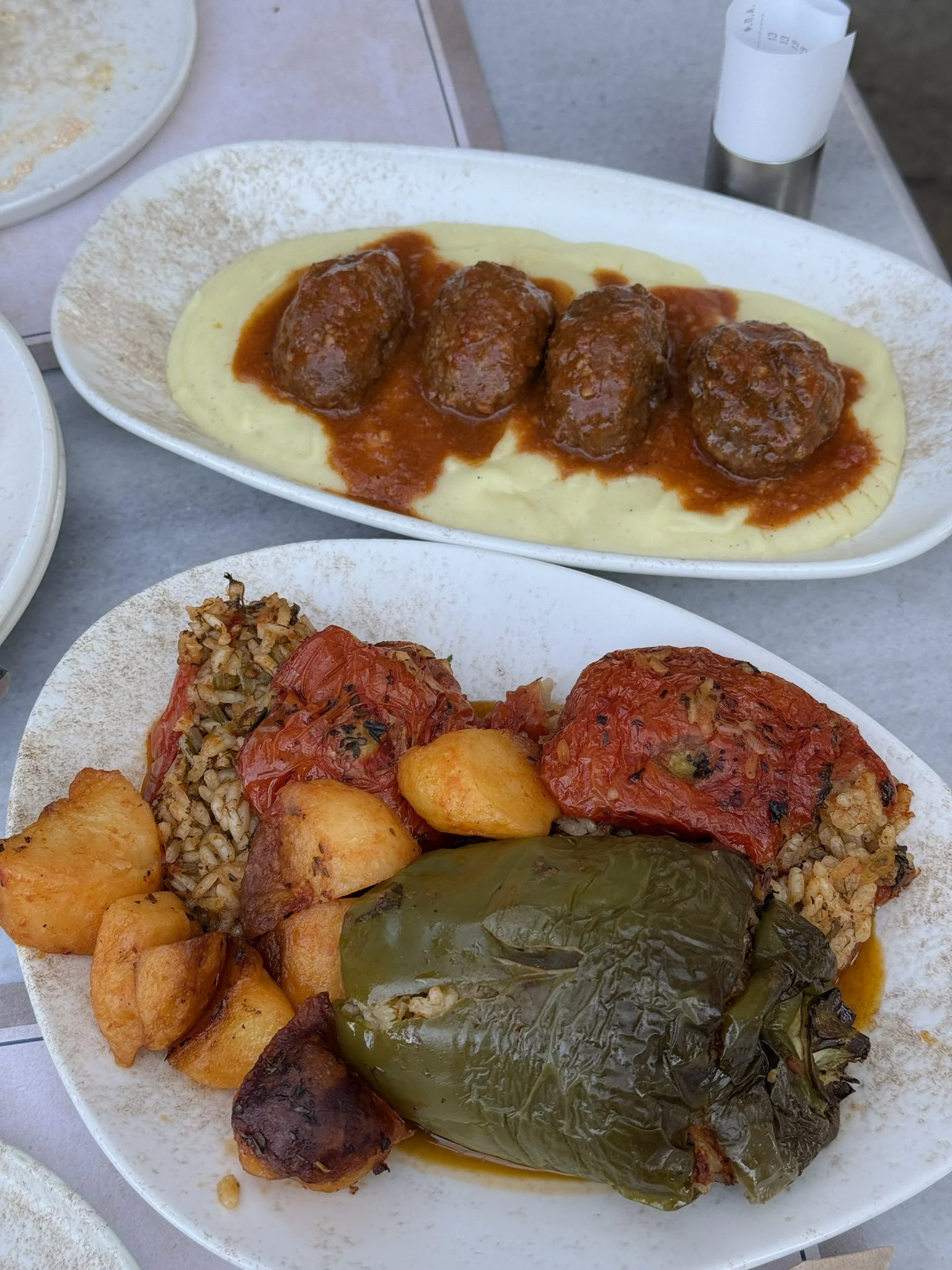
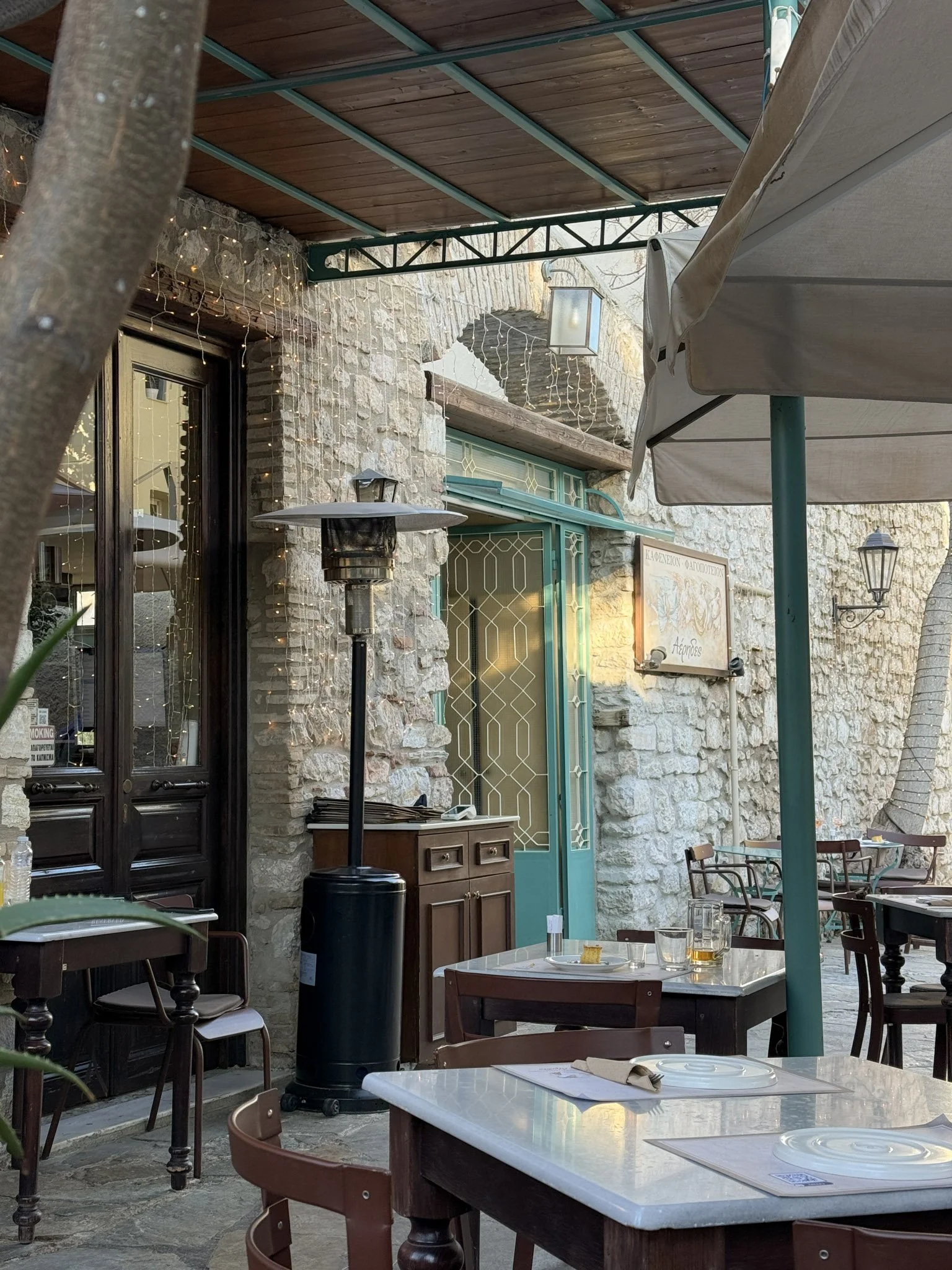
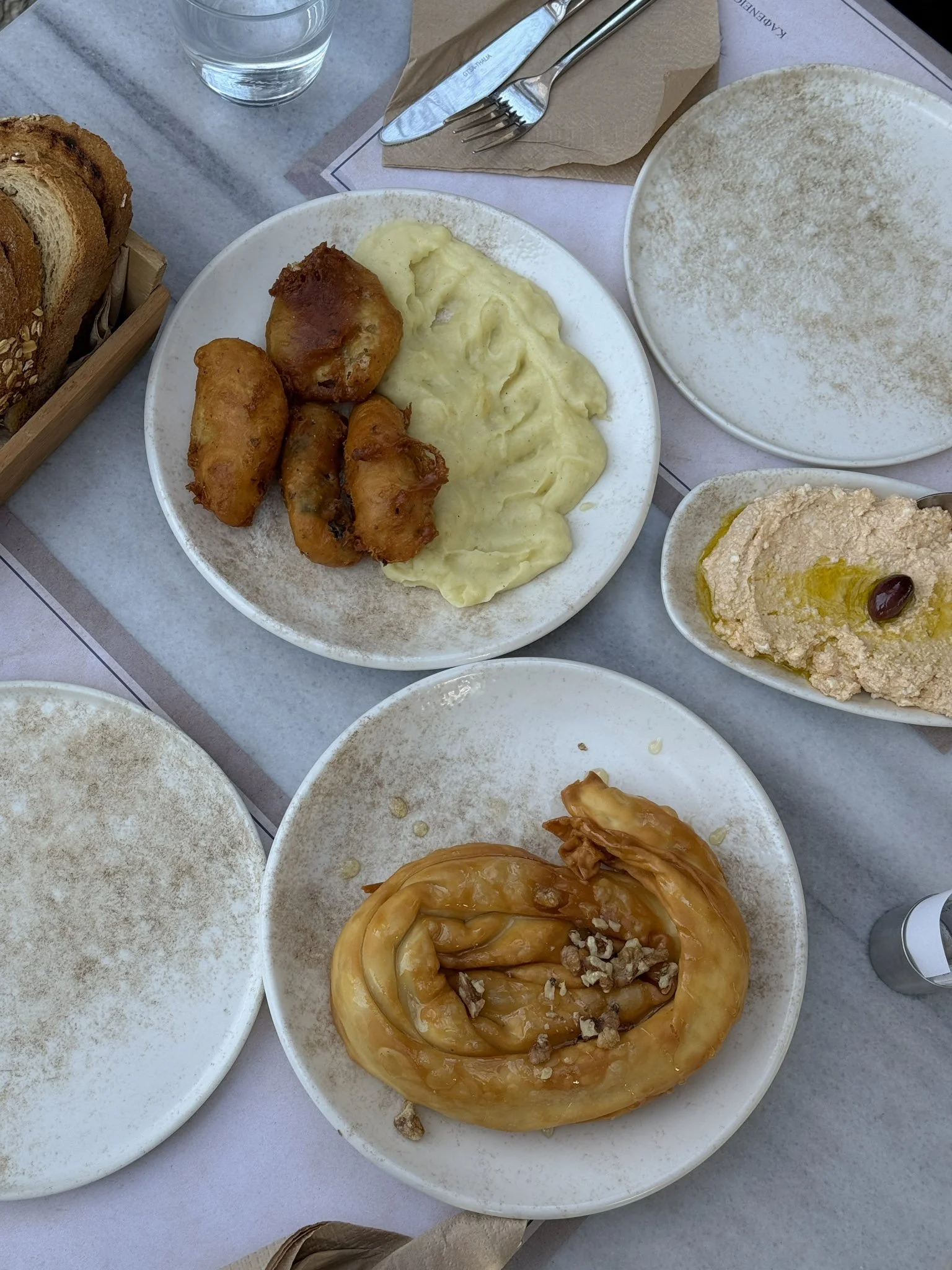
After a morning in Plaka and Anafiotika, Aerides Plaka is a good option for a late lunch: a traditional taverna with outdoor seating and simple Greek food done well. I tried the cheese pie with honey and walnuts, a spicy feta dip, fried cod and stuffed vegetables. The service was the friendliest I encountered in Athens, and they bring complimentary dessert at the end.
Practical information
Anafiotika is free to visit and open at any time. There is no admission, no entrance gate, and no organised route. The simplest approach is to walk up through Plaka from Monastiraki Square or the Acropolis metro station, heading toward the rock. Several paths lead up through the streets; the ones going uphill toward Stratonos Street will eventually bring you into the neighbourhood. GPS can be unreliable in the narrow lanes, so it helps to have your general orientation fixed before you go in.
Anafiotika itself took me about twenty minutes to wander, but the surrounding streets of Plaka make an hour or two a good amount of time to set aside. The Acropolis entrance is a short walk further up the hill, making Anafiotika a natural first stop before or after the main site.
The neighbourhood is open year-round. February was an excellent time to visit: cool, quiet, occasionally sunny, with the particular pleasure of finding flowers already coming through in the middle of winter.


The ancient sites are quiet, the food is extraordinary, and February in Athens turns out to be one of the better-kept secrets in European winter travel.